Raccoons are some of the most recognizable and surprisingly intelligent animals in the wild. With their masked faces, ringed tails, and curious personalities, they have captured human attention for generations. Found across North America and in parts of Europe and Asia, raccoons thrive in forests, cities, and suburban neighborhoods alike. Their adaptability has made them one of the most successful mammals in changing environments, often living closer to people than many realize. While they may look cute and harmless, raccoons are clever survivors with a unique set of skills that help them navigate both natural habitats and urban landscapes.
These nocturnal creatures are known for their dexterous front paws, which function almost like human hands. They can open containers, turn doorknobs, and even solve simple problems to access food. This intelligence, combined with their opportunistic feeding habits, allows them to eat a wide variety of foods including fruits, insects, small animals, and even leftovers from human garbage. Because of this, raccoons have become a common sight in cities where food sources are plentiful.
Despite their popularity, many people only know raccoons for their mischievous behavior. There is much more to these animals than their nighttime scavenging. They have complex social behaviors, excellent memories, and fascinating physical adaptations that make them stand out among mammals. From their unique communication methods to their surprising climbing skills, raccoons offer a wealth of interesting traits that are often overlooked.
1. Raccoons Have Highly Sensitive Hands
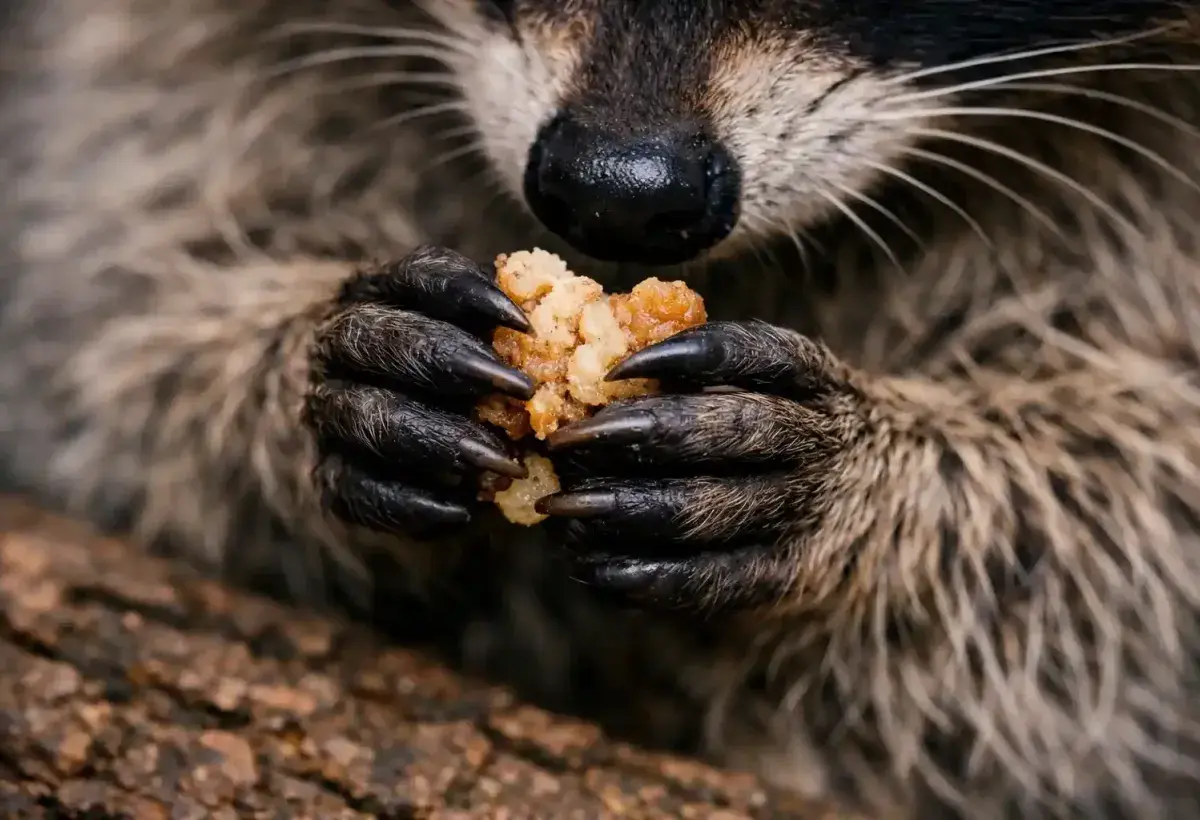
Raccoons are famous for their incredible sense of touch, especially in their front paws. Unlike many animals that rely heavily on sight or smell, raccoons depend greatly on their sense of touch to explore the world around them. Their paws contain a high concentration of nerve endings, making them extremely sensitive. This allows them to identify objects, textures, and even food items without needing to see them clearly, which is especially useful since they are mostly active at night.
One of the most interesting behaviors associated with raccoons is their habit of dipping food into water. While it may look like they are washing their food, scientists believe this behavior actually enhances their sense of touch. Water softens the outer layer of their paws, making them even more sensitive. This allows raccoons to better detect details about what they are holding, such as whether something is edible or not.
Their hands are also remarkably dexterous. Raccoons can grasp, pull, twist, and manipulate objects with surprising precision. They are known to open jars, unlatch cages, and even figure out complex mechanisms to get to food. This ability has earned them a reputation as clever problem solvers. In urban environments, this skill helps them access garbage bins and other human food sources with ease.
Their sense of touch is so refined that raccoons can recognize objects they have previously handled, even without seeing them again. This strong tactile memory plays a key role in their survival. It helps them remember where to find food and how to access it, making them highly efficient foragers.
Image
2. They Are Extremely Intelligent Animals
Raccoons are often compared to primates in terms of intelligence. Studies have shown that they can solve complex problems, remember solutions for long periods, and adapt their behavior based on experience. This level of intelligence is one of the reasons why raccoons are so successful in both wild and urban environments.
One famous experiment involved raccoons being presented with a series of locks that needed to be opened to access food. The raccoons quickly learned how to unlock each mechanism and were able to remember the solutions even after several months. This demonstrates not only their problem solving abilities but also their strong memory.
Raccoons are also capable of learning through observation. They can watch other raccoons or even humans and figure out how to perform certain tasks. This kind of learning is often seen in animals with advanced cognitive abilities. It allows them to adapt quickly to new situations and challenges.
Their intelligence also plays a role in their survival strategies. Raccoons can assess risks, choose safe routes, and avoid dangerous situations. In cities, they learn traffic patterns and know when it is safe to cross roads. They also remember which houses or areas provide reliable food sources.
This adaptability and intelligence make raccoons one of the most resourceful animals in the animal kingdom. Their ability to think, learn, and remember gives them a significant advantage in environments that are constantly changing.
Image

3. Raccoons Are Excellent Climbers
Raccoons are natural climbers, thanks to their strong limbs and sharp claws. They can easily scale trees, fences, and even buildings. This ability helps them escape predators, find food, and locate safe places to rest.
One of the reasons raccoons are such skilled climbers is their flexible ankle joints. Their hind feet can rotate nearly one hundred eighty degrees, allowing them to descend headfirst down trees and other vertical surfaces. This unique adaptation gives them greater control and stability while climbing.
Climbing also plays an important role in their nesting behavior. Raccoons often build dens in tree hollows, abandoned burrows, or even attics in urban areas. Being able to climb allows them to access these elevated and secure locations.
In cities, their climbing skills help them navigate rooftops, power lines, and other structures. This makes them highly adaptable to urban environments where traditional habitats may be limited. It also allows them to avoid threats such as dogs or human disturbances.
Their agility and balance are impressive to watch. Raccoons can move quickly and confidently across narrow branches or ledges. This combination of strength, flexibility, and coordination makes them one of the most capable climbers among mammals of their size.
Image

4. They Have a Very Diverse Diet
Raccoons are omnivores, which means they eat both plants and animals. Their diet is incredibly varied and depends largely on what is available in their environment. In the wild, they consume fruits, nuts, insects, small mammals, birds, eggs, and even fish.
Their ability to eat a wide range of foods makes them highly adaptable. If one food source becomes scarce, they can easily switch to another. This flexibility is one of the reasons raccoons are able to thrive in so many different habitats.
In urban areas, raccoons often take advantage of human food sources. They are known to raid garbage bins, compost piles, and pet food dishes. While this behavior can sometimes cause problems for homeowners, it highlights their resourcefulness and adaptability.
Raccoons also use their sensitive paws to search for food in water. They often hunt along riverbanks or in shallow streams, feeling around for fish, frogs, and other aquatic prey. This behavior showcases both their tactile skills and their opportunistic feeding habits.
Their diverse diet ensures that they can survive in a wide range of conditions. Whether in a dense forest or a busy city, raccoons can find something to eat.
Image

5. Raccoons Are Mostly Nocturnal
Raccoons are primarily nocturnal animals, meaning they are most active during the night. This behavior plays a major role in their survival and overall lifestyle. By staying active after dark, raccoons are able to avoid many predators that hunt during the day. It also helps them reduce competition for food with other animals that are active in daylight hours. This nighttime routine has shaped many of their physical and behavioral traits, making them highly efficient in low light conditions.
Their senses are well suited for life in the dark. While raccoons do not have exceptionally sharp eyesight compared to some predators, their vision is adapted to detect movement and function effectively in dim environments. They also rely heavily on their sense of hearing, which allows them to pick up subtle sounds such as insects moving or water splashing. Combined with their highly sensitive paws, these senses give raccoons a powerful toolkit for navigating and foraging at night.
Another advantage of being nocturnal is the reduced interaction with humans. In urban and suburban areas, raccoons typically wait until late evening or early morning hours to search for food. This helps them avoid direct encounters with people, vehicles, and other potential dangers. Over time, many raccoons have even adjusted their schedules based on human activity patterns, becoming more active when neighborhoods are quiet.
During the day, raccoons rest in secure and hidden locations. These dens can be found in tree hollows, underground burrows, or man made structures such as attics, chimneys, and sheds. They prefer spaces that provide safety, warmth, and protection from predators. Some raccoons may use multiple dens within their territory and switch between them regularly.
Their nocturnal nature is not absolute, however. In areas where food is scarce or during certain seasons, raccoons may be seen during daylight hours. Young raccoons, in particular, are sometimes active during the day as they learn to forage and explore their surroundings.
Being nocturnal gives raccoons a strategic advantage. It allows them to operate with less risk, take advantage of available resources, and adapt their behavior to different environments. This flexibility is one of the key reasons raccoons have become so successful across a wide range of habitats.
Image

6. Raccoons Have Distinctive Facial Markings
Raccoons are instantly recognizable because of the dark mask of fur that surrounds their eyes. This marking is not just a visual feature that makes them look mysterious or playful. It actually serves a practical purpose that helps them survive, especially during their nighttime activities. The dark coloration around their eyes is believed to reduce glare from surrounding light, much like the eye black that athletes use. By minimizing light reflection, raccoons are able to focus better in low light conditions, which improves their ability to find food and detect movement.
This feature works together with their natural night vision, allowing raccoons to move confidently in darkness. While their eyesight is not as sharp as that of some predators, the combination of reduced glare and heightened sensitivity to light gives them a strong advantage during nighttime foraging. Their facial mask may also help them remain less noticeable to other animals in dim environments, adding a subtle layer of camouflage.
In addition to its physical function, the facial mask may also play a role in communication. Raccoons rely on body language and visual cues when interacting with one another. Their distinct markings can help individuals recognize each other, especially in situations where multiple raccoons share the same territory. This can be useful during mating season or when mothers are caring for their young.
The mask, combined with their expressive eyes and mobile ears, gives raccoons a wide range of visual signals. They can convey curiosity, caution, or aggression through subtle changes in posture and facial expression. This makes their communication more complex than many people assume.
The raccoon’s facial markings are more than just a defining feature of its appearance. They are a functional adaptation that supports vision, enhances communication, and contributes to the animal’s success in a variety of environments.
Image

7. They Are Solitary but Social When Needed
Raccoons are often described as solitary animals, and in many cases this is true. Adult raccoons usually prefer to live and forage alone, especially when food resources are limited. This independence allows them to reduce competition and move freely within their territory. However, their social behavior is more flexible than it might seem at first glance. Under certain conditions, raccoons can display surprisingly social tendencies.
In areas where food is abundant, such as urban neighborhoods or regions with plentiful natural resources, raccoons may tolerate each other’s presence and even form loose groups. These groups are not structured in the same way as those of highly social animals, but they demonstrate a level of cooperation and shared space that is unusual for typically solitary mammals. This adaptability allows raccoons to make the most of their environment without unnecessary conflict.
Female raccoons, in particular, show strong social bonds when raising their young. Mothers are highly protective and attentive, teaching their offspring essential survival skills such as foraging, climbing, and avoiding danger. Young raccoons stay with their mother for several months, during which time they learn by observing and imitating her behavior. This early social interaction is critical for their development and future independence.
Male raccoons sometimes form small groups called coalitions. These groups can provide advantages such as increased protection and better access to resources. While these coalitions are not permanent, they demonstrate that raccoons are capable of forming cooperative relationships when it benefits them.
This balance between independence and social interaction is one of the reasons raccoons are so successful. They can adjust their behavior based on their surroundings, choosing solitude when necessary and cooperation when it is advantageous. This flexibility allows them to thrive in a wide range of environments, from remote forests to busy cities.
Image

8. Raccoons Have Excellent Memory
Raccoons possess an impressive memory that plays a crucial role in their survival. Their ability to remember locations, solutions to problems, and past experiences allows them to navigate complex environments with confidence. This is especially important for an animal that relies heavily on exploration and problem solving to find food.
Studies have shown that raccoons can remember how to solve tasks for extended periods. For example, if a raccoon learns how to open a container or unlock a mechanism to access food, it can recall that solution months later. This long term memory gives them a significant advantage when returning to reliable food sources or encountering similar challenges in the future.
Their memory is closely tied to their intelligence. Raccoons are not just reacting to their surroundings in the moment. They are actively learning from their experiences and using that knowledge to make better decisions. This ability to adapt based on past events helps them avoid dangers and take advantage of opportunities.
In urban environments, this skill becomes even more valuable. Raccoons can remember which areas have consistent food sources, such as specific garbage bins or feeding spots. They also learn to recognize patterns, such as when humans are less active or when it is safe to approach certain locations. This makes them highly efficient and strategic in their movements.
Their memory also extends to their sense of touch. Because their paws are so sensitive, raccoons can remember the feel of objects they have handled before. This tactile memory helps them quickly identify food items and avoid non edible materials.
The raccoon’s strong memory is a key factor in its adaptability and success. It allows them to learn, plan, and thrive in environments that are constantly changing.
Image

9. They Communicate in Many Ways
Raccoons are more vocal and expressive than many people realize. They use a wide range of sounds and body movements to communicate with each other, especially in situations involving mating, parenting, or territory. Their communication system is complex and helps them navigate social interactions effectively.
Raccoons can produce a variety of vocalizations, including chirps, growls, hisses, and purring sounds. Each of these sounds serves a different purpose. For example, a mother may use soft chirping noises to communicate with her young, while a growl or hiss may be used as a warning to other animals. These vocal signals help raccoons express emotions such as fear, aggression, or comfort.
In addition to sounds, raccoons rely heavily on body language. Their posture, facial expressions, and movements all convey important information. A raccoon that feels threatened may puff up its fur, arch its back, and make itself appear larger. On the other hand, a relaxed raccoon may move slowly and show no signs of tension.
Scent also plays a role in their communication. Raccoons have scent glands that allow them to mark their territory and leave signals for other raccoons. These scent markers can indicate ownership of an area or provide information about the individual that left them.
This combination of vocal, visual, and scent based communication makes raccoons highly expressive animals. It allows them to interact effectively with each other, even in environments where visibility is limited.
Understanding how raccoons communicate can help people better interpret their behavior. Rather than seeing them as unpredictable, it becomes clear that they are responding to their surroundings in deliberate and meaningful ways.
Image

10. Raccoons Can Thrive in Cities
One of the most remarkable traits of raccoons is their ability to thrive in urban environments. While many animals struggle to adapt to human development, raccoons have embraced it. Cities provide a steady supply of food, shelter, and opportunities that these resourceful animals have learned to take full advantage of.
Raccoons use their intelligence and problem solving skills to navigate complex urban landscapes. They can climb buildings, cross busy streets, and access food sources that are out of reach for many other animals. Their dexterous paws allow them to open containers, lift lids, and explore spaces that would otherwise remain inaccessible.
Food availability is one of the main reasons raccoons are drawn to cities. Garbage bins, compost piles, and pet food left outdoors all provide easy meals. Raccoons quickly learn where to find these resources and often return to the same locations repeatedly. Their strong memory helps them keep track of these reliable food sources.
Shelter is another important factor. In urban areas, raccoons make use of attics, crawl spaces, abandoned buildings, and other structures as dens. These locations offer protection from weather and predators, making them ideal for raising young.
Despite their success, living in cities also presents challenges. Raccoons must navigate traffic, avoid human conflict, and deal with limited natural habitats. However, their adaptability allows them to overcome these obstacles.
Their presence in urban areas is a powerful example of how wildlife can adjust to changing environments. Raccoons demonstrate that with intelligence, flexibility, and resourcefulness, animals can find ways to coexist with human development.
Image

Raccoons are far more than just nighttime scavengers. They are intelligent, adaptable, and highly skilled animals with a wide range of fascinating traits. From their sensitive hands to their impressive memory and climbing abilities, every aspect of their biology is designed to help them survive and thrive in different environments. Their ability to live in both wild and urban settings highlights their resilience and resourcefulness.
Understanding raccoons can help change the way people see them. Instead of viewing them only as pests, it becomes easier to appreciate their role in the ecosystem and their remarkable capabilities. They are problem solvers, explorers, and survivors that have managed to coexist with humans in ways that few other animals have.
As cities continue to grow, encounters with raccoons are likely to become even more common. Learning about their behavior and habits can help people live alongside them more peacefully. Simple actions such as securing trash bins and avoiding feeding wildlife can make a big difference.
In the end, raccoons remind us that nature is full of surprises. Even animals that seem familiar can have hidden depths and abilities that are worth exploring. By taking a closer look at these masked mammals, we gain a better understanding of the natural world and the incredible diversity of life within it.