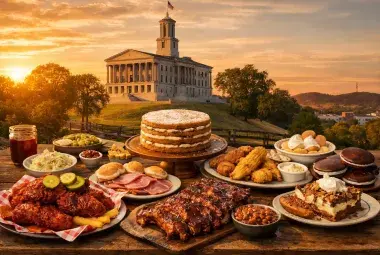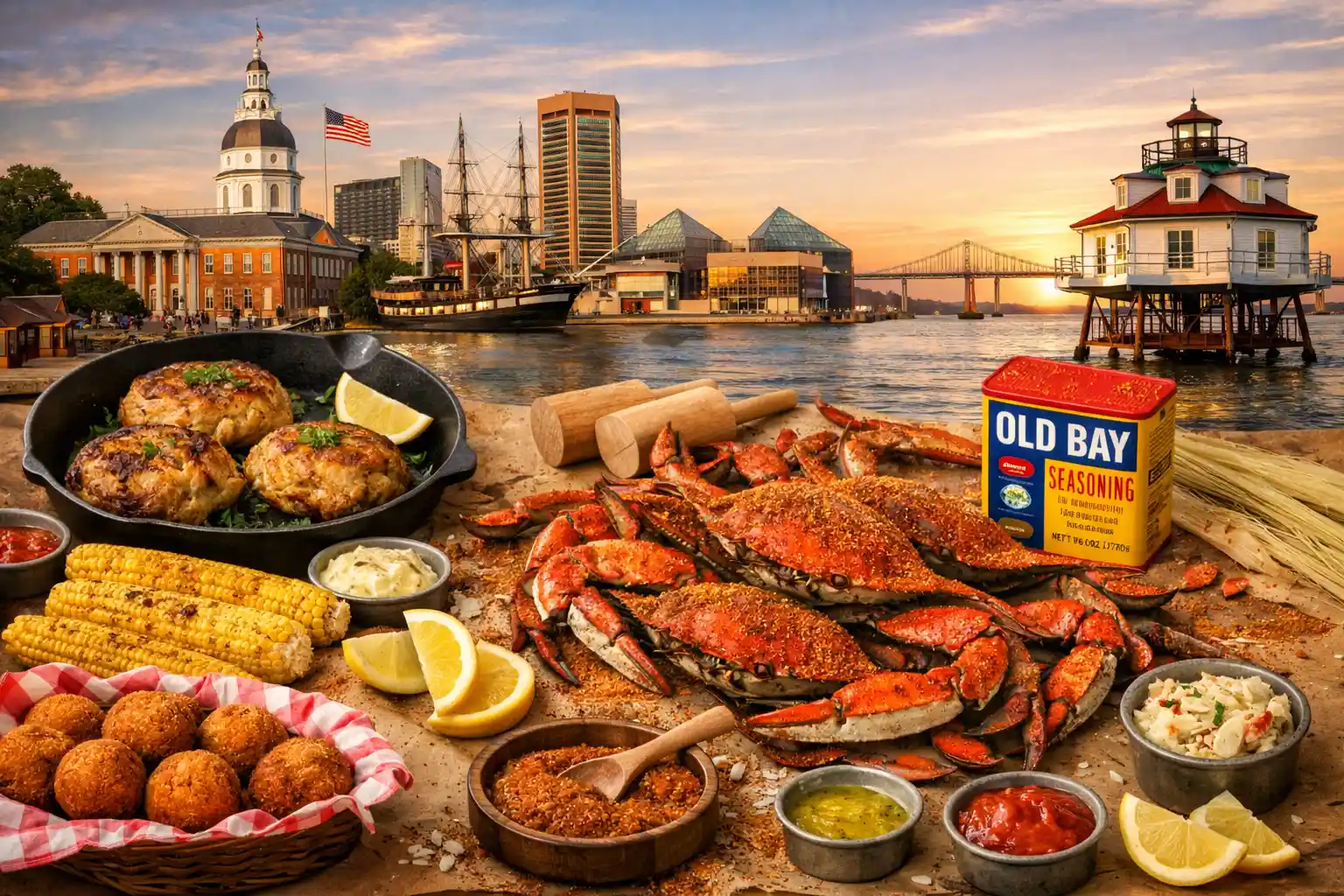
Maryland is one of those rare places where food is not just something people eat but something that defines identity, tradition, and community pride. Sitting on the edge of the Chesapeake Bay, the state has built its culinary reputation on seafood that is deeply tied to local waters, seasonal rhythms, and generations of cooking knowledge passed down through families. Visitors often arrive expecting crab dishes, but what they discover is a much broader and richer food culture shaped by coastal living, rural farming traditions, and urban culinary innovation.
What makes Maryland cuisine unique is how strongly it reflects place. The Chesapeake Bay blue crab is more than an ingredient, it is a symbol of the region itself. Seasonings like Old Bay have become cultural markers that appear in homes, restaurants, and even modern fusion dishes. Beyond seafood, Maryland also offers comfort foods influenced by Southern, Mid Atlantic, and immigrant traditions that have blended together over time.
From roadside crab shacks to historic city eateries, Maryland food is about experience as much as taste. Meals are often communal, messy, and memorable, designed to be shared rather than simply consumed. Whether it is cracking crabs at a paper covered table or biting into a warm crab cake sandwich on a dock overlooking the water, the food tells a story of heritage and local pride.
1. Maryland Blue Crab Steam Feast
Image
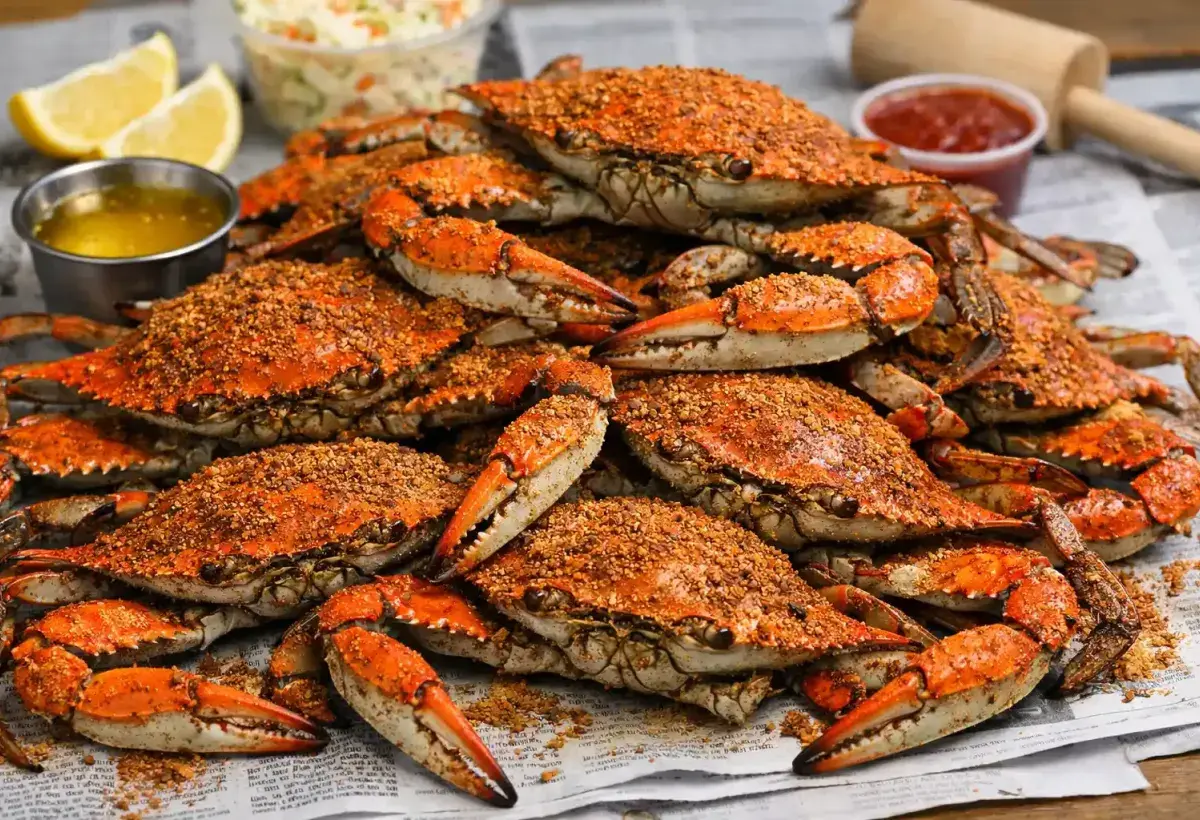
Maryland blue crab steam feasts are one of the most iconic food traditions in the state and represent far more than just a meal. This experience is deeply social, often taking place outdoors along waterfronts, backyards, or crab houses where long tables are covered with brown paper and piled high with freshly steamed crabs. The crabs are typically seasoned heavily with a blend of spices that enhances their natural sweetness and briny flavor.
The process of eating steamed crabs is part of the tradition itself. Diners use mallets and their hands to crack open shells, pulling out tender meat in a slow and deliberate rhythm. This is not fast food or refined dining. It is messy, interactive, and designed for conversation and connection. Families and friends often spend hours at the table, sharing stories while slowly working through piles of crabs.
What makes this dish unique to Maryland is the Chesapeake Bay blue crab, which thrives in the region’s specific mix of saltwater and freshwater. The flavor of the crab is often described as sweet, delicate, and slightly oceanic. Local seasoning blends, especially those centered around Old Bay style spice profiles, are essential to the experience.
Seasonality also plays a major role. Summer and early fall are peak crab seasons, when the crabs are most abundant and flavorful. During these months, crab feasts become community events, often paired with corn, potatoes, and cold beverages.
In Maryland, a crab feast is not just about eating. It is about tradition, patience, and shared experience. It reflects the state’s deep connection to the Chesapeake Bay and remains one of the most authentic ways to understand local culture.
2. Maryland Crab Cakes
Image
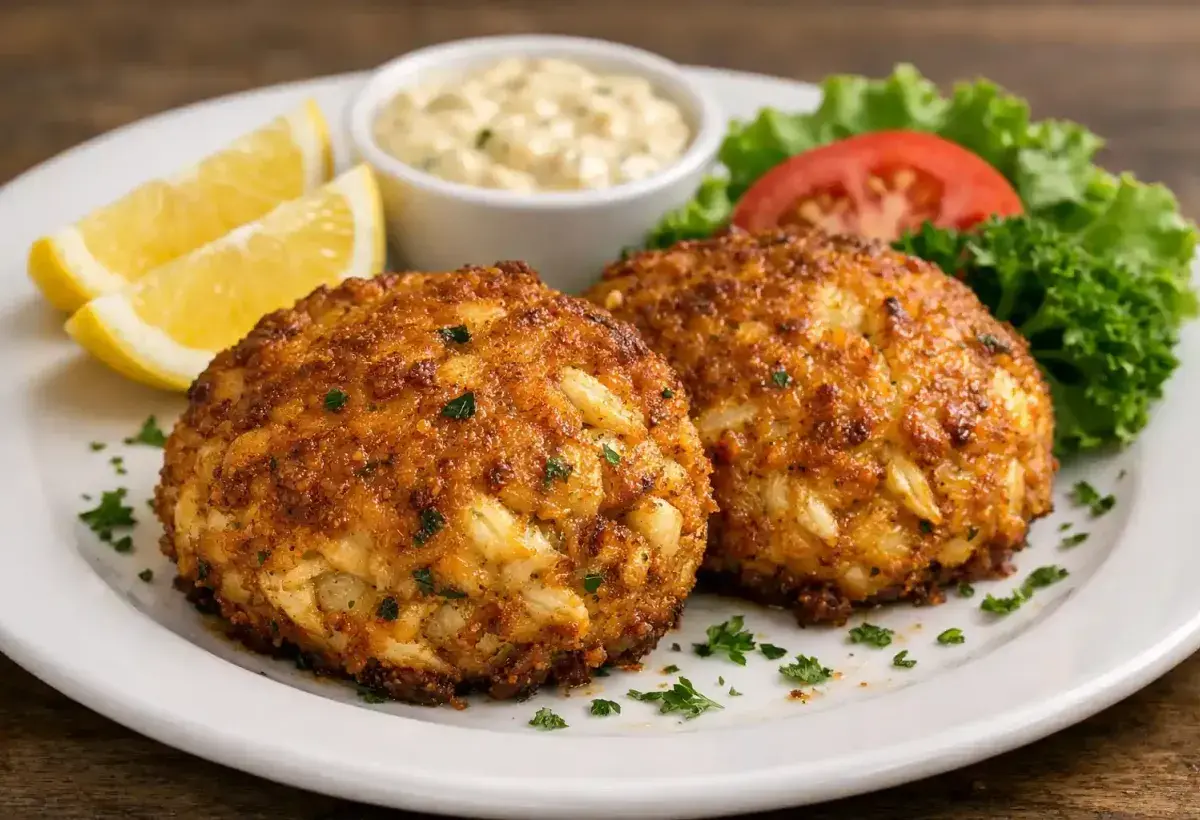
Maryland crab cakes are one of the most recognized dishes associated with the state and for good reason. Unlike many seafood patties found elsewhere, authentic Maryland crab cakes are known for their simplicity and focus on showcasing the natural flavor of blue crab meat rather than masking it with heavy fillers or excessive breading.
A traditional Maryland crab cake is made primarily with lump crab meat, lightly bound together with minimal ingredients such as mayonnaise, mustard, egg, and seasoning. The goal is to hold the crab together while preserving its texture and natural sweetness. When cooked properly, the outside develops a golden crust while the inside remains tender and full of visible crab pieces.
These crab cakes are typically pan fried, broiled, or baked, and they are often served with lemon wedges, tartar sauce, or a simple side salad. In many Maryland restaurants, crab cakes are considered a signature dish and are judged by how little filler they contain. The more crab meat, the better the quality is perceived to be.
What sets Maryland crab cakes apart is the quality of local blue crab and the culinary philosophy behind them. Instead of treating crab as an ingredient to be transformed, Maryland cuisine treats it as something to be respected and highlighted. This approach has influenced seafood cooking across the United States, but it remains most authentic in its home state.
Crab cakes are found everywhere in Maryland from fine dining establishments to casual diners and seafood shacks. Each place has its own variation, but the best versions always emphasize simplicity, freshness, and balance.
3. Old Bay Seasoned Everything
Image
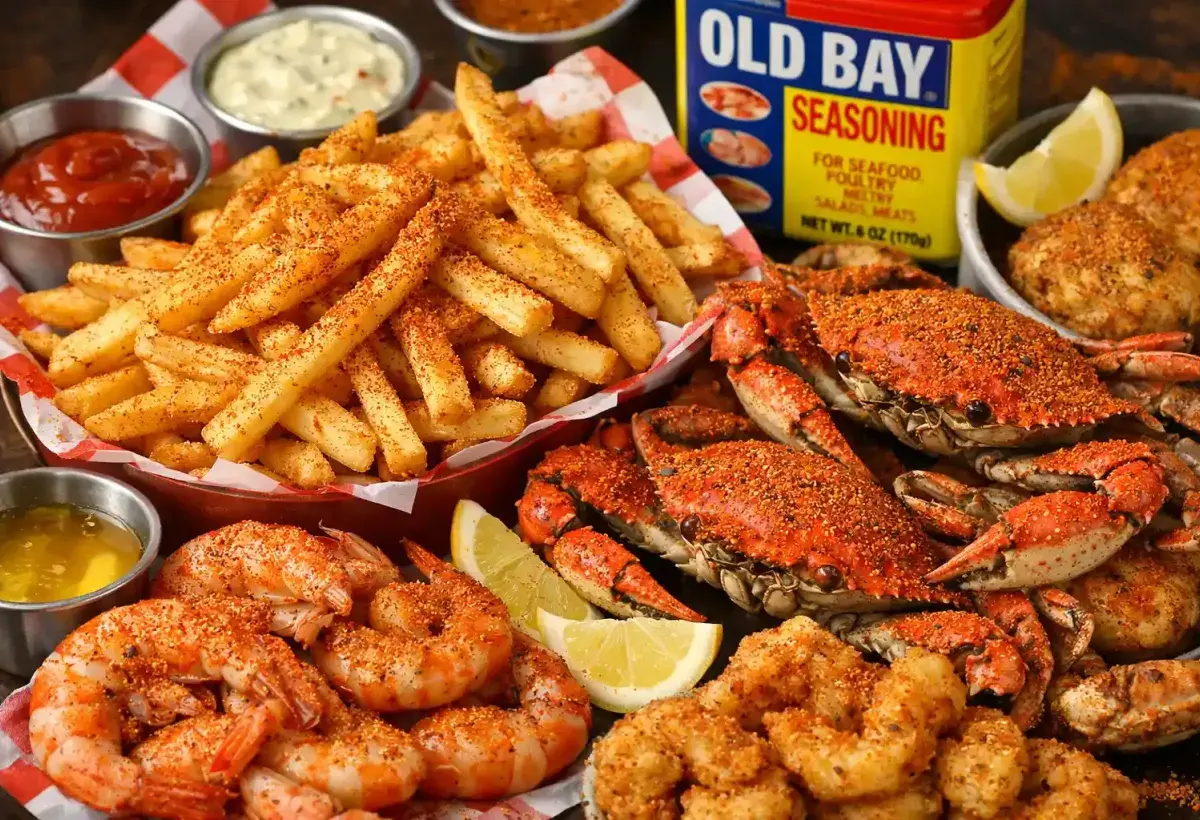
Old Bay seasoning is one of Maryland’s most defining culinary elements and has become a cultural icon that extends far beyond the state itself. Originally created as a spice blend for seafood, it has evolved into a universal seasoning used on everything from crabs and shrimp to fries, popcorn, and even cocktails.
The flavor profile is complex and distinctive, combining notes of celery salt, paprika, black pepper, and other spices that create a savory and slightly spicy taste. In Maryland kitchens, it is common to find Old Bay used not just as a seasoning but as a foundational ingredient in cooking.
What makes Old Bay so deeply connected to Maryland is its relationship with the state’s seafood culture. Steamed crabs are traditionally heavily coated with the seasoning, allowing the spices to infuse into the shell and meat during cooking. This creates a layered flavor experience that defines many Maryland seafood dishes.
Beyond seafood, Old Bay has become a symbol of regional identity. Locals often use it creatively in unexpected foods, including fried chicken, soups, and even snacks like chips and nuts. Restaurants across Maryland frequently feature signature dishes that incorporate the seasoning in unique ways.
The popularity of Old Bay reflects Maryland’s broader culinary philosophy of bold but balanced flavor. It enhances rather than overwhelms, adding depth without overpowering the main ingredient.
In many ways, Old Bay is more than just a seasoning. It is a representation of Maryland pride, history, and culinary creativity, making it an essential part of the state’s food identity.
4. Smith Island Cake
Image
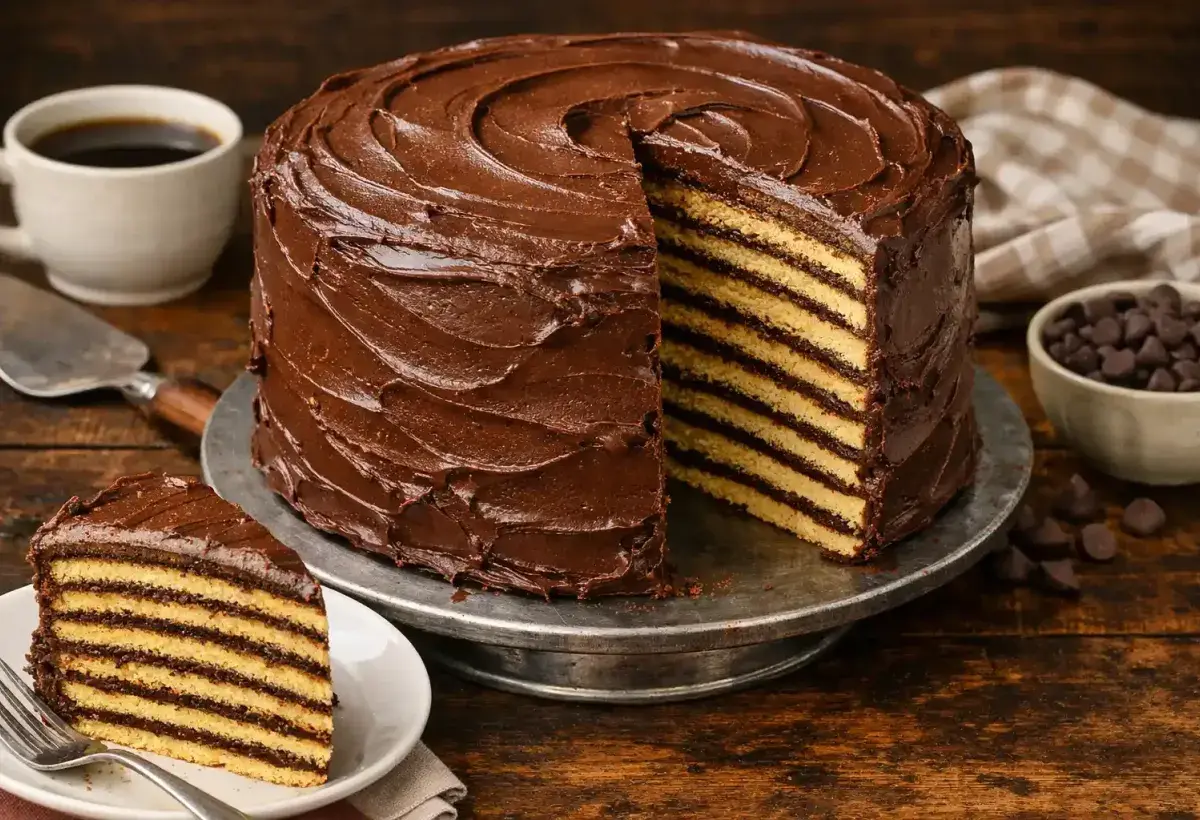
Smith Island cake is Maryland’s official state dessert and one of its most visually distinctive and culturally significant foods. Originating from Smith Island in the Chesapeake Bay, this dessert is known for its multiple thin layers of cake stacked with rich frosting between each layer.
Traditionally, Smith Island cake features anywhere from eight to twelve layers, although some versions can have even more. The cake itself is light and tender, while the frosting is typically thick, creamy, and often chocolate based. When sliced, the cake reveals a striking striped pattern that reflects its layered construction.
The origins of this dessert date back to early island communities where women would prepare cakes that could last longer and travel well for watermen working on the Chesapeake Bay. The multiple layers helped preserve moisture and flavor over time, making it practical as well as delicious.
Today, Smith Island cake is a symbol of Maryland heritage and is often served at celebrations, festivals, and special occasions. It is recognized as a cultural treasure that represents the island communities and their connection to the water.
Modern bakeries across Maryland continue to make variations of the cake, experimenting with flavors such as lemon, caramel, and strawberry, but the traditional chocolate version remains the most iconic.
Smith Island cake is not just a dessert. It is a piece of Maryland history that reflects resilience, tradition, and craftsmanship passed down through generations.
5. Baltimore Style Pit Beef
Image
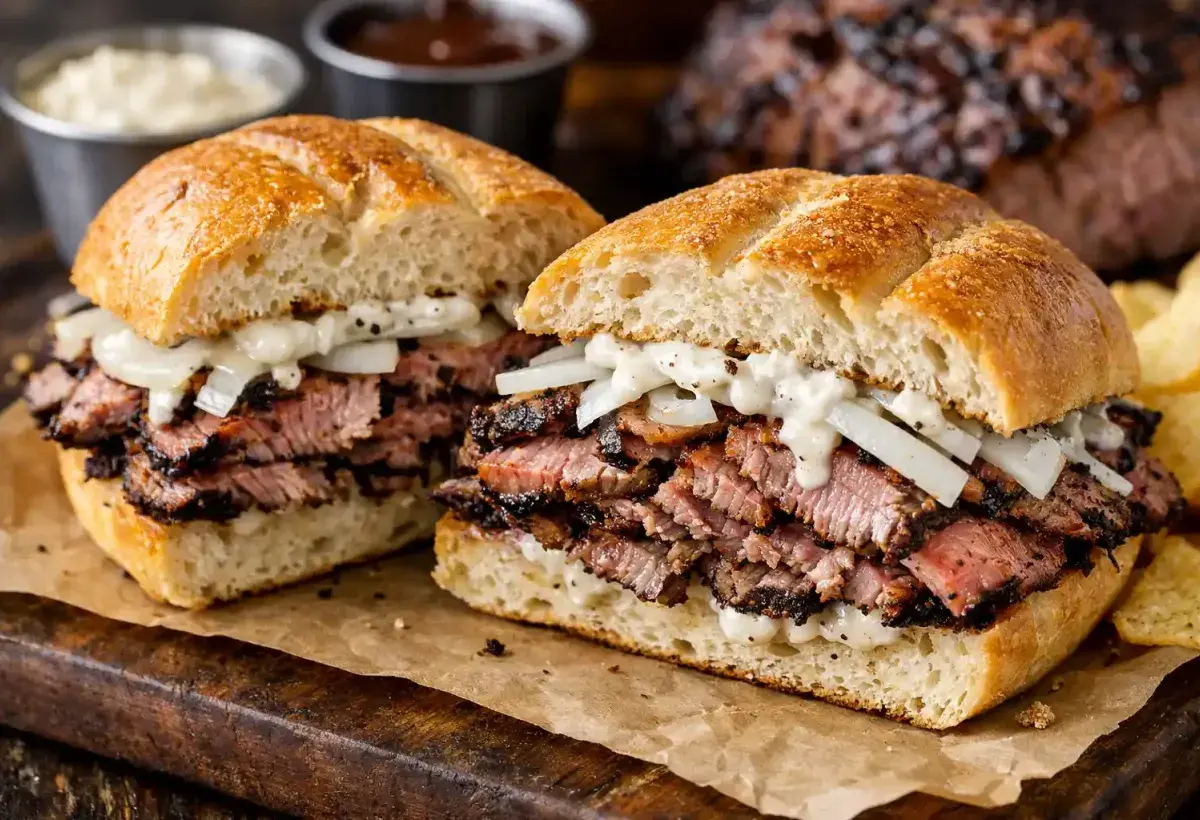
Baltimore style pit beef is one of Maryland’s most beloved regional sandwiches and a staple of its local food culture. Unlike slow cooked barbecue styles found in other parts of the United States, pit beef is cooked quickly over an open charcoal pit, giving it a distinctive smoky flavor while keeping the meat rare and tender inside.
The cut of beef is typically top round, seasoned simply with salt and pepper, then grilled over high heat. Once cooked, it is sliced very thin and served on a kaiser roll. The sandwich is traditionally topped with raw onions and a strong horseradish sauce that adds heat and sharpness to balance the richness of the beef.
Pit beef originated in Baltimore and became popular as a quick, affordable, and flavorful street food. It is commonly found at roadside stands, local markets, and casual eateries rather than formal restaurants.
What makes pit beef unique is its simplicity and focus on technique rather than complex seasoning. The flavor comes from the charred exterior of the meat, the juiciness of the interior, and the contrast provided by the condiments.
This dish represents Baltimore’s working class food culture and its emphasis on bold, straightforward flavors. It remains one of the most authentic local sandwiches in Maryland and continues to be a favorite among residents and visitors alike.
6. Chesapeake Bay Oysters
Image
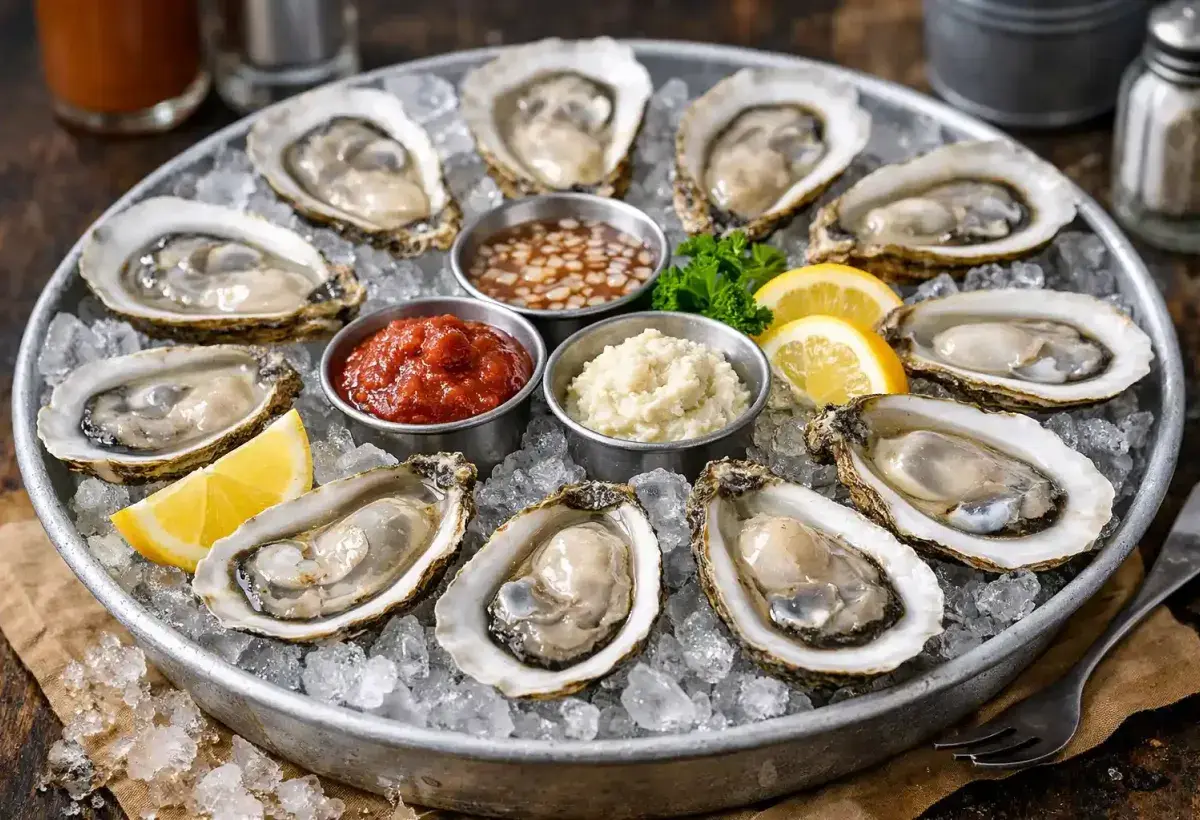
Chesapeake Bay oysters are one of Maryland’s most prized seafood offerings and have been part of the region’s identity for centuries. These oysters are harvested from the waters of the Chesapeake Bay, where a unique blend of saltwater and freshwater creates ideal growing conditions that influence their distinct taste and texture.
Maryland oysters are known for their balanced flavor profile, often described as mildly briny with a clean finish and subtle sweetness. Unlike oysters from some colder or more saline waters, Chesapeake Bay oysters tend to have a softer salinity, making them approachable for both new and experienced seafood eaters.
Oysters in Maryland are traditionally served raw on the half shell, often placed on beds of crushed ice with lemon wedges, horseradish, and vinegar based sauces. Eating them raw allows the natural flavors of the bay to come through without interference. However, they are also commonly found in cooked dishes such as oyster stew, fried oysters, and stuffing for poultry.
The cultural significance of oysters in Maryland goes beyond taste. Historically, oyster harvesting was a major industry in the Chesapeake Bay region, shaping local economies and communities. Watermen have relied on oyster beds for generations, and the tradition continues today with strict conservation practices to protect oyster populations.
Oyster season in Maryland is often celebrated with festivals and gatherings where people enjoy fresh harvests in social settings. These events highlight the connection between food, environment, and community.
Chesapeake Bay oysters remain a symbol of Maryland’s coastal heritage and are considered one of the purest expressions of its seafood culture.
7. Soft Shell Crab Sandwich
Image
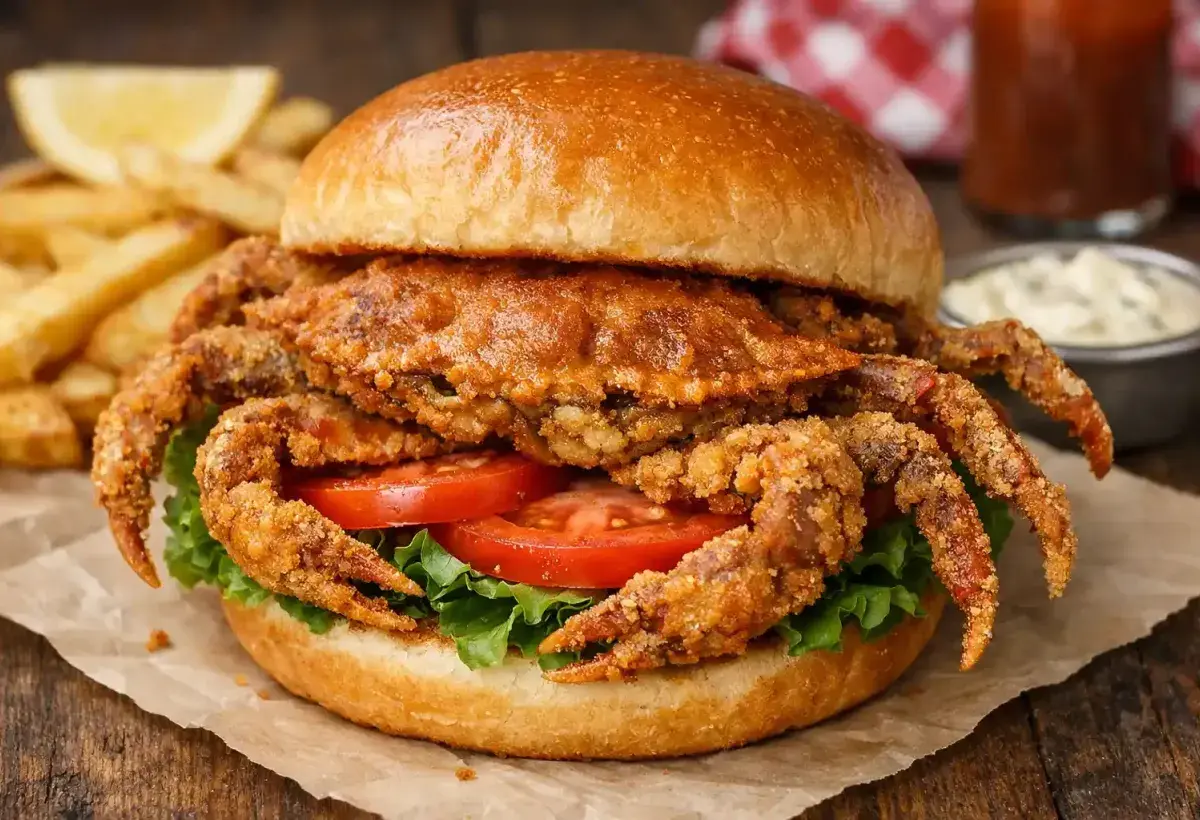
Soft shell crab sandwiches are a seasonal Maryland delicacy that showcase the state’s deep connection to the Chesapeake Bay and its unique seafood ecosystem. Unlike traditional crab dishes that use only the meat, soft shell crab sandwiches feature the entire crab after it has molted its hard outer shell, allowing it to be eaten whole.
The preparation typically involves lightly cleaning the crab, coating it in seasoned flour or batter, and frying it until crispy. The result is a crunchy exterior with a tender and flavorful interior. The sandwich is usually served on a bun with lettuce, tomato, and a simple sauce such as mayonnaise or tartar sauce.
What makes this dish special is its limited availability. Soft shell crabs are only harvested during a short seasonal window when crabs shed their shells to grow. This makes the sandwich a highly anticipated seasonal treat in Maryland.
The flavor of soft shell crab is often described as rich and slightly sweet, with a texture that combines crispiness and tenderness in every bite. It is a favorite in both casual seafood spots and upscale restaurants across the state.
Soft shell crab sandwiches reflect Maryland’s ability to transform seasonal ingredients into iconic dishes that celebrate freshness and timing. They are a true taste of the Chesapeake Bay experience.
8. Maryland Style Fried Chicken
Image
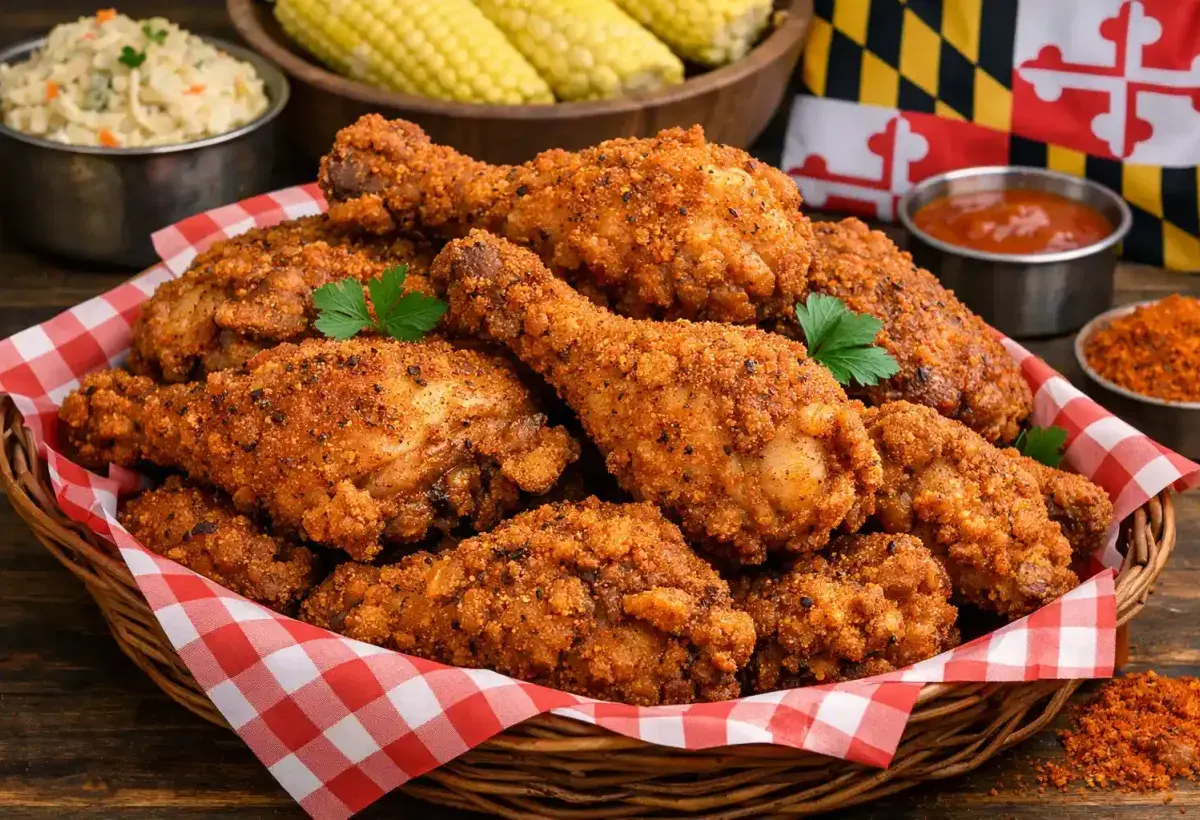
Maryland style fried chicken is a regional variation of fried chicken that reflects the state’s culinary blend of Southern influence and local seasoning traditions. While fried chicken is popular throughout the United States, Maryland’s version is often distinguished by its preparation methods and flavor enhancements.
In many traditional recipes, the chicken is marinated in buttermilk or seasoned brine before being coated in flour and fried until golden brown. What sets Maryland style apart is the frequent use of local seasoning blends and sometimes a finishing touch of pan gravy or light sauce.
Historically, this dish became popular in both rural and urban Maryland households, often served as a Sunday meal or for special gatherings. It reflects the state’s agricultural roots and its access to fresh poultry and spices.
The texture of Maryland fried chicken is typically crisp on the outside while remaining juicy and tender inside. Some variations incorporate subtle spice blends that echo the flavor profile of Old Bay inspired seasoning traditions.
This dish is often served with classic Southern style sides such as mashed potatoes, greens, or corn. It represents comfort food at its core, offering familiarity while still carrying a distinct regional identity.
Maryland style fried chicken is a reminder that the state’s food culture extends beyond seafood, incorporating broader American traditions into its unique culinary landscape.
9. Lake Trout Sandwich Baltimore Style
Image
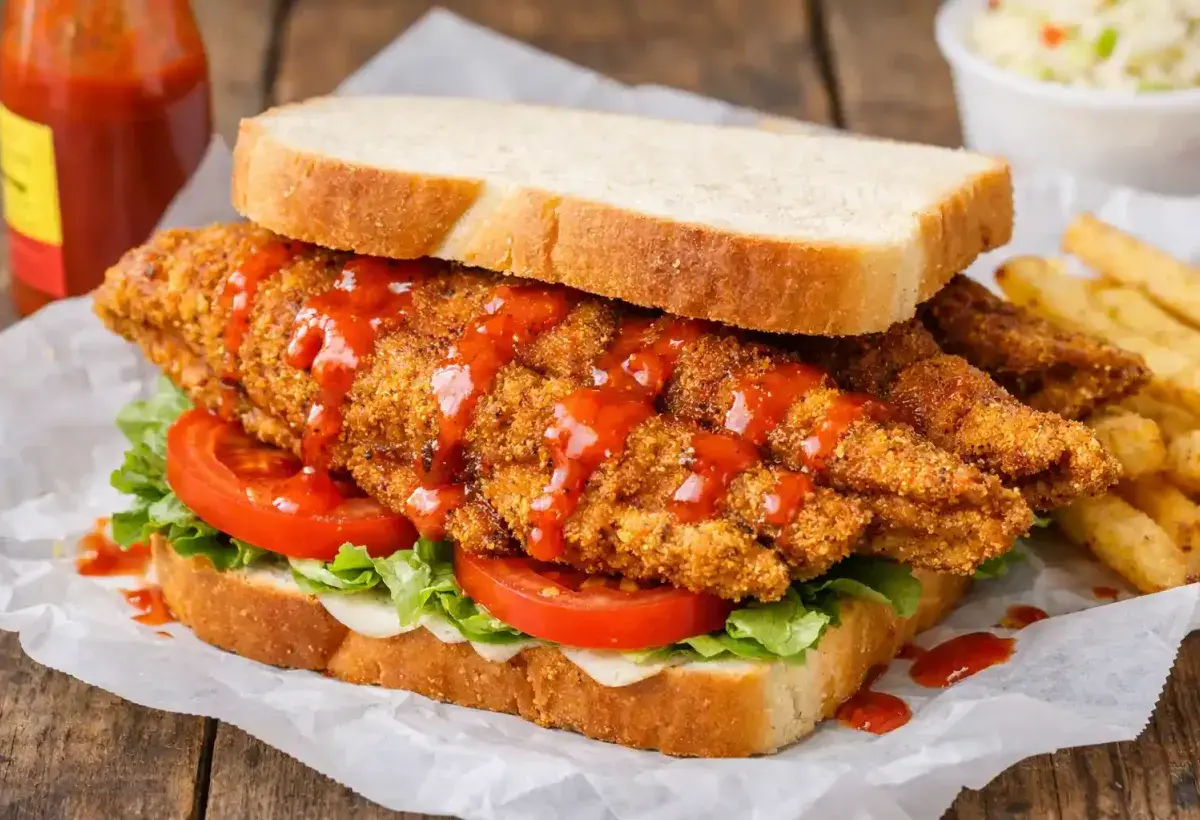
Lake trout sandwiches, particularly in Baltimore, are a classic example of urban street food culture in Maryland. Despite the name, lake trout in this context is not the freshwater fish but rather a local term for fried whiting fish, which is commonly served in the city.
The fish is typically seasoned, battered, and deep fried until crispy, then served on white bread or a sandwich roll. It is often topped with hot sauce, ketchup, or mayonnaise, depending on personal preference. The simplicity of the preparation makes it an affordable and widely accessible meal.
Lake trout sandwiches are deeply rooted in Baltimore’s neighborhood food scene and are commonly found in carryout restaurants and small local eateries. They represent an important part of the city’s culinary identity and working class food traditions.
The flavor is mild yet satisfying, with a crispy exterior and flaky interior. The seasoning and sauces play a major role in enhancing the overall taste experience.
This dish reflects the adaptability of Maryland cuisine, showing how local communities have created meaningful food traditions from available ingredients while shaping unique regional names and styles.
10. Chicken Box Baltimore Street Meal
Image
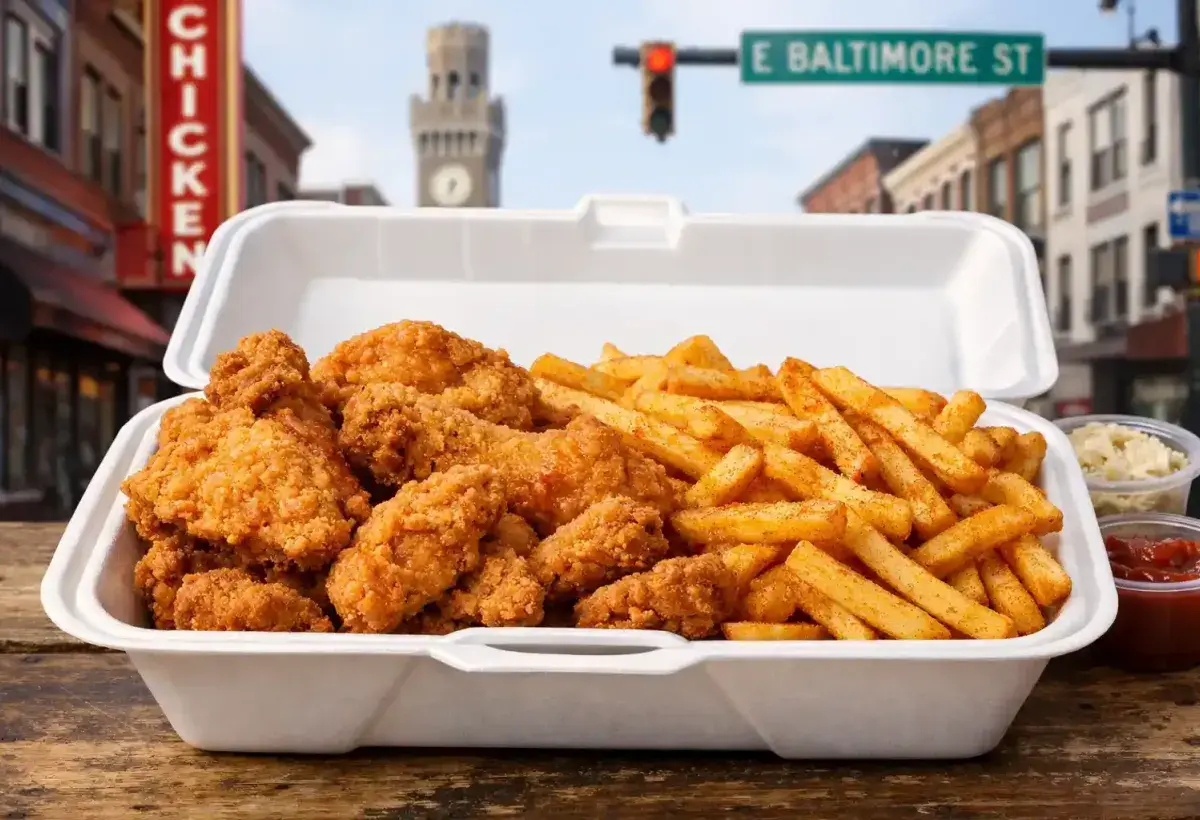
The chicken box is one of Baltimore’s most iconic street food meals and a defining part of Maryland’s urban food culture. It typically consists of fried chicken pieces served with seasoned fries in a simple cardboard or foam container, often accompanied by hot sauce or ketchup packets.
This meal is commonly found in carryout restaurants throughout Baltimore and is known for being quick, affordable, and deeply satisfying. The combination of crispy fried chicken and seasoned fries creates a hearty meal that has become a staple for generations of residents.
The chicken box is more than just food. It represents a cultural experience tied to community life, late night meals, and neighborhood food traditions. It is often associated with local carryout spots that serve as gathering places for quick meals and social interaction.
Flavor wise, the chicken is typically well seasoned and fried to a golden crisp, while the fries are heavily seasoned and soft inside. The simplicity of the dish is part of its appeal.
The chicken box highlights the creativity and resilience of Maryland’s urban food scene, showing how simple ingredients can be transformed into a beloved regional staple.
Maryland cuisine is a powerful reflection of place, history, and community. From the waters of the Chesapeake Bay to the streets of Baltimore, every dish tells a story that connects people to their environment and to each other. The foods featured in this guide are not just meals but cultural symbols that have been shaped by generations of tradition, labor, and local pride.
What stands out most about Maryland food is its authenticity. Whether it is the ritual of a blue crab feast, the simplicity of a pit beef sandwich, or the seasonal anticipation of soft shell crabs, each experience is rooted in something real and enduring. These foods are not designed for trend or spectacle. They exist because they are part of everyday life and heritage.
As Maryland continues to evolve, its food culture remains a constant thread that ties past and present together. New influences may emerge, but the foundation built on Chesapeake seafood, regional seasoning, and community based cooking remains strong.
For anyone exploring Maryland through its cuisine, the journey is as meaningful as the destination. Each bite offers a glimpse into the state’s identity and a reminder that food is one of the most powerful ways to understand a place.