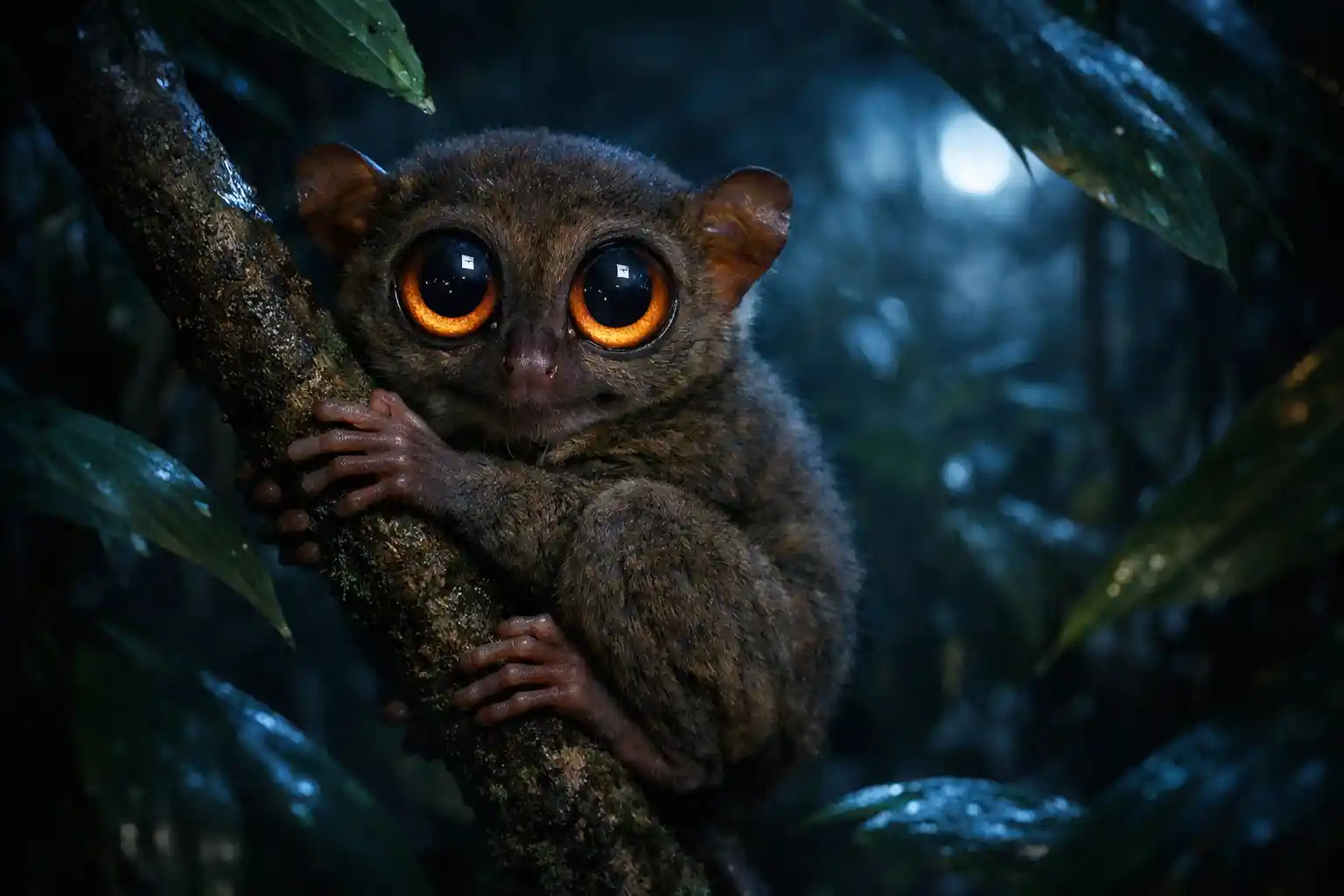
Tarsiers look like creatures that escaped from an old fantasy movie, yet they are very real animals quietly living in the forests of Southeast Asia. These tiny primates are famous for their enormous eyes, strange body proportions, and movements that seem almost unreal when seen in person. At first glance many people mistake them for small monkeys, but tarsiers belong to their own unusual branch of the primate family tree. They have survived on Earth for millions of years while keeping many traits that seem ancient and mysterious even today.
One reason people are fascinated by tarsiers is because almost every part of their body looks exaggerated. Their eyes are enormous compared to their head size, their fingers appear incredibly long, and their legs allow them to leap through forests with shocking speed. Even their way of communicating can sound eerie in the darkness of the jungle. They are quiet hunters that spend much of the night searching for insects, small reptiles, and other prey while remaining almost invisible among the trees.
The Philippines is especially well known for the Philippine tarsier, one of the most recognized species in the world. Tourists often travel to rainforest sanctuaries hoping to catch a glimpse of one resting on a branch during the daytime. Despite their cute appearance, tarsiers are extremely sensitive animals that can become stressed very easily when exposed to noise, touching, or habitat destruction. This has made conservation efforts increasingly important as forests continue to disappear across parts of Southeast Asia.
Scientists continue studying tarsiers because they offer important clues about primate evolution and behavior. Their combination of ancient traits and specialized abilities makes them one of the most unusual mammals alive today. From eyes bigger than their brains to jumps that cover surprising distances, these tiny creatures are filled with incredible surprises. Here are ten fun facts that explain why tarsiers continue to amaze animal lovers around the world.
1. Tarsiers Have Eyes Bigger Than Their Brain
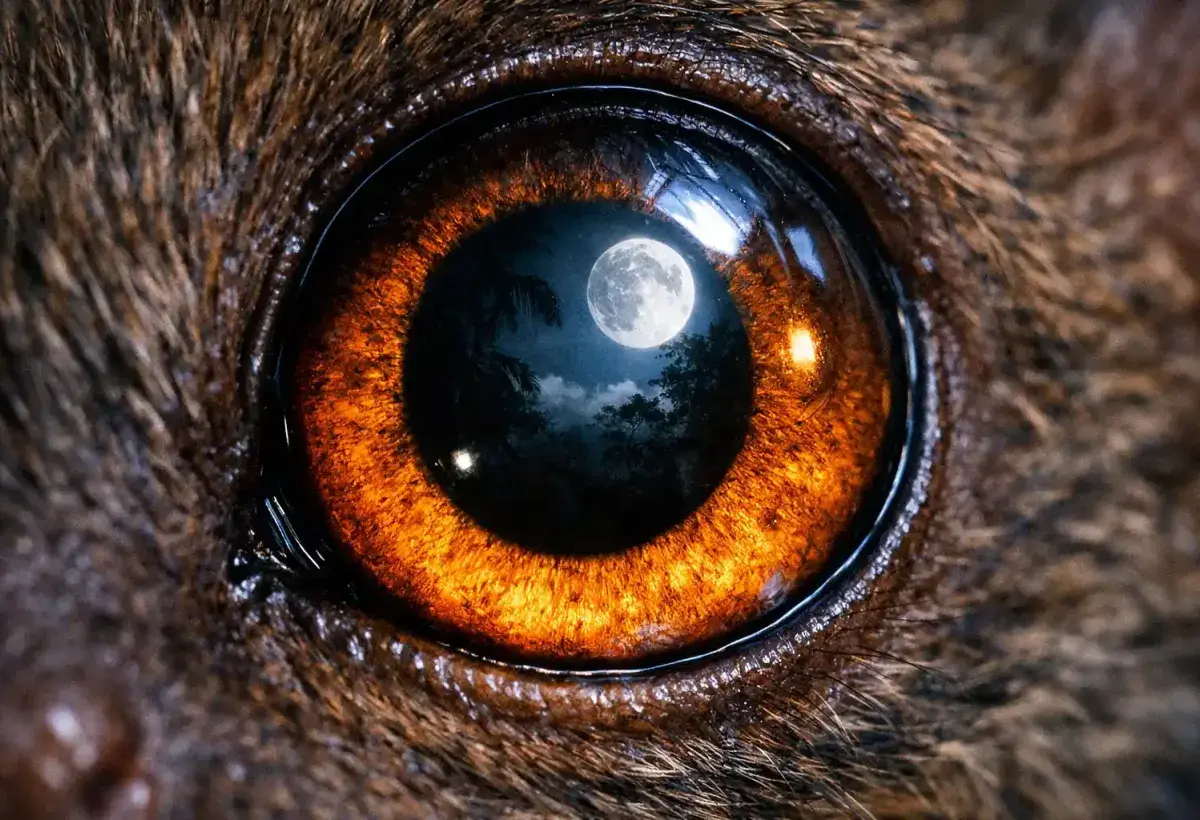
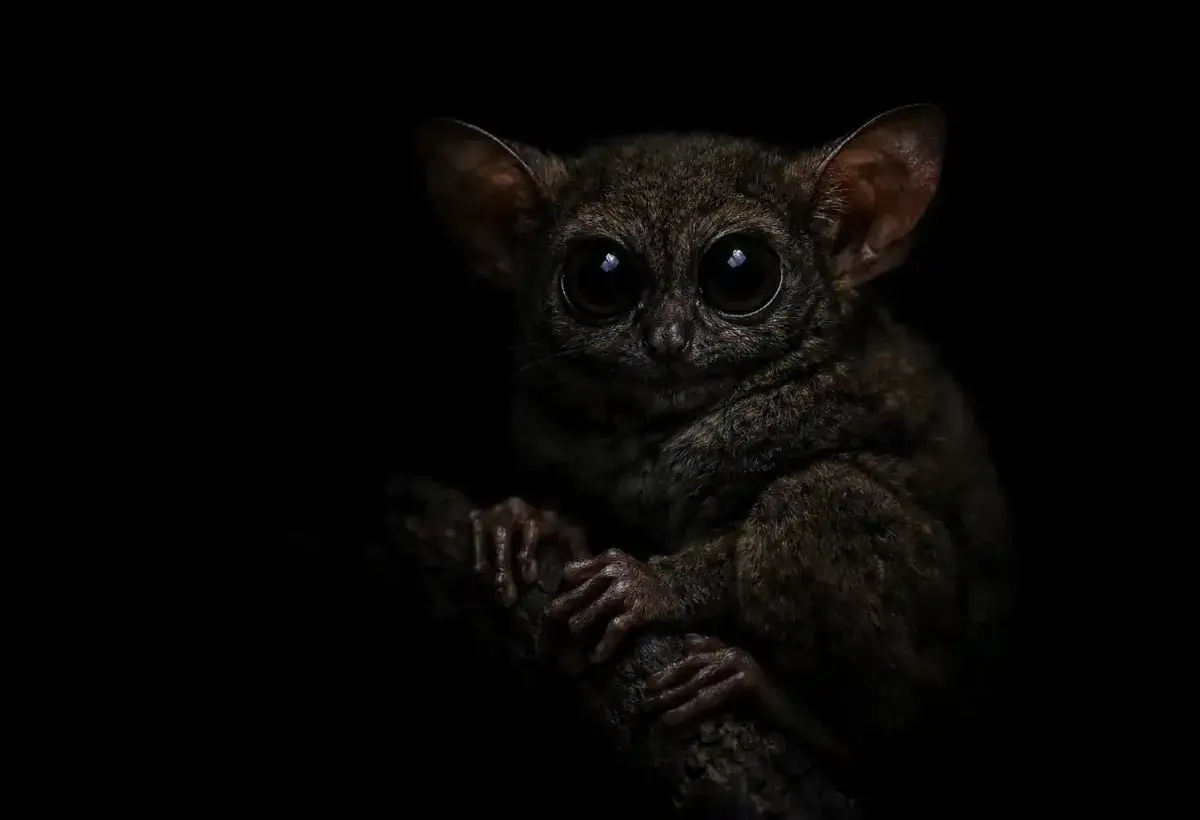
The first thing most people notice about a tarsier is its eyes. They look almost unreal because they are so enormous compared to the size of the animal's head. In fact, each eyeball is roughly the same size as the tarsier's brain. Scientists consider this one of the most extreme eye to body ratios found in mammals. If humans had the same eye proportions, each eye would be about the size of a grapefruit. This strange feature is not just for appearance because those giant eyes help tarsiers survive in darkness.
Tarsiers are nocturnal hunters, which means they become active at night. Their massive eyes collect as much light as possible, allowing them to spot movement in dim forests where visibility is extremely limited. Instead of relying mostly on smell like some nocturnal animals, tarsiers depend heavily on vision. They can detect insects, frogs, lizards, and even small birds moving through branches in low light conditions. Their eyes are so specialized that they provide excellent depth perception, helping them judge distances before making quick leaps toward prey.
Unlike humans, tarsiers cannot move their eyes around inside their sockets. The eyes are simply too large and tightly packed into the skull. To compensate for this limitation, tarsiers evolved another remarkable ability. They can rotate their heads nearly one hundred eighty degrees in either direction. This allows them to scan the forest without moving their body very much. Watching a tarsier slowly turn its head while remaining perfectly still can look both fascinating and slightly creepy at the same time.
Their giant eyes also explain why bright lights can disturb them. Flash photography and direct artificial lighting may stress tarsiers because their eyes are highly sensitive. Wildlife experts often remind visitors in sanctuaries to remain quiet and avoid using flashes around them. Even though they look cute and calm, tarsiers are delicate animals that depend on a very specific environment to stay healthy.
Scientists continue studying tarsier eyesight because it reveals how primates adapted to nighttime hunting millions of years ago. Their eyes are living examples of evolution shaping a creature for survival in darkness. Few animals on Earth have vision systems quite as unusual or memorable as the tarsier.
Image
2. They Can Leap Farther Than You Would Expect
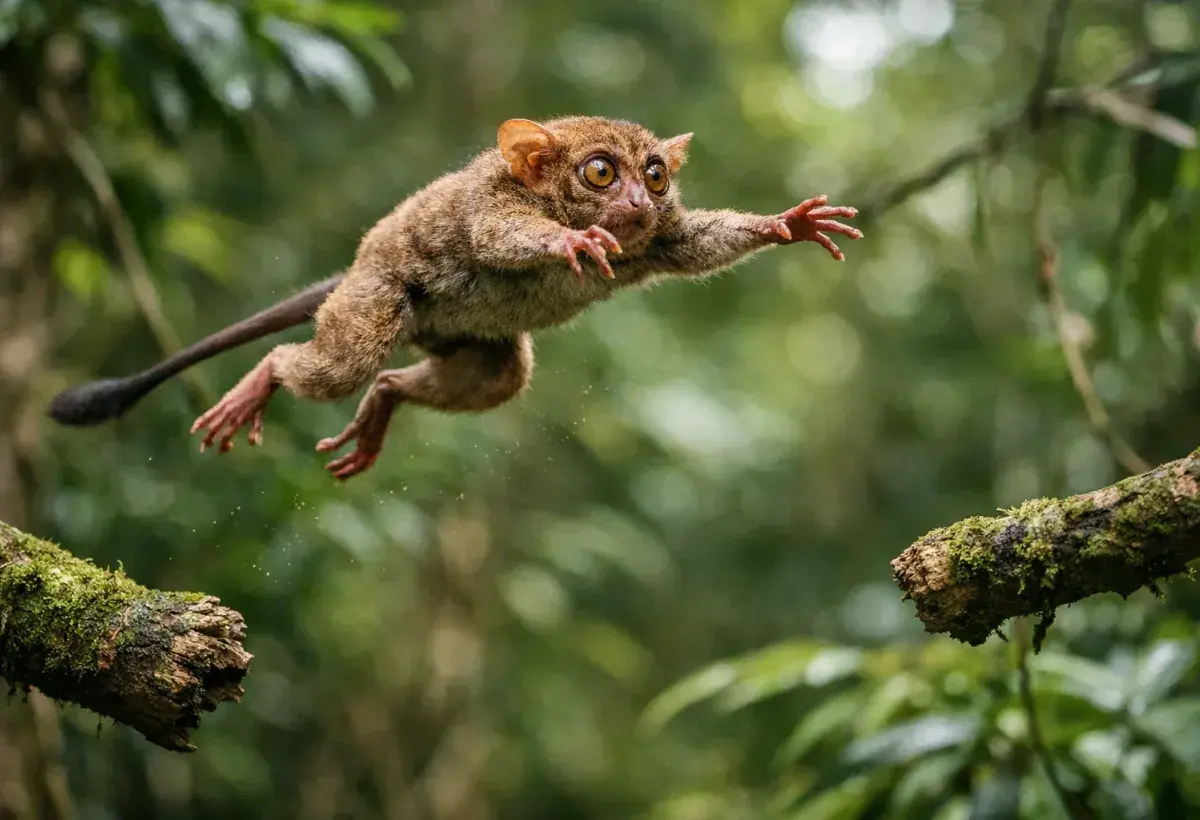
Tarsiers may be tiny, but they move through forests like miniature acrobats. One of their most impressive abilities is jumping. Their long hind legs are specially built for launching them from branch to branch with incredible speed and accuracy. A tarsier can leap many times the length of its own body in a single jump, making it one of the best jumpers among small mammals.
The secret behind this skill lies in the elongated ankle bones called tarsals. These bones are actually where the animal gets its name. The stretched leg structure acts almost like a natural spring, storing energy before release. When a tarsier jumps, the power from its legs sends it flying through the air in a sudden burst of motion. To a human observer, the movement can seem almost impossible for such a small creature.
Their jumping ability is not just for travel. It is also an important hunting strategy. Tarsiers often wait quietly on branches while scanning the forest for prey. Once they detect movement, they launch themselves quickly toward insects or small animals. Their speed gives prey very little chance to escape. This makes tarsiers highly efficient predators despite their tiny size.
Balance is another important part of their movement. Their long fingers and toes help them grip branches securely after landing. Some of their digits even have special pads that improve traction on slippery surfaces. In dense rainforest environments where branches can be wet and unstable, this grip is essential for survival.
Young tarsiers begin practicing climbing and jumping early in life. Even at a small age they learn to navigate complex forest environments. Their movements become more accurate as they mature, allowing them to survive in the challenging nighttime world of the rainforest canopy.
Watching a tarsier move naturally in the wild is very different from seeing one sitting still in a photograph. They can remain frozen for long periods and then suddenly explode into motion with astonishing speed. This combination of patience and athletic ability makes them one of the most fascinating hunters in Southeast Asian forests.
Researchers studying tarsier locomotion are interested in how their jumping mechanics compare to ancient primates. Their movement patterns may offer clues about how early primates evolved ways to travel through trees long before humans existed. Even after millions of years, tarsiers remain perfectly adapted to life among the branches.
Image
3. Tarsiers Are Carnivorous Primates
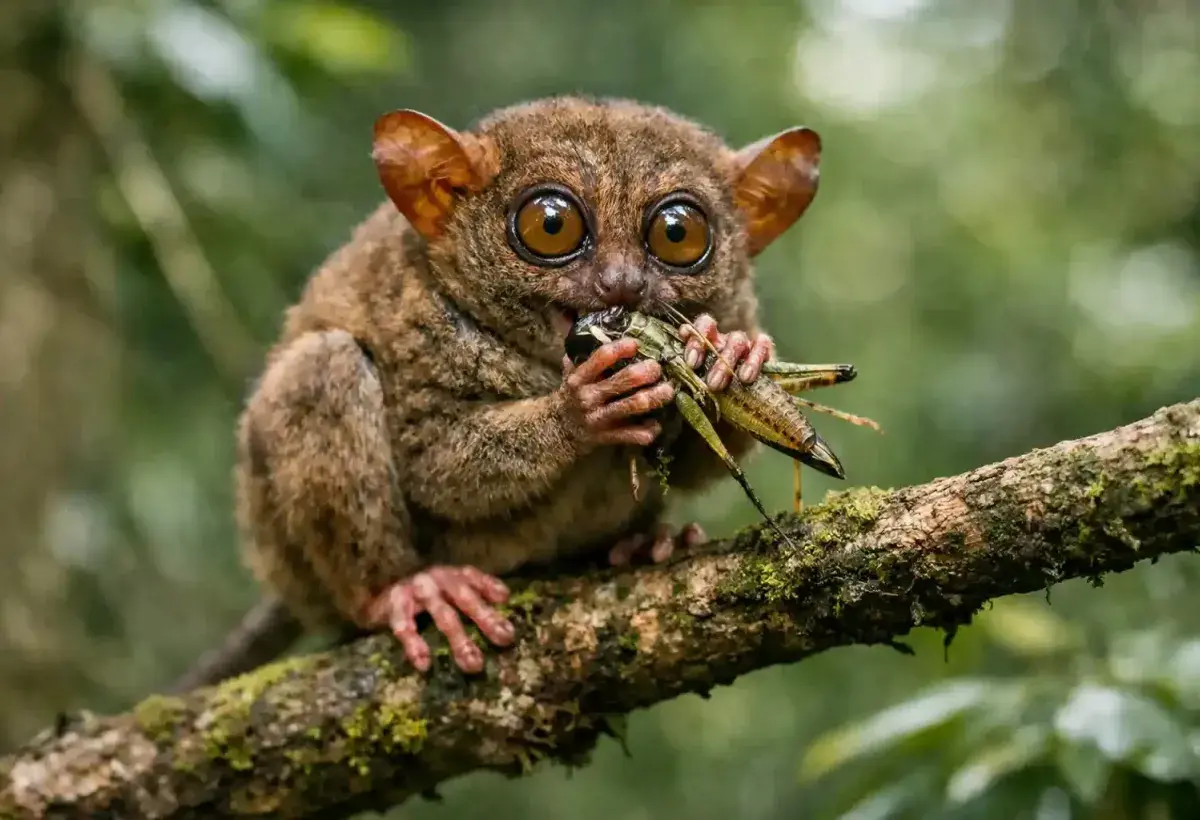
Many people assume all primates mainly eat fruit, leaves, or plants. Tarsiers completely break that expectation because they are almost entirely carnivorous. In fact, they are the only fully carnivorous primates known in the world today. Their diet includes insects, spiders, lizards, frogs, birds, and even small snakes. This makes them very different from monkeys, apes, and many other primates people are familiar with.
Their hunting style is based on patience and precision. A tarsier often stays perfectly still while observing its surroundings. Once prey comes close enough, the tarsier launches forward with remarkable speed. Their strong grip and sharp teeth help them capture struggling prey before quickly consuming it. Despite their small size, they are highly effective hunters.
Insects form a large part of their diet because they are abundant in rainforest environments. Crickets, beetles, grasshoppers, and moths are common meals. However, tarsiers are not limited to tiny prey. Some species have been observed catching birds and reptiles nearly their own size. This behavior surprises many researchers because such a small primate can act like a miniature predator.
Their large eyes and excellent hearing play major roles during hunting. Tarsiers can detect movement and sound in darkness with impressive accuracy. Some scientists believe they are capable of hearing ultrasonic frequencies, which may help them locate insects and communicate with other tarsiers without attracting predators.
Because they rely on live prey, tarsiers do not adapt well to captivity. Feeding them properly can be extremely difficult. They require fresh and varied food sources to remain healthy. This is one reason wildlife experts discourage keeping tarsiers as pets. Their dietary needs are highly specialized and difficult to replicate outside natural habitats.
Their carnivorous lifestyle also influences their behavior. Tarsiers tend to be solitary or live in very small groups compared to many fruit eating primates. Hunting requires stealth and territory rather than large social gatherings. Each animal needs enough space to search for food during the night.
Scientists find tarsiers especially interesting because their diet may reflect ancient primate behaviors from millions of years ago. Studying them could help researchers better understand how early primates evolved different feeding strategies over time. Among all primates alive today, tarsiers stand out as hunters in a family better known for fruit gathering.
Image
4. They Can Rotate Their Heads Like Owls
One of the strangest things about tarsiers is the way they move their heads. Since their giant eyes cannot shift inside the sockets, they developed the ability to rotate their head dramatically in order to look around. A tarsier can turn its head almost one hundred eighty degrees in either direction, giving it an owl like appearance when scanning the forest.
This adaptation is extremely useful in the rainforest. Tarsiers often remain completely still while listening and watching for prey or predators. Instead of moving their entire body and attracting attention, they simply rotate their head slowly and silently. The motion can appear almost mechanical because of how smooth and far the head turns.
Their flexible neck structure allows this unusual range of movement. Blood vessels and bones in the neck are adapted in ways that help support extreme rotation without injury. Scientists compare this trait to owls because both animals rely heavily on vision and stealth hunting at night.
The ability also helps them remain hidden. A moving body is easier for predators to notice than a stationary one. By minimizing body movement, tarsiers can blend into branches and leaves more effectively. In dense forests where survival depends on avoiding snakes, birds of prey, and larger mammals, this advantage is very important.
People seeing a tarsier for the first time are often fascinated by this behavior. Videos showing their rotating heads frequently spread online because the motion looks so unusual and almost alien. Combined with their giant eyes and tiny body, the effect is unforgettable.
This adaptation also reveals how evolution solves biological problems in creative ways. Since the eyes became too large to move normally, nature compensated by increasing neck flexibility. Instead of reducing eye size, tarsiers evolved an entirely different solution that works perfectly for nighttime hunting.
Researchers studying vertebrate anatomy continue examining how tarsier neck structures function compared to other mammals. Understanding these adaptations may offer insight into the relationship between skeletal design and sensory specialization. Tarsiers are excellent examples of how extreme physical traits can evolve when survival depends on a very specific lifestyle.
Although their head turning ability may seem amusing to humans, it is actually a sophisticated survival tool refined over millions of years. In the dark rainforest where every sound and movement matters, being able to look almost completely behind themselves without shifting position gives tarsiers a major advantage.
Image
5. Tarsiers Use High Frequency Sounds Humans Cannot Hear
Tarsiers are not always silent even though humans may think they are. Some species communicate using ultrasonic sounds that are too high for human ears to detect. This means tarsiers can sometimes communicate with each other without nearby predators or humans even realizing it.
Scientists discovered this ability while studying tarsier vocal behavior using specialized recording equipment. The sounds existed beyond the normal hearing range of humans. Researchers believe these calls may help tarsiers locate each other in darkness while remaining hidden from predators. It is a remarkable form of communication that adds another mysterious trait to these already unusual primates.
Ultrasonic communication may be especially useful in dense rainforest environments where visibility is limited. Sound travels around trees and vegetation more effectively than visual signals at night. By using frequencies outside the hearing range of many animals, tarsiers may gain a private communication channel that reduces danger.
Their hearing abilities are equally impressive. Tarsiers possess extremely sensitive ears capable of detecting faint movements and noises from insects or small prey. The combination of excellent hearing and specialized vocalizations makes them highly adapted to nighttime hunting and survival.
Communication among tarsiers includes more than just ultrasonic calls. They also produce chirps, squeaks, and other vocal sounds that humans can hear under certain conditions. Different calls may signal alarm, territory, or contact between mates and family members. Scientists continue researching exactly how complex their communication system may be.
The discovery of ultrasonic vocalizations in primates surprised many researchers because it is relatively rare among mammals of this type. It demonstrated once again that tarsiers are far more specialized than most people realize. Nearly every aspect of their biology seems designed specifically for life in darkness.
Unfortunately, increasing noise pollution from human activity can interfere with animal communication systems. Deforestation, tourism, and development may disrupt the delicate sound environments tarsiers depend on. Protecting quiet forest habitats is therefore important not only for shelter but also for communication and hunting.
People often describe tarsiers as cute because of their appearance, but their hidden abilities reveal an animal far more advanced and mysterious than expected. The fact that these tiny primates can communicate beyond human hearing makes them feel even more like creatures from another world. Every scientific discovery about them seems to uncover something stranger than the last.
Image
6. Tarsiers Have Existed for Millions of Years
Tarsiers are often called living fossils because their ancestors have existed for an incredibly long time. Fossil evidence suggests that ancient relatives of modern tarsiers lived tens of millions of years ago. While many species disappeared through changing climates and mass extinctions, tarsiers managed to survive and adapt in the forests of Southeast Asia.
Scientists study tarsiers closely because they may preserve traits linked to some of the earliest primates. Their combination of ancient and specialized features makes them valuable for understanding primate evolution. Even though they are tiny animals hiding in tropical forests today, they represent a very old branch of the primate family tree.
Long ago, relatives of tarsiers were spread across larger parts of the world. Fossils connected to early tarsier like primates have been discovered in Asia, Europe, and North America. Over time environmental changes reduced their range dramatically. Modern tarsiers are now found mainly in countries such as the Philippines, Indonesia, and Malaysia.
Their survival through millions of years is impressive because rainforest ecosystems constantly change. Predators evolve, climates shift, and habitats disappear. Yet tarsiers continued adapting while keeping many unusual traits. Their giant eyes, climbing ability, and hunting behavior remain highly effective even in modern forests.
Researchers debate exactly where tarsiers fit within primate evolution. Some characteristics resemble monkeys and apes while others appear much more ancient. This scientific mystery keeps them important in evolutionary biology research. Every new fossil discovery or genetic study can help scientists better understand how primates evolved over time.
The idea of a living fossil often captures public imagination because it creates a connection to distant prehistoric worlds. Looking at a tarsier today is almost like seeing a glimpse of ancient rainforest life that existed long before humans appeared. Their survival story reminds people that some animals carry pieces of Earth's deep history within them.
Conservationists also emphasize this ancient heritage when encouraging protection efforts. Losing tarsiers would not simply mean losing another small mammal species. It would mean losing one of the oldest surviving branches of primate evolution. Their extinction would erase millions of years of biological history.
Because they evolved in highly specific rainforest environments, modern tarsiers remain vulnerable to habitat destruction. Protecting forests in Southeast Asia is essential if future generations are going to continue seeing these remarkable creatures. Every tarsier alive today represents an evolutionary journey stretching back through immense periods of time.
Image
7. They Are Extremely Sensitive to Stress
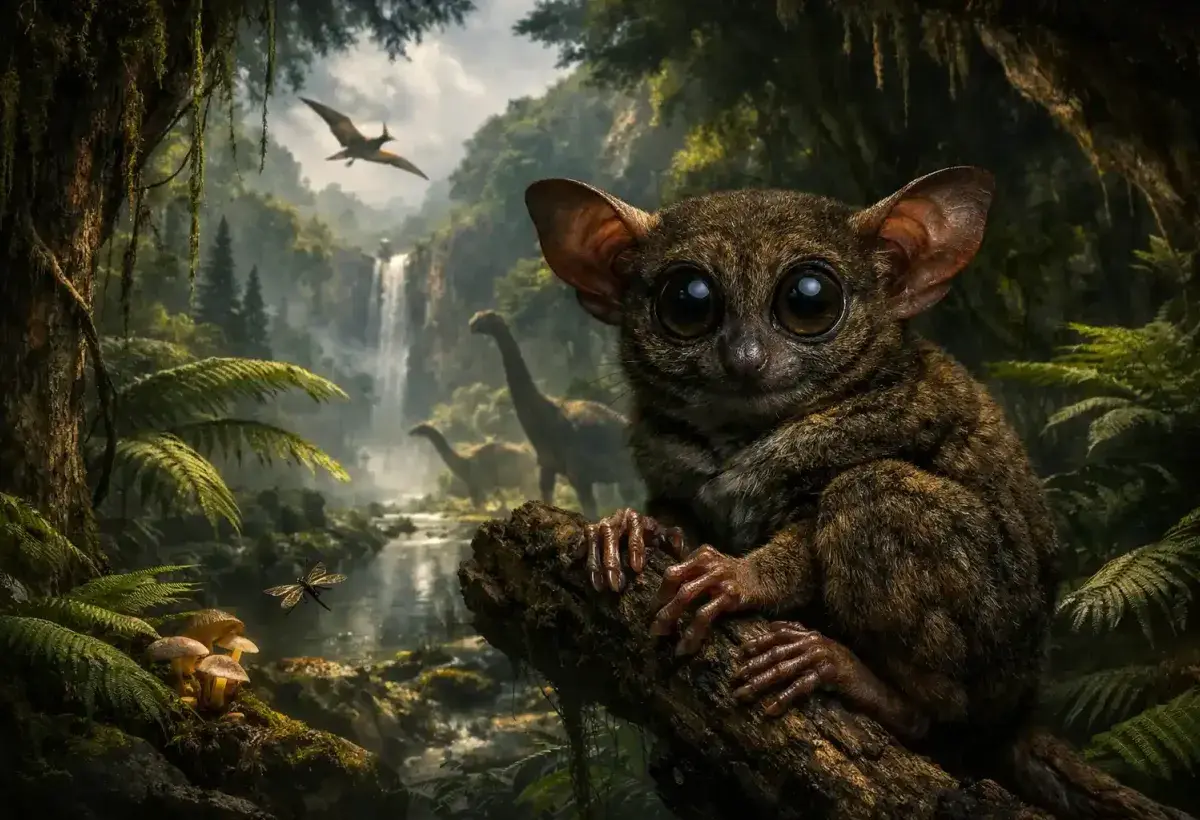
Despite their adorable appearance, tarsiers are very delicate animals emotionally and physically. They do not handle stress well at all. Loud sounds, excessive handling, bright lights, and confinement can seriously affect their health. This sensitivity is one reason wildlife experts strongly discourage treating them like tourist props or exotic pets.
In the past some tarsiers were captured for display or private ownership because people thought they looked cute and unusual. Unfortunately many of these animals became sick or died quickly due to stress. Tarsiers require quiet environments and natural habitats to survive properly. Even constant human attention can become overwhelming for them.
Wildlife sanctuaries in the Philippines and other countries now focus heavily on responsible viewing practices. Visitors are often instructed to remain quiet, avoid flash photography, and never touch the animals. Ethical sanctuaries place the health of the tarsiers above entertainment. This approach helps reduce stress while still allowing people to appreciate them from a respectful distance.
Stress can disrupt eating habits, sleeping patterns, and social behavior in tarsiers. Since they are nocturnal, daytime disturbances can be especially harmful. Constant interruptions prevent them from resting properly, weakening their overall health over time.
Habitat destruction creates another major source of stress. Deforestation forces tarsiers into smaller spaces where food becomes harder to find and predators may become more dangerous. Noise from machinery and human development can also disrupt their natural environment. Even if forests appear partially intact, environmental disturbance may still affect their survival.
Their sensitivity has made conservation efforts more challenging. Relocating or breeding tarsiers in captivity requires careful handling by specialists who understand their behavior. Successful conservation programs often depend on preserving natural habitats instead of trying to move the animals elsewhere.
Scientists studying animal stress responses find tarsiers particularly interesting because they react so strongly to environmental disruption. Their behavior highlights how some species depend on stable ecosystems much more than others. What humans consider minor disturbance can become severe stress for wildlife adapted to quiet forest life.
People sometimes assume small animals are easy to care for, but tarsiers prove the opposite can be true. Their complex needs make them unsuitable for captivity in most situations. Respecting their space and protecting their habitat are among the best ways humans can help ensure their survival in the wild.
Image
8. Baby Tarsiers Are Born Ready to Climb
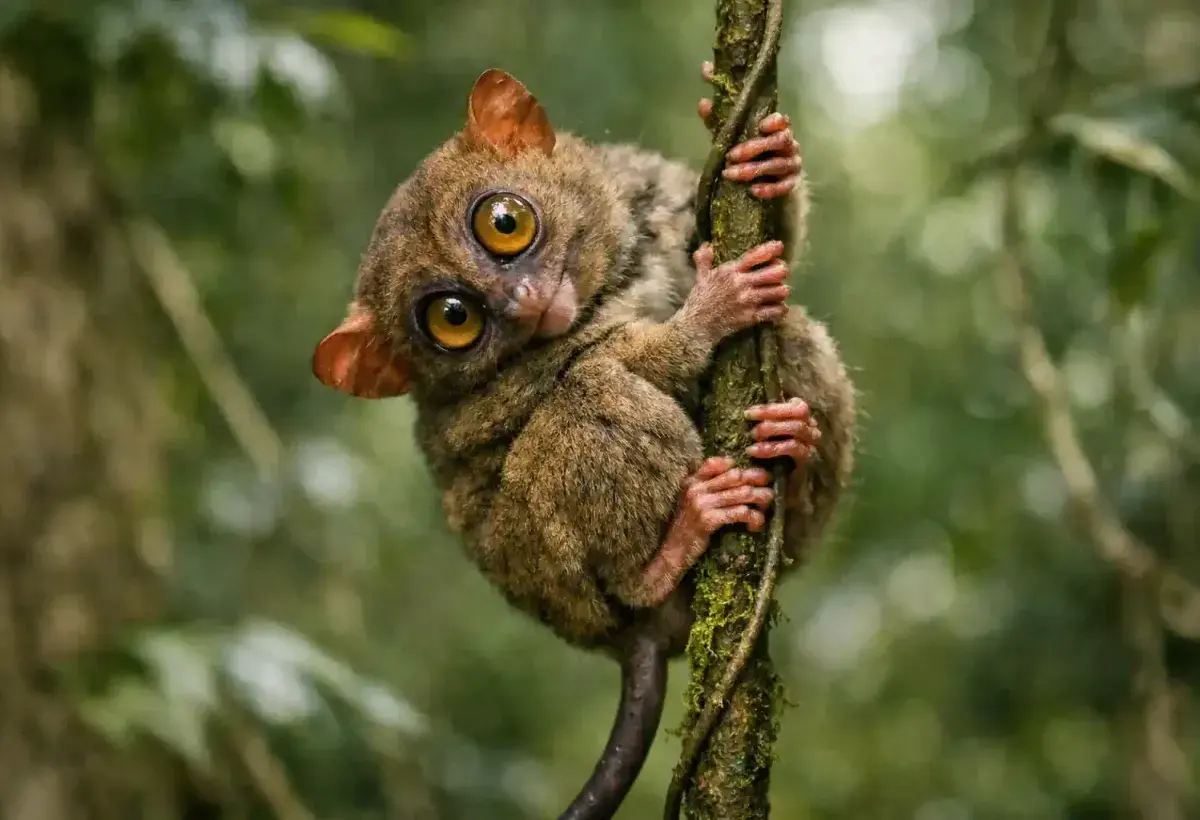
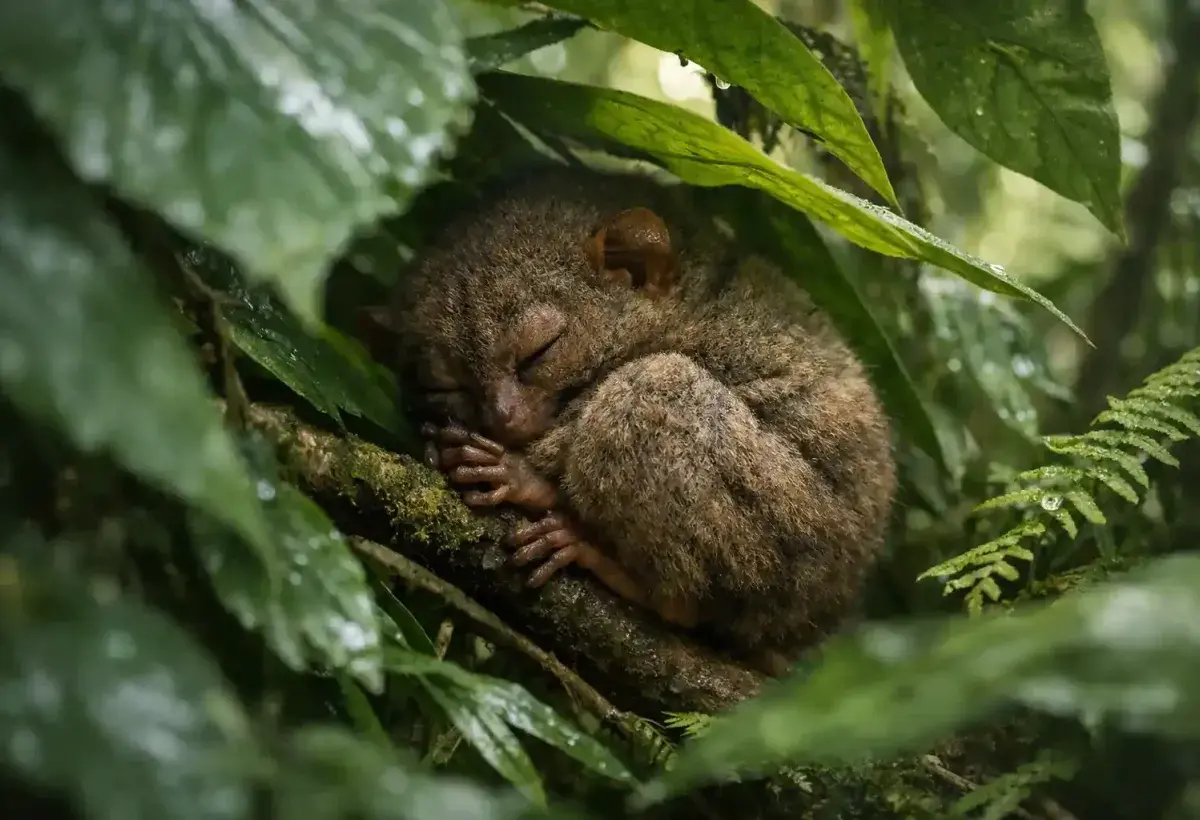
Baby tarsiers enter the world surprisingly prepared for survival. Unlike many newborn mammals that are helpless for long periods, infant tarsiers are born with fur, open eyes, and the ability to cling to branches shortly after birth. This early development is extremely important in rainforest environments where danger can appear quickly.
Mother tarsiers usually give birth to a single baby at a time. The infant spends much of its early life attached to the mother while she moves through trees searching for food. Because tarsiers leap frequently between branches, strong gripping ability is essential even for newborns.
Young tarsiers develop coordination rapidly. Within a short period they begin exploring nearby branches and practicing climbing movements. Their natural instincts help them learn how to navigate the forest canopy safely. Watching a tiny baby tarsier cling tightly to vines or tree bark is both impressive and adorable.
Mothers remain protective and attentive during the early stages of development. Communication between mother and infant includes vocal calls and physical contact. In dense forests where visibility is poor, maintaining connection is essential for survival.
Their early independence reflects the demanding nature of rainforest life. Predators, environmental hazards, and nighttime hunting conditions require young tarsiers to mature quickly. Evolution favored infants capable of gripping, climbing, and reacting to danger soon after birth.
Scientists studying primate development find tarsiers interesting because their growth patterns differ from many other primates. The balance between early physical ability and continued maternal care provides insight into how different species adapted to environmental pressures.
Baby tarsiers also contribute to the strong emotional reaction many people have toward the species. Their enormous eyes and tiny size make them appear almost toy like. Photographs of infants clinging to branches often become popular online because they look so unusual and expressive.
However, experts remind people that wild baby tarsiers should never be handled or removed from their environment for photography. Human interference can stress both mother and infant. Responsible wildlife tourism focuses on observation rather than direct interaction.
The survival of baby tarsiers depends heavily on healthy forests with enough food and shelter. When habitats disappear, young animals become especially vulnerable. Protecting rainforest ecosystems therefore plays a direct role in ensuring future generations of these remarkable primates continue to thrive.
Image
9. Tarsiers Are Found Mainly in Southeast Asia
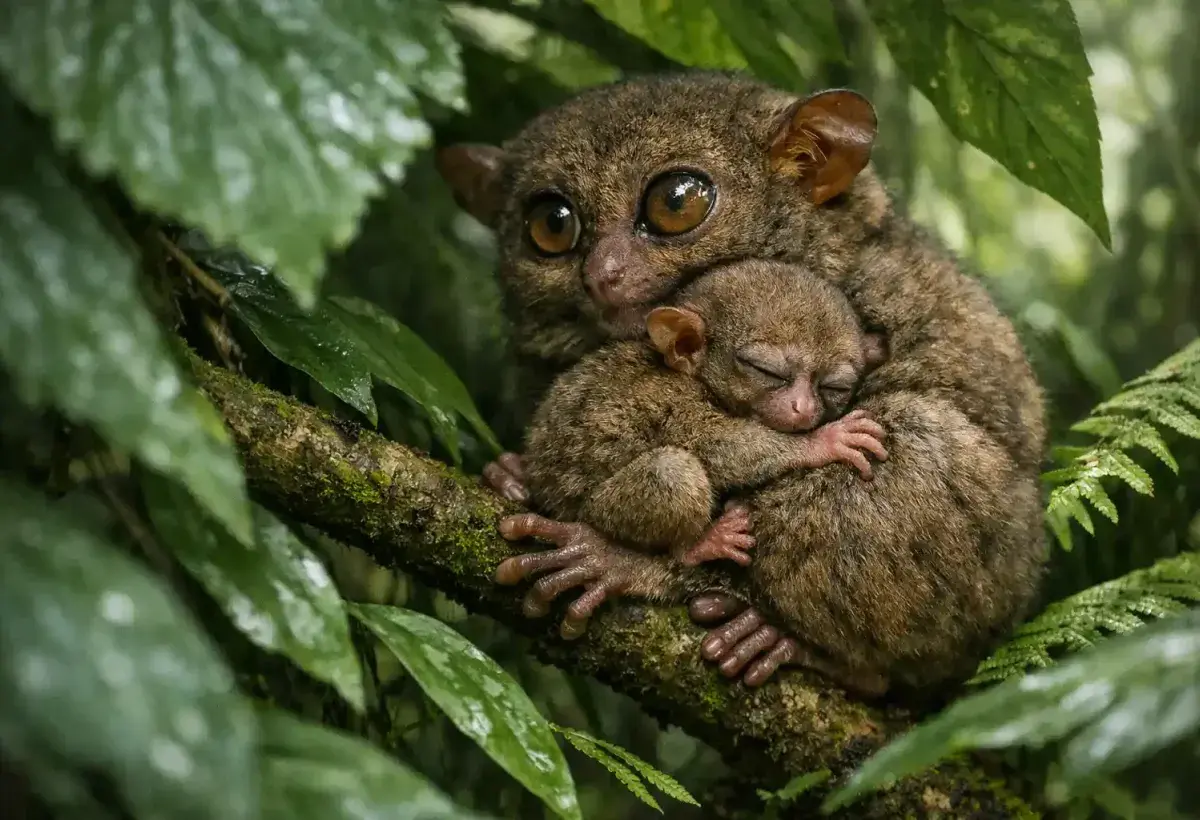
Tarsiers may be famous online, but in the wild they are found only in limited parts of Southeast Asia. Different species live in countries such as the Philippines, Indonesia, Malaysia, and Brunei. Their restricted range makes them unique regional treasures and important symbols of biodiversity.
The Philippine tarsier is among the best known species and has become an iconic animal in the country. It appears in tourism campaigns, educational materials, and wildlife conservation efforts. Many visitors travel specifically to places like Bohol hoping to see these tiny primates in protected sanctuaries.
Different tarsier species vary slightly in appearance and behavior depending on where they live. Some inhabit dense lowland forests while others prefer higher elevation environments. Despite these differences, most species rely heavily on healthy tropical forests with abundant insects and safe climbing areas.
Because their range is limited, habitat destruction creates serious risks. Logging, agricultural expansion, and urban development continue reducing forest areas across Southeast Asia. As habitats become fragmented, tarsier populations may become isolated from one another, making survival more difficult over time.
Conservation organizations work with local communities to protect forests and promote sustainable tourism. Responsible ecotourism can provide economic benefits while encouraging preservation of natural habitats. In some areas local pride in tarsiers has helped strengthen conservation efforts.
The limited geographic range of tarsiers also increases scientific interest in them. Researchers travel to Southeast Asia to study their behavior, genetics, and ecology in natural environments. Since many species remain difficult to observe in the wild, there is still much to learn about them.
Rainforest ecosystems supporting tarsiers are among the richest environments on Earth. Protecting these habitats benefits not only tarsiers but also countless other species of birds, insects, reptiles, and plants. Conservation efforts therefore have broader environmental importance beyond a single animal.
For many people outside Southeast Asia, seeing a tarsier in person remains a rare experience. This rarity adds to their mystery and appeal. They are not common zoo animals and do not thrive easily outside their native environments. Their survival remains closely tied to the forests where they evolved over millions of years.
As awareness grows globally, more people are beginning to recognize tarsiers not just as cute internet animals but as important parts of Southeast Asian natural heritage deserving protection and respect.
Image
10. Tarsiers Look Cute but They Are Skilled Predators
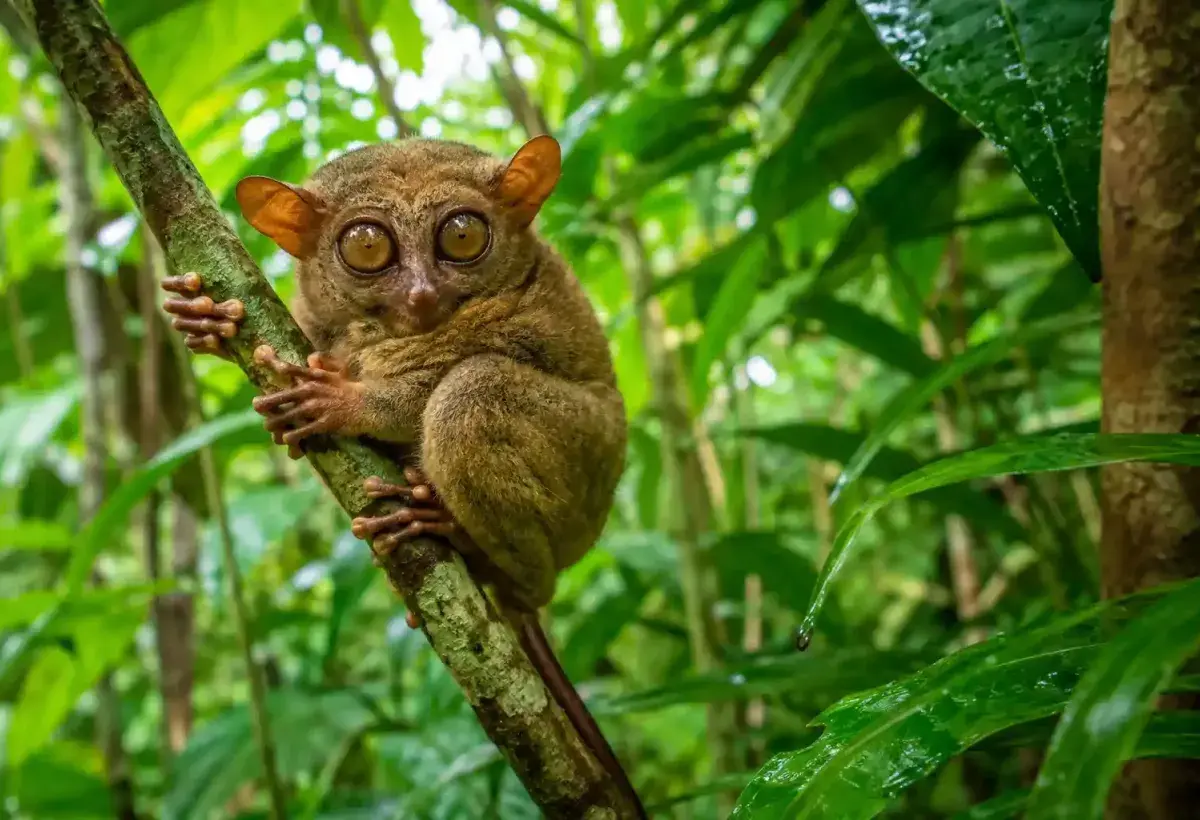
Many people see tarsiers as adorable little animals because of their huge eyes and tiny size. What surprises most people is that behind that cute appearance is a highly efficient predator. Tarsiers are fast, focused hunters capable of catching live prey with remarkable precision.
Their hunting strategy combines patience, stealth, and explosive movement. A tarsier may remain motionless for several minutes while carefully observing nearby insects or small animals. Once the opportunity appears, it strikes with sudden speed. Their powerful legs launch them toward prey before the victim has much chance to react.
Sharp teeth and strong jaws allow them to handle struggling prey effectively. Unlike herbivorous primates that spend time gathering fruit or leaves, tarsiers actively pursue moving targets. This predatory lifestyle influences nearly every part of their anatomy including their vision, hearing, and movement.
Their enormous eyes help them detect tiny movements in darkness. Sensitive hearing allows them to notice faint sounds from insects hidden among leaves. Long fingers and gripping toes help them cling securely to branches while preparing to attack. Every feature works together to support hunting success.
Watching a tarsier hunt in the wild can completely change how people perceive them. They no longer appear simply cute or fragile. Instead they resemble highly specialized nocturnal predators perfectly adapted to rainforest life.
Scientists often describe tarsiers as evolutionary specialists because their survival depends on a narrow but effective set of skills. While some animals survive by adapting to many environments, tarsiers became masters of a very specific ecological role. Their predatory behavior is a major reason they have persisted for millions of years.
This contrast between appearance and behavior is part of what makes them so fascinating. One moment they appear gentle and almost cartoon like while sitting quietly on a branch. The next moment they transform into lightning fast hunters chasing prey through darkness.
Their popularity online sometimes oversimplifies them into cute mascots, but real tarsiers are far more complex. They are ancient primates, nocturnal hunters, agile climbers, and survivors of changing worlds. Understanding their true nature helps people appreciate them beyond appearance alone.
Tarsiers remind us that some of the most extraordinary animals on Earth are also among the smallest. Hidden in the forests of Southeast Asia, these tiny predators continue living lives filled with mystery, skill, and evolutionary wonder.
Image
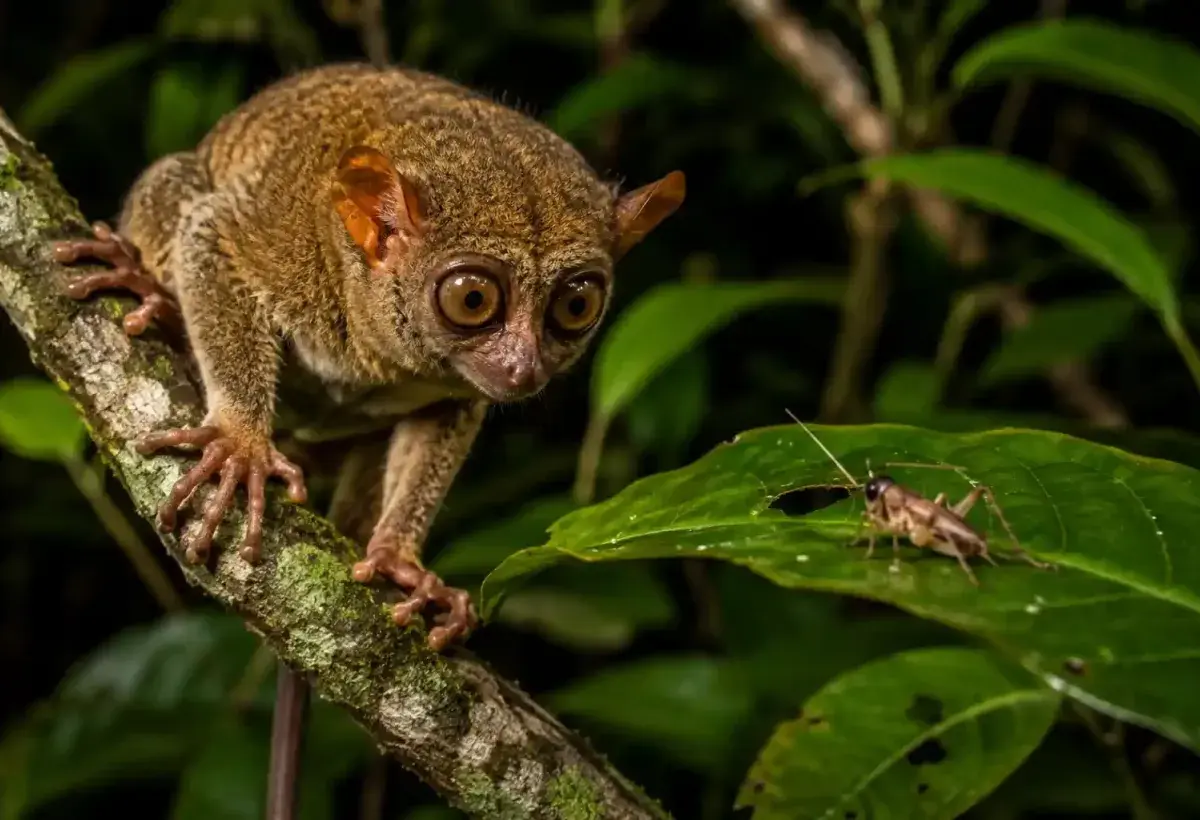
Tarsiers may be small enough to fit in the palm of a hand, but they possess some of the most remarkable abilities found anywhere in the animal kingdom. From giant eyes adapted for darkness to powerful legs capable of launching them through rainforest trees, every part of their body reflects millions of years of specialized evolution. They are proof that nature does not need large size to create extraordinary creatures.
Part of what makes tarsiers so unforgettable is the contrast between their appearance and behavior. At first they seem almost toy like with oversized eyes and tiny faces, yet beneath that cute exterior exists a fast and capable predator. They hunt with precision, communicate in unusual ways, and survive in some of the most complex forest ecosystems on Earth. The more scientists learn about them, the stranger and more fascinating they become.
Their story also highlights the importance of conservation. Tarsiers depend heavily on healthy rainforest environments, and many populations face growing threats from habitat destruction, noise, and human disturbance. Because they are so sensitive to stress and environmental change, protecting them requires more than simple admiration. It requires preserving the forests and ecosystems that allow them to survive naturally.
For people in Southeast Asia, especially in the Philippines, tarsiers have become symbols of wildlife uniqueness and natural heritage. Visitors from around the world travel hoping to see one quietly clinging to a branch beneath the rainforest canopy. When observed respectfully in their natural environment, tarsiers leave a lasting impression that photographs alone cannot fully capture.
Even after decades of scientific research, these tiny primates still hold mysteries waiting to be explored. Their ancient lineage, unusual anatomy, and specialized behaviors continue inspiring researchers and animal lovers alike. Tarsiers remind us that some of the most incredible stories in nature belong not to giant predators or massive mammals, but to tiny creatures hidden quietly in the darkness of tropical forests.