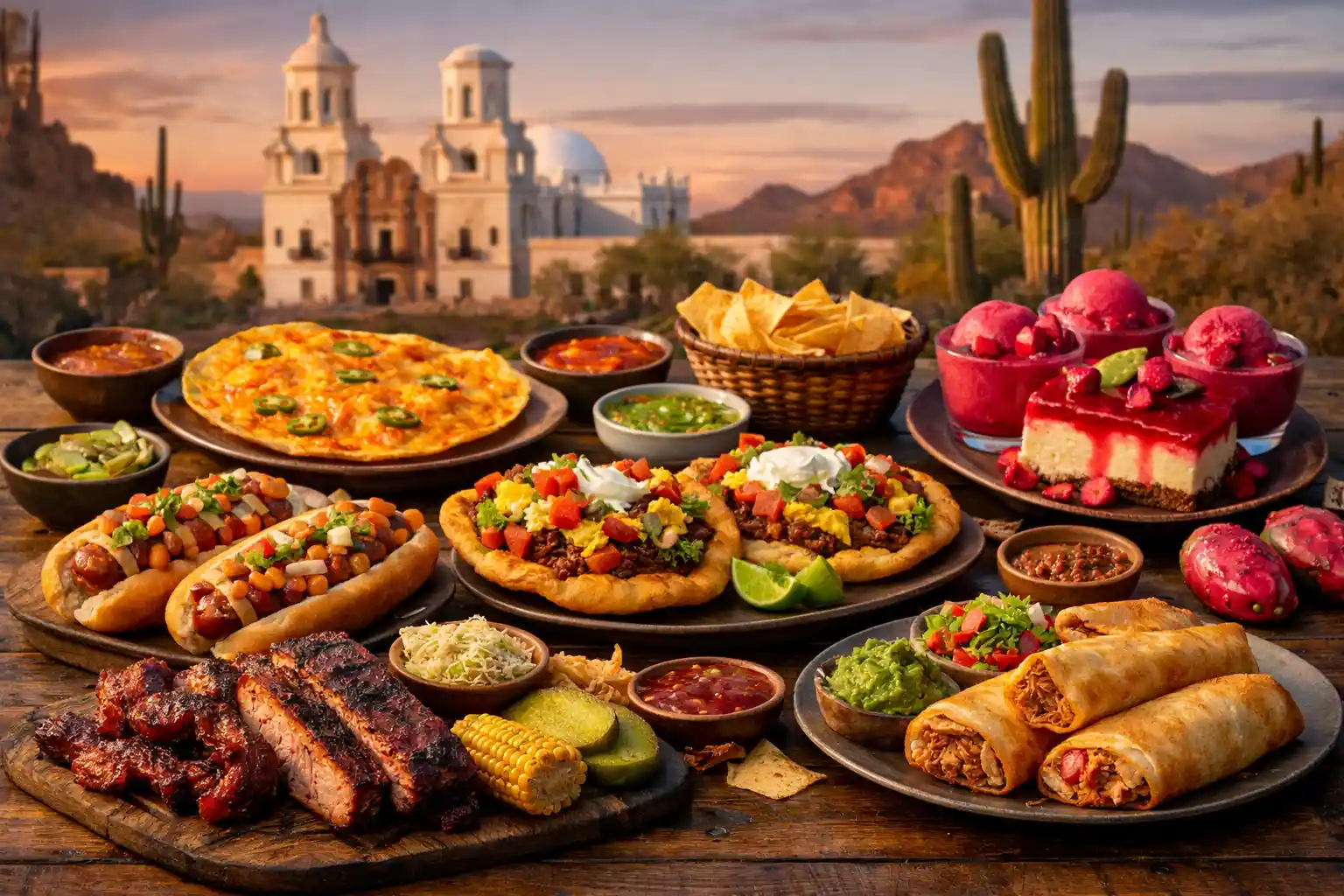
Arizona is often celebrated for the Grand Canyon, red rock landscapes, and endless desert skies, but the state also offers one of the most distinctive food cultures in America. The flavors found here are shaped by Native American traditions, Mexican heritage, ranching communities, and generations of people who learned how to cook in a hot and dry environment. The result is a cuisine that feels both rugged and deeply comforting, with ingredients such as chiltepin peppers, mesquite, prickly pear, and fresh tortillas appearing again and again across the state.
Many visitors arrive expecting tacos and barbecue, only to discover dishes that exist almost nowhere else. A Sonoran hot dog wrapped in bacon and piled high with beans and salsa is unlike any ballpark hot dog in the country. A Navajo taco served on fluffy fry bread carries generations of history in every bite. Even a simple cheese crisp reveals how Arizona transformed familiar ingredients into something uniquely local.
What makes Arizona food special is not only the ingredients but also the stories behind them. Indigenous communities continue to preserve ancient agricultural traditions. Border towns blend Mexican and American flavors in ways that cannot be replicated elsewhere. Desert plants once considered survival foods have become celebrated ingredients in restaurants from Tucson to Phoenix. Eating through Arizona is a journey across cultures, landscapes, and centuries of history.
This guide highlights ten foods that truly belong to the Grand Canyon State. Some are famous enough to draw food lovers from around the world, while others remain beloved local secrets. Together they create a portrait of Arizona that goes far beyond the postcard images of canyons and cacti. If you want to understand the state through its most memorable flavors, these are the dishes worth seeking out first.
1. Sonoran Hot Dog
Image
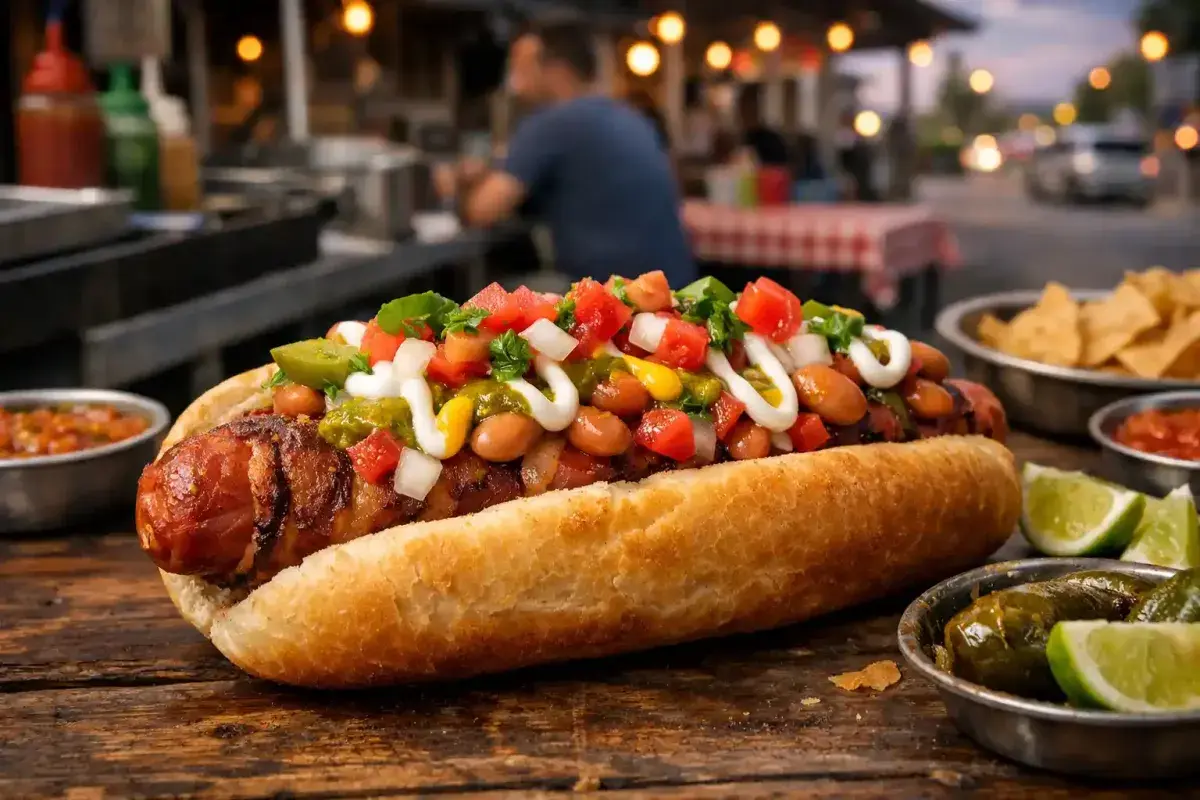
If Arizona had an official street food, the Sonoran hot dog would be the leading candidate. This famous creation originated in the border region around Tucson and draws strong influence from the Mexican state of Sonora. At first glance it may look like an oversized hot dog, but the experience is completely different from anything served at a baseball stadium. The sausage is wrapped in bacon before cooking, creating a smoky and crispy exterior that immediately sets it apart.
The hot dog is tucked into a soft bolillo style bun that is slightly sweet and sturdy enough to hold an impressive collection of toppings. Traditional versions include pinto beans, diced tomatoes, onions, mustard, mayonnaise, and a variety of salsas. Some vendors add jalapeño sauce or roasted peppers for extra heat. The combination sounds unusual, yet every ingredient has a purpose. The beans add richness, the tomatoes bring freshness, and the sauces tie everything together into a satisfying handheld meal.
Walking through Tucson in the evening, the aroma of bacon sizzling on street carts is impossible to miss. Locals often debate which stand serves the best version, and many visitors build entire trips around sampling several. The dish has become so closely associated with the city that food writers frequently describe it as one of the defining flavors of Southern Arizona.
Part of the appeal is the balance between comfort and boldness. The Sonoran hot dog feels familiar enough for anyone to enjoy, yet the combination of textures and flavors is unmistakably regional. The crisp bacon contrasts with the soft bun, while creamy mayonnaise meets spicy salsa in every bite. It is messy, filling, and deeply satisfying.
Unlike many famous foods that become watered down as they spread, the best Sonoran hot dogs remain tied to their desert roots. Tucson vendors continue to prepare them in the traditional style, often using recipes and techniques passed down through families. For many Arizonans, this is more than a snack. It is a symbol of the state’s border culture and a delicious reminder that some of the country’s most memorable foods are found far from the usual culinary capitals.
2. Navajo Taco
Image
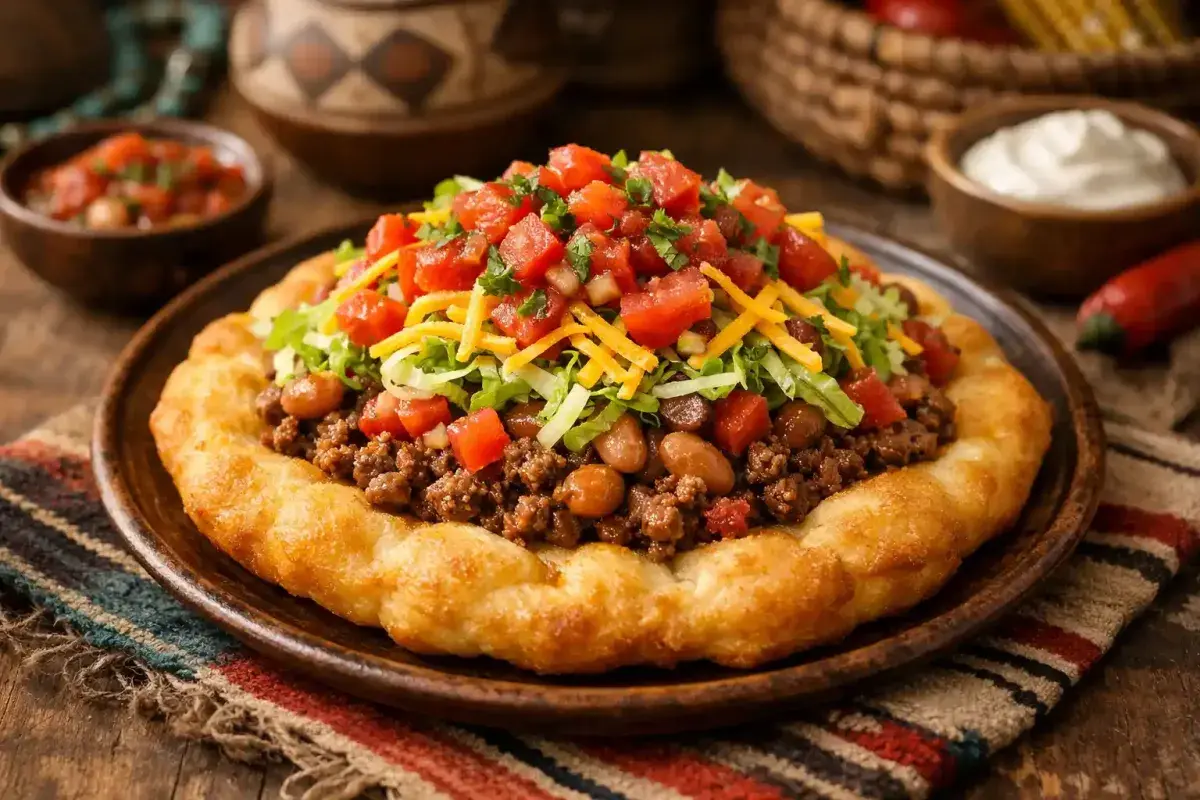
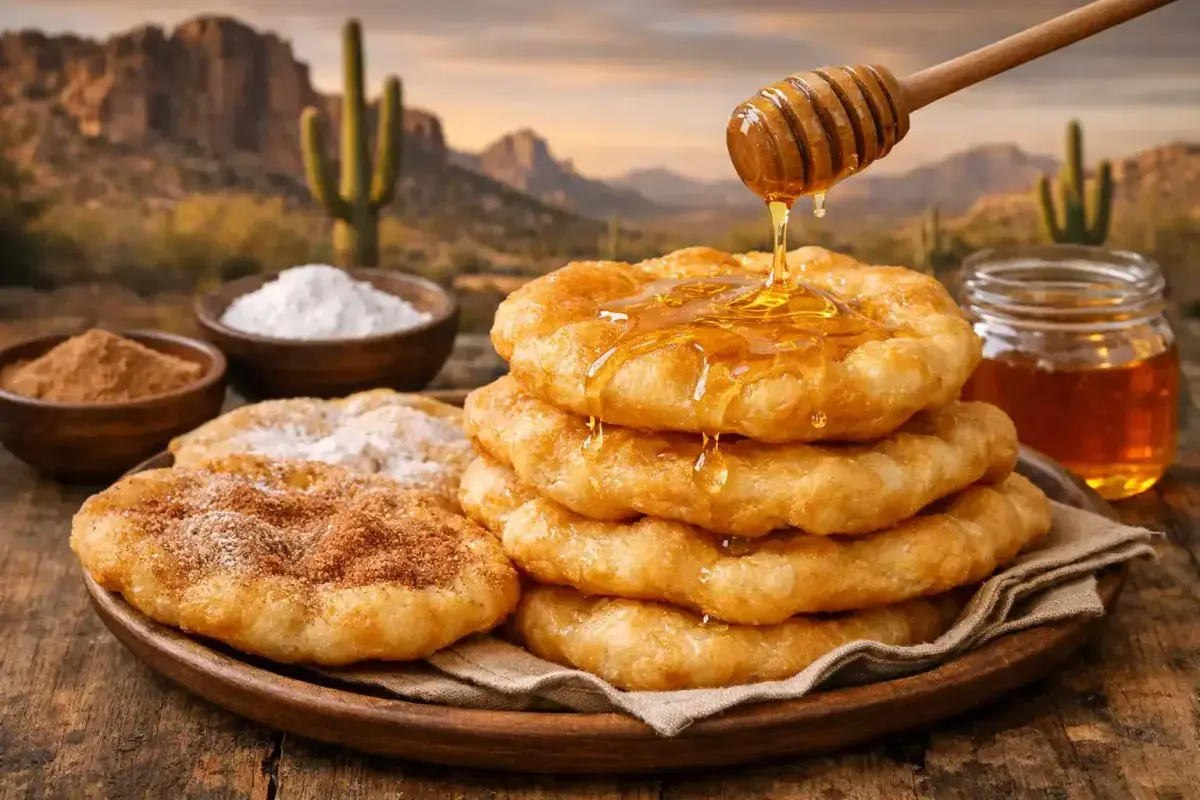
The Navajo taco is one of the most meaningful dishes in Arizona because it connects food with living Indigenous history. Built on a base of fry bread, this hearty meal is commonly topped with seasoned beef, beans, lettuce, tomatoes, cheese, and salsa. The result resembles a taco, but the bread changes the experience completely. Instead of a crisp shell or soft tortilla, each bite combines airy, chewy fry bread with savory toppings.
Fry bread carries a complicated story. It emerged during periods of hardship when Native communities were forced to rely on government issued ingredients such as flour, salt, and lard. Over time, however, many families transformed those limited supplies into a beloved food that became part of gatherings, celebrations, and everyday meals. Today the Navajo taco represents resilience as much as flavor.
Across northern Arizona, particularly near the Navajo Nation, travelers can find fry bread stands serving generous portions that are large enough to share. The bread is usually prepared fresh to order. Watching the dough puff and turn golden in hot oil is part of the experience. When topped with warm beans and seasoned meat, the fry bread remains slightly crisp at the edges while staying soft in the center.
Many restaurants offer their own variations. Some feature shredded beef, green chile, or vegetarian toppings, while others keep the recipe simple and traditional. No matter the version, the fry bread remains the star. Its mild flavor absorbs the juices from the toppings, creating a rich and comforting meal that feels uniquely Southwestern.
Visitors often describe the Navajo taco as unexpectedly filling. The combination of bread, beans, meat, and vegetables creates a complete meal rather than a quick snack. It is the kind of dish that encourages people to slow down, sit with family or friends, and appreciate the cultural heritage behind the plate.
In Arizona, eating a Navajo taco is not just about trying something new. It is an opportunity to experience a food tradition that continues to hold deep significance for Indigenous communities across the region. Every fresh piece of fry bread carries generations of memory, making this dish one of the most distinctive and meaningful foods in the state.
3. Chimichanga
Image
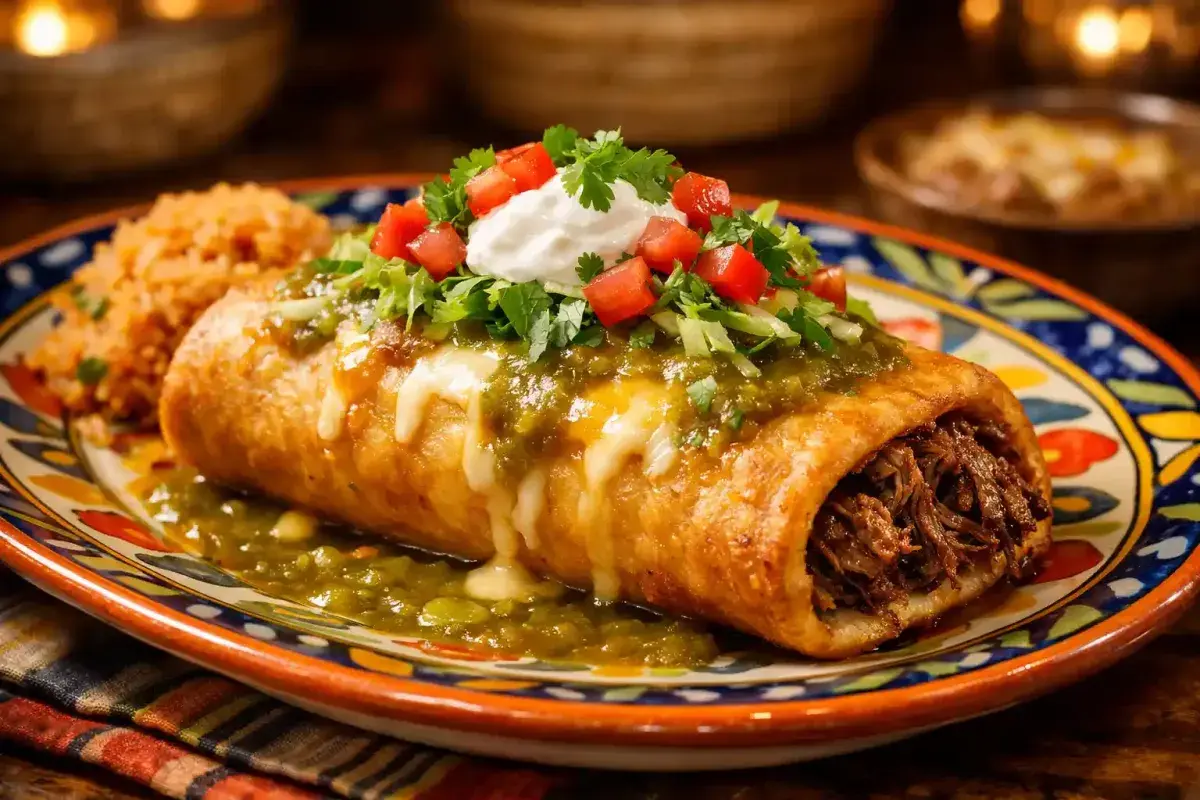
Few foods inspire as much debate in Arizona as the chimichanga. Many locals proudly claim that this deep fried burrito was invented in the state, with several restaurants competing for the honor. Whether the story began in Tucson or Phoenix, the chimichanga has become one of Arizona’s signature dishes and a staple of Southwestern restaurant menus.
The basic idea is simple. A flour tortilla is filled with meat, beans, cheese, or other ingredients, then folded tightly and fried until the outside becomes golden and crisp. The magic happens in the contrast between the crunchy shell and the soft, flavorful filling inside. Traditional Arizona versions often feature shredded beef or chicken, though modern restaurants offer everything from green chile pork to seafood.
Once fried, the chimichanga is usually topped with sauce, melted cheese, sour cream, and fresh lettuce or tomatoes. Some restaurants serve it smothered in green chile sauce, while others let the crisp tortilla remain uncovered so diners can hear the crackle with each bite. The portion is typically generous, making it a meal that satisfies even the hungriest traveler.
What makes the Arizona chimichanga special is its connection to the state’s border culture. It combines the familiar comfort of a burrito with the indulgence of deep frying, creating a dish that feels both traditional and celebratory. Families often order chimichangas for birthdays, weekend dinners, or gatherings with friends because the meal feels a little more festive than an ordinary burrito.
The origin stories add to the charm. One popular tale describes a cook accidentally dropping a burrito into hot oil and creating a new favorite by mistake. Whether or not the story is true, it captures the spirit of Arizona cuisine, where creativity and practicality often come together in unexpected ways.
For first time visitors, the chimichanga offers an accessible introduction to Southwestern flavors. The crisp tortilla, savory filling, and rich sauces are instantly appealing, yet the dish still feels distinctly local. In a state filled with memorable foods, the chimichanga remains one of the clearest examples of Arizona turning a simple idea into something iconic.
4. Cheese Crisp
Image
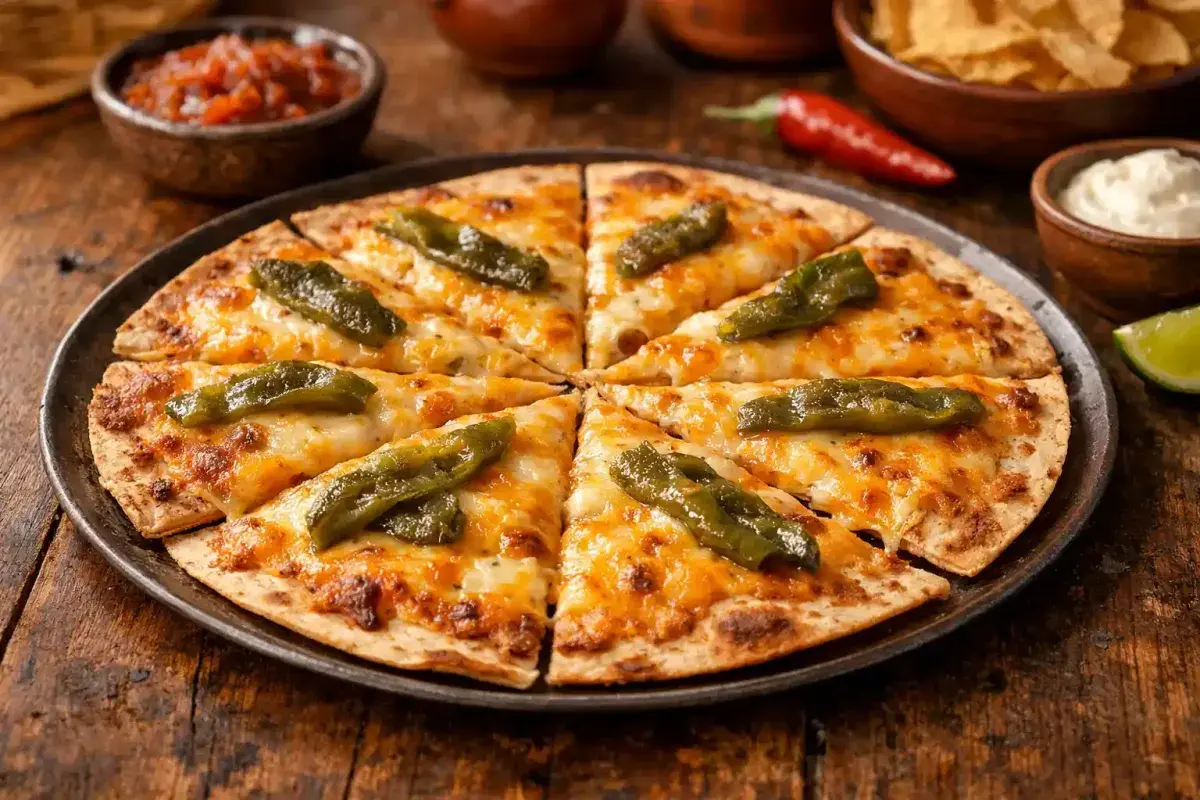
Visitors sometimes mistake the Arizona cheese crisp for a quesadilla, but locals quickly explain that the two dishes are not the same. A cheese crisp begins with a large flour tortilla baked or toasted until it becomes thin and crunchy. Melted cheese is spread across the top, and the finished dish is cut into wedges much like a pizza. The result is lighter, crispier, and more snackable than a folded quesadilla.
The cheese crisp became popular in Arizona restaurants during the twentieth century and remains a beloved appetizer throughout the state. Many longtime residents grew up sharing one before the main meal arrived. The simplicity of the dish is part of its charm. A well made cheese crisp needs only a crisp tortilla, quality cheese, and careful baking to achieve the perfect balance of crunch and melt.
Restaurants often add green chiles, onions, or chorizo, but purists argue that a classic version should keep the focus on the cheese and the texture of the tortilla. The edges become deeply crisp while the center stays slightly chewy beneath the melted cheese. Each wedge offers a satisfying crackle that is impossible to achieve with a traditional quesadilla.
Because it is easy to share, the cheese crisp has become a social food. Families order one for the table while deciding on entrées, and friends gather around it during casual lunches or game days. The dish appears on menus from neighborhood Mexican restaurants to historic Tucson establishments that have served generations of Arizonans.
What surprises many visitors is how memorable such a simple dish can be. The cheese crisp highlights the importance of tortillas in Arizona cuisine. Flour tortillas in the state are often larger and softer than those found elsewhere, and when baked into a crisp base they develop a flavor that is both nutty and buttery.
In a region known for bold chiles and smoky meats, the cheese crisp proves that simplicity can still become iconic. It is not flashy, and it rarely appears on national food lists, yet many locals consider it one of the true tastes of home. For travelers seeking foods that Arizonans genuinely love, this crunchy, cheesy classic deserves a place near the top of the list.
5. Prickly Pear Candy and Syrup
Image
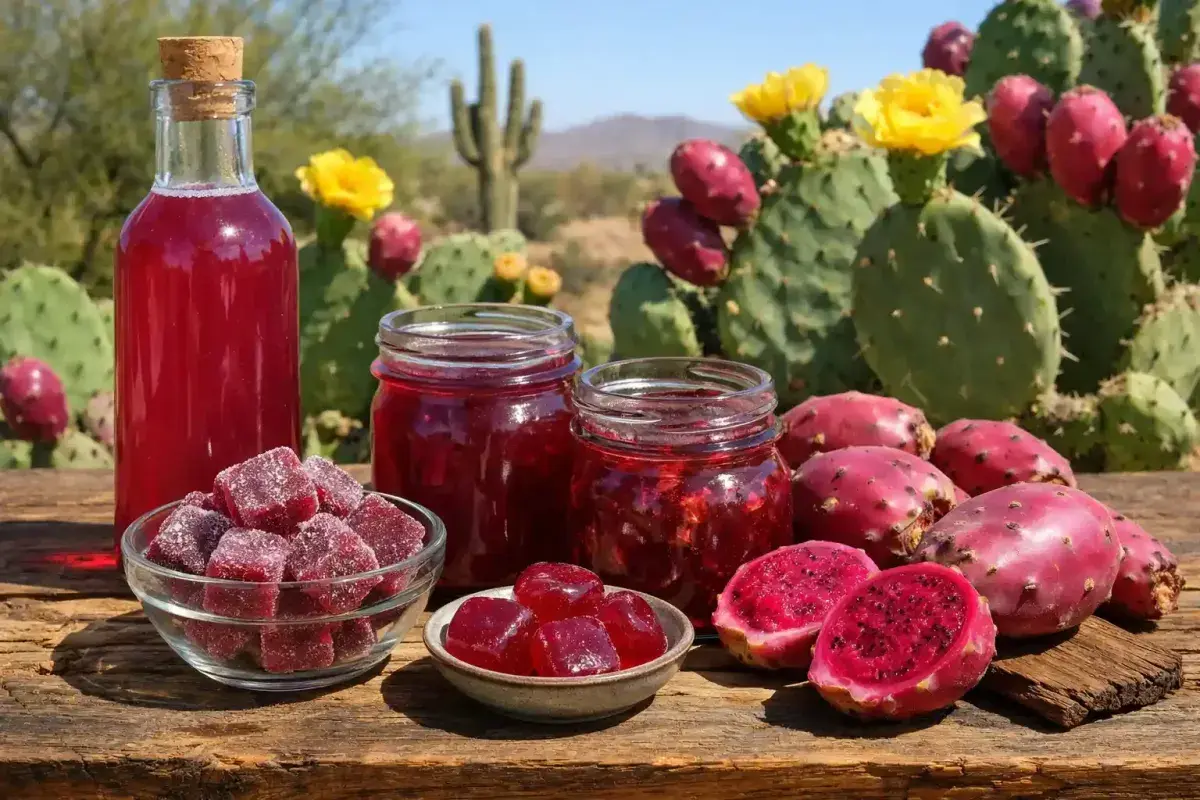
The prickly pear cactus is one of the most recognizable plants in the Arizona desert, and its fruit has become one of the state’s signature flavors. Bright pink or deep magenta prickly pear syrup appears in restaurants, coffee shops, and cocktail bars across Arizona, while candies and jellies made from the fruit fill gift shops from Phoenix to Sedona.
Many first time visitors expect the flavor to be intensely cactus like, but prickly pear is surprisingly fruity. It is often described as a blend of watermelon, berry, and citrus with a gentle floral note. The vivid color makes it instantly recognizable, and the taste captures the feeling of the desert in a way few ingredients can.
Harvesting prickly pear fruit requires care because the cactus is covered with tiny spines called glochids. Traditionally, the fruit is collected in late summer, cleaned thoroughly, and cooked down into juice or syrup. That syrup becomes the base for lemonades, iced teas, desserts, and even savory glazes for meat.
Prickly pear candy is especially popular with travelers looking for an edible souvenir. The candies range from soft chews to hard sweets and often feature the fruit’s natural pink color. Local producers also make jams, honey blends, and pancake syrups that showcase the ingredient in different ways.
What makes prickly pear special is its deep connection to the desert landscape. Long before it became a tourist favorite, Indigenous peoples used the fruit for food and drink. Modern Arizona cuisine continues that tradition by incorporating prickly pear into everything from margaritas to cheesecakes.
Trying prickly pear is one of the easiest ways to taste the Arizona desert itself. The flavor is refreshing during the intense summer heat, and the brilliant color instantly brightens any table. While many Southwestern ingredients can be found across the region, prickly pear remains particularly associated with Arizona’s cactus filled landscapes and outdoor culture.
For visitors who want a food souvenir that truly represents the Grand Canyon State, a bottle of prickly pear syrup or a bag of prickly pear candy is hard to beat. It is portable, distinctive, and carries the unmistakable flavor of the Sonoran Desert wherever it goes.