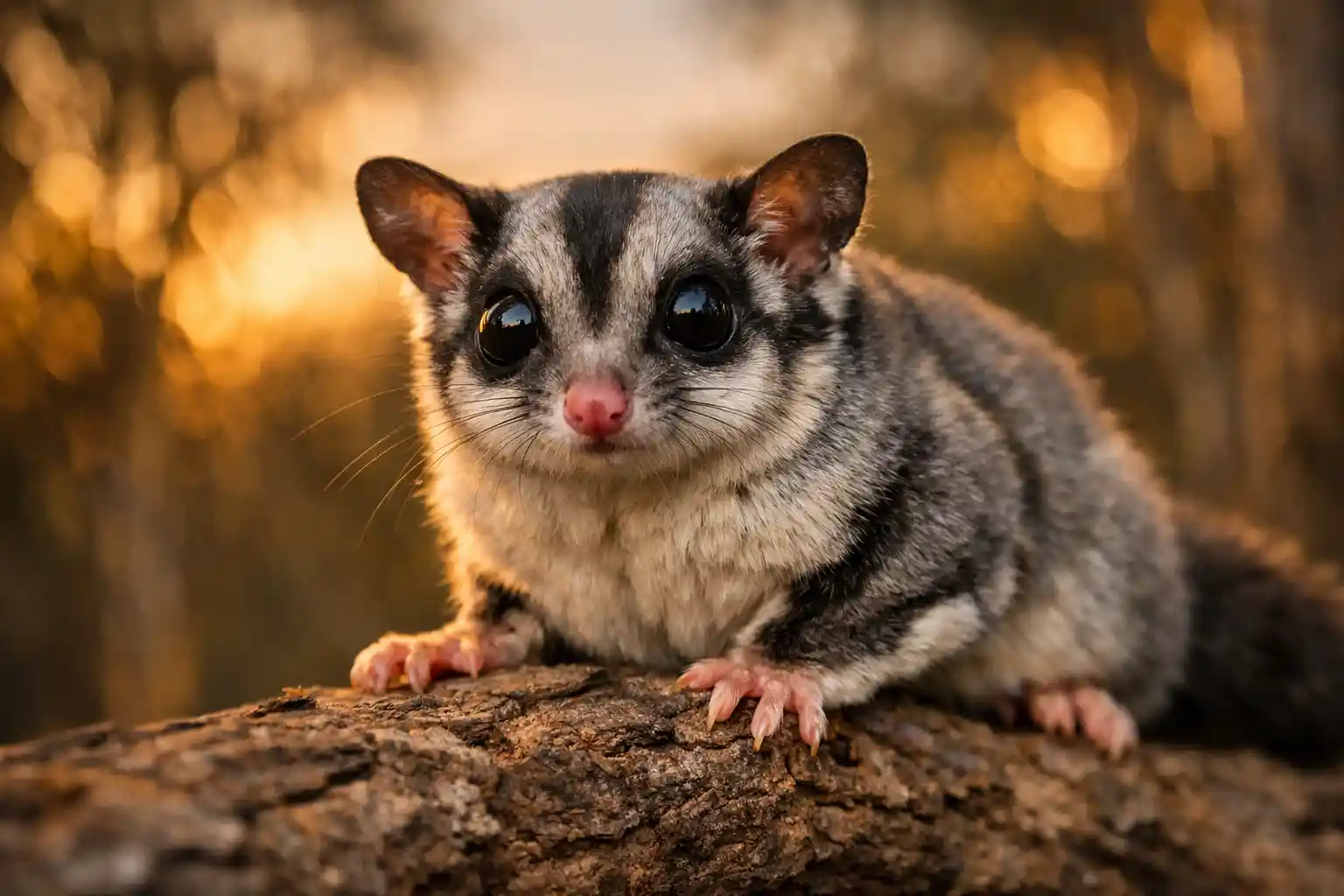
Sugar gliders are among the most fascinating animals found in the forests of Australia, New Guinea, and nearby islands. These tiny marsupials may look delicate, but they possess remarkable abilities that help them survive in the wild. With their large eyes, soft gray fur, curious personalities, and impressive gliding skills, sugar gliders have captured the attention of animal lovers around the world. Whether seen in nature documentaries, wildlife parks, or educational exhibits, they often leave people amazed by what such a small creature can accomplish.
Many people assume sugar gliders are related to flying squirrels because both animals glide through the air. In reality, they belong to completely different animal groups. Sugar gliders are marsupials, meaning mothers carry their young in a pouch after birth. This places them in the same broad family group as kangaroos and koalas. Their unique biology and behavior make them an exciting subject for scientists who study animal adaptation and survival.
Life in the forest canopy requires special skills, and sugar gliders have developed many of them over thousands of years. They spend most of their time high above the ground where they search for food, avoid predators, and interact with members of their family group. Their ability to glide allows them to travel efficiently between trees while conserving energy. Their excellent night vision helps them navigate the darkness, and their social nature allows them to cooperate with one another in ways that improve their chances of survival.
Beyond their physical abilities, sugar gliders are intelligent and highly communicative. They use sounds, scent markings, and body language to share information with other members of their colony. Their family bonds are strong, and they often spend time grooming and caring for one another. These behaviors reveal a level of social complexity that many people do not expect from such a small animal.
The more researchers learn about sugar gliders, the more impressive they become. From their aerial abilities to their unique parenting methods, every aspect of their lives offers something interesting to discover.
1. Sugar Gliders Can Glide Amazing Distances
Image
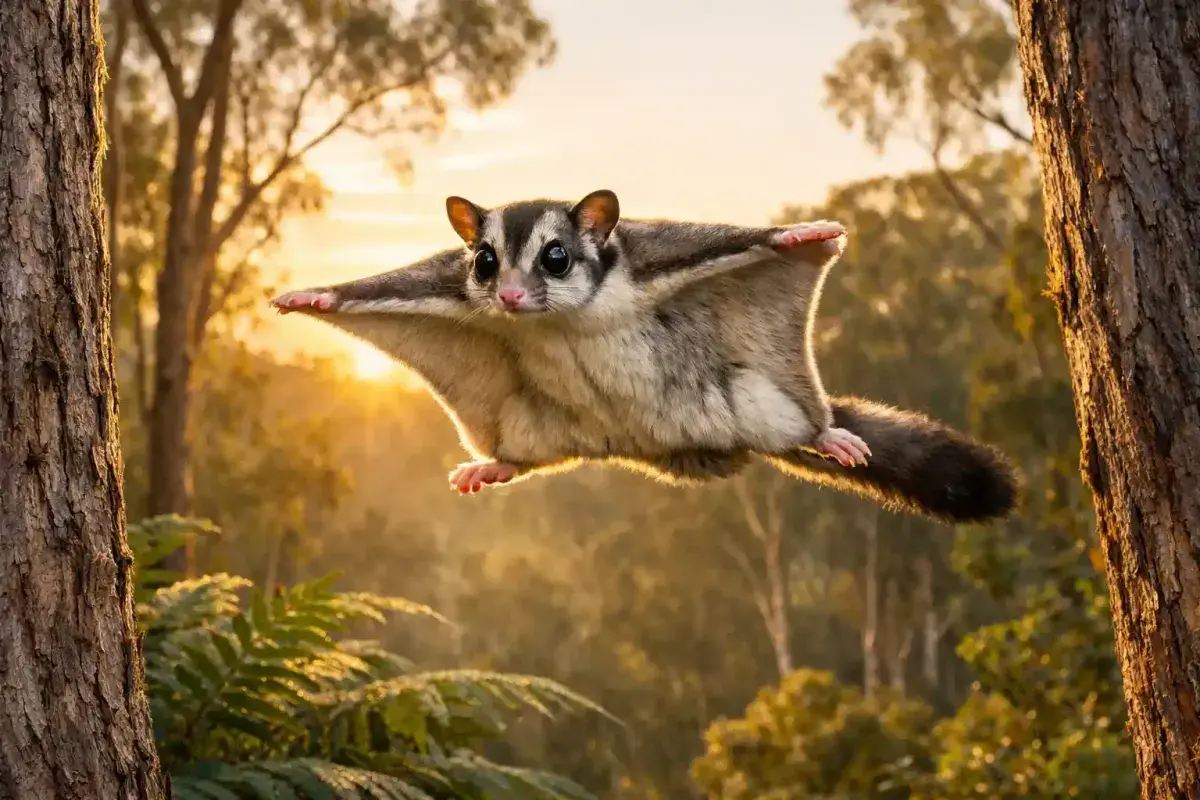
The ability to glide is the feature that makes sugar gliders famous around the world. Unlike birds or bats, they do not have wings. Instead, they possess a special membrane of skin that stretches from their front legs to their back legs. When they leap from a tree branch and spread their limbs, this membrane catches the air and allows them to glide gracefully through the forest.
A sugar glider can travel impressive distances while remaining airborne. In the wild, some glides can exceed one hundred feet depending on the height of the launch point and environmental conditions. This allows the animal to move efficiently between trees without having to climb down and back up again. The ability saves energy and reduces exposure to predators that may be waiting on the ground.
Steering during flight requires remarkable control. Sugar gliders adjust their body position and use their long tails to help maintain balance and direction. Small changes in posture can affect their path through the air, allowing them to target specific branches or tree trunks. Researchers studying their movement have noted how accurately they can land even after covering considerable distances.
Gliding is especially useful when searching for food. Forest resources are often spread across large areas, and moving from tree to tree quickly gives sugar gliders access to nectar, sap, insects, and fruit without wasting valuable energy. This adaptation has played a major role in their survival for thousands of years.
Young sugar gliders must learn how to glide successfully. As they mature, they begin practicing shorter jumps before attempting longer flights. Over time, they develop the confidence and skill needed to navigate the forest canopy with precision. Watching a young sugar glider improve its gliding ability provides insight into how important this behavior is for survival.
Their aerial movements may appear effortless, but they represent a highly specialized adaptation shaped by evolution. Few mammals possess such effective gliding abilities, making sugar gliders one of nature's most remarkable examples of life in the treetops.
2. They Are Marsupials Like Kangaroos
Image
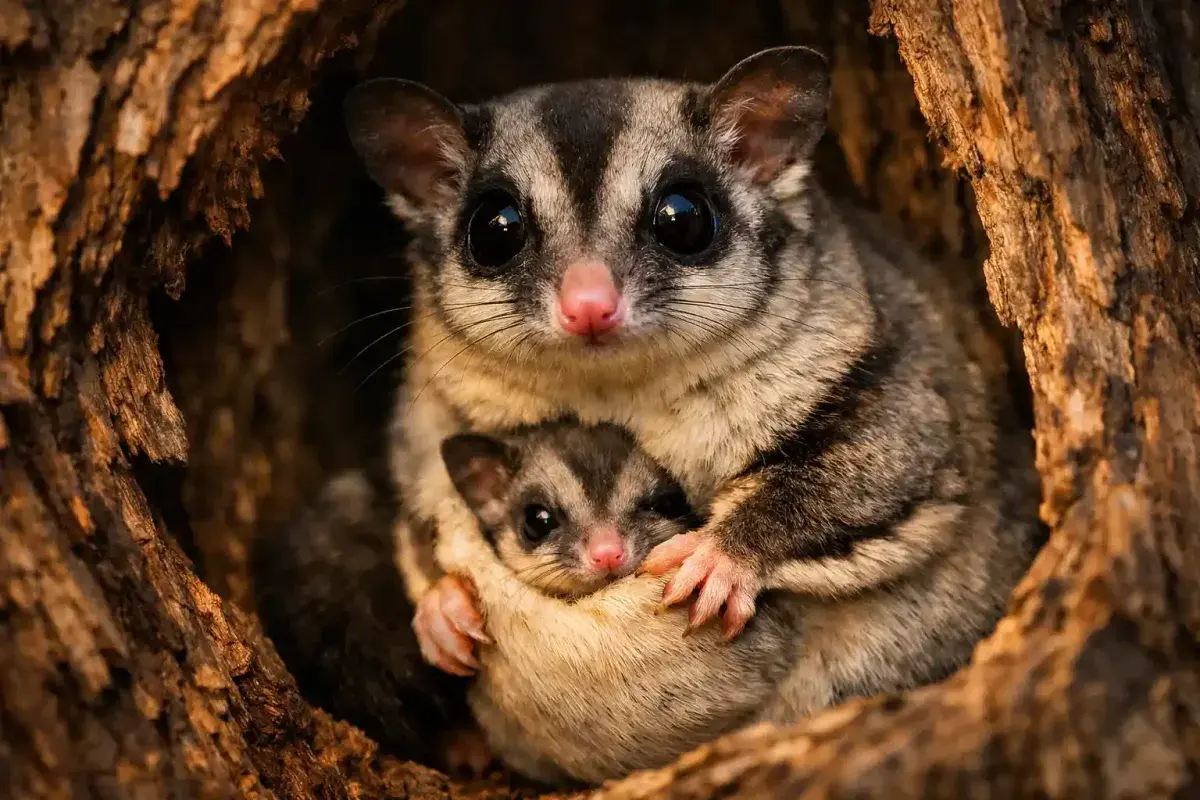
Many people are surprised to learn that sugar gliders are marsupials. Because of their small size and squirrel like appearance, they are often mistaken for rodents. In reality, they belong to the same broad animal group as kangaroos, koalas, and wombats. This classification is based on how they reproduce and raise their young.
Like other marsupials, female sugar gliders give birth to extremely underdeveloped babies. At birth, the tiny infant is only about the size of a grain of rice. Despite being so small, it instinctively crawls into its mother's pouch where it attaches to a nipple and continues developing in a protected environment.
The pouch serves as a safe nursery during the earliest and most vulnerable stage of life. Inside the pouch, the baby receives nourishment and protection while its body grows and develops. Over time, the young sugar glider becomes stronger and begins peeking outside before eventually leaving the pouch completely.
Even after emerging, the young remain heavily dependent on their parents. Mothers continue providing care while other members of the colony may also contribute to protection and social learning. This extended period of family support helps young sugar gliders develop the skills needed to survive independently.
The marsupial reproductive strategy differs significantly from that of many other mammals. Rather than carrying a fully developed baby through a long pregnancy, marsupials complete much of the developmental process after birth. This approach has proven successful across many species in Australia and nearby regions.
Scientists find marsupials fascinating because they represent a distinct evolutionary pathway. Sugar gliders demonstrate how diverse marsupial species can become while sharing common reproductive traits. Their pouch based parenting system remains one of the most unique aspects of their biology.
Understanding that sugar gliders are marsupials helps explain many features of their behavior and life cycle. It also highlights their connection to some of Australia's most iconic animals. Despite their small size, they share a remarkable heritage with creatures many times larger than themselves.
3. Their Large Eyes Help Them See At Night
Image
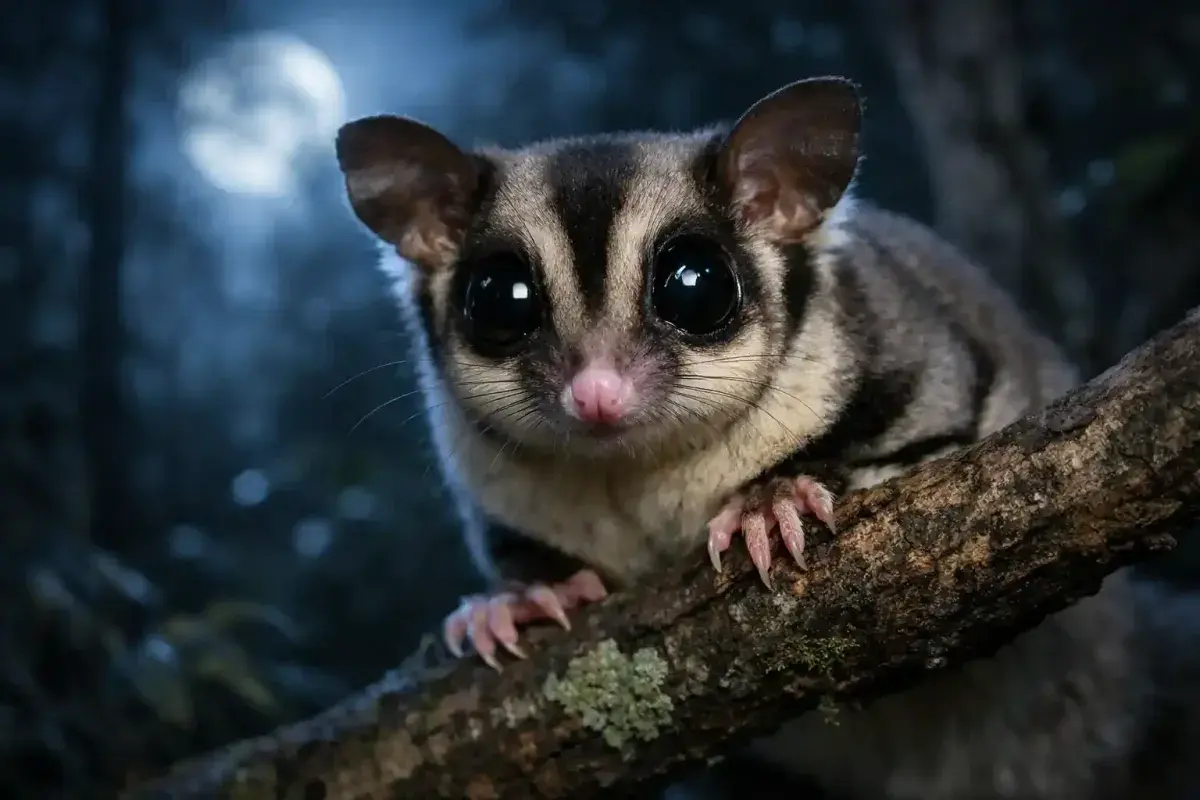
One of the first features people notice about sugar gliders is their enormous eyes. These striking eyes are not simply cute. They are an important adaptation that helps the animals survive in their natural environment. Sugar gliders are nocturnal, meaning they are most active during the night rather than during the day.
Nighttime activity presents challenges because visibility is limited. To overcome this obstacle, sugar gliders evolved large eyes capable of gathering more available light. This allows them to detect movement, navigate through trees, locate food sources, and avoid potential dangers after sunset.
The forests where sugar gliders live become very dark once daylight fades. Despite these conditions, they move confidently through branches and leaves while searching for food. Their excellent night vision works together with their sense of hearing and smell to create an effective system for locating resources and identifying threats.
Being active at night offers several advantages. Many daytime predators rely heavily on vision and are less effective hunters after dark. Temperatures are often cooler during nighttime hours as well, making activity more comfortable in some environments. By occupying a nocturnal lifestyle, sugar gliders reduce competition with animals that search for food during daylight.
Their eyes are positioned to provide a wide field of view, helping them remain aware of their surroundings. This awareness becomes especially important while gliding between trees because they must judge distances accurately and identify safe landing spots.
When daylight arrives, sugar gliders usually retreat to tree hollows where they rest with members of their colony. These sheltered locations provide protection while they sleep through much of the day before becoming active again after sunset.
The next time you see a picture of a sugar glider, pay attention to its eyes. Those large, dark eyes are more than a charming feature. They represent a powerful adaptation that allows these small marsupials to thrive in the nighttime world of the forest canopy.
4. Sugar Gliders Love Sweet Foods
Image
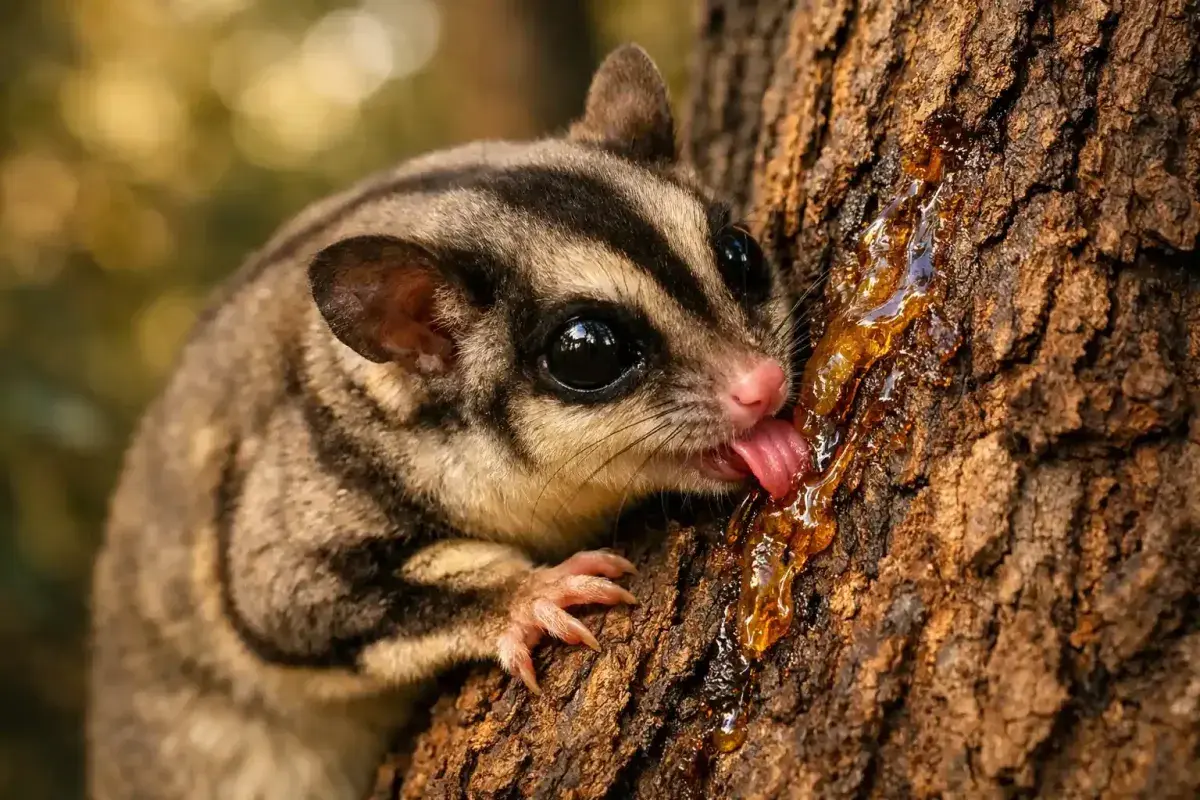
The name sugar glider provides an important clue about one of its favorite foods. In the wild, these animals are attracted to sweet natural substances such as nectar, pollen, and tree sap. Their preference for sugary foods inspired the first part of their common name and reflects a key aspect of their diet.
Tree sap is an especially valuable food source. Sugar gliders may chew into bark to access the nutritious liquid underneath. The sap contains sugars and other nutrients that provide energy for their active lifestyle. Nectar from flowers serves a similar purpose and can be found in many parts of their natural habitat.
Although sweet foods are important, sugar gliders are not limited to sugary treats. They are omnivores, meaning they eat a variety of foods from both plant and animal sources. Their diet often includes insects, spiders, fruit, and other small items they discover while exploring the forest.
This flexible diet helps them adapt to changing environmental conditions. If one food source becomes scarce, they can rely more heavily on another. Such versatility improves their chances of survival during different seasons and weather patterns.
Their feeding habits also benefit the ecosystem. While visiting flowers for nectar, sugar gliders may help transfer pollen between plants. This process supports plant reproduction and contributes to the health of forest environments.
Foraging usually takes place at night when they move through the canopy searching for food. Their excellent climbing skills and gliding ability allow them to cover large areas efficiently while locating resources. Colonies often develop familiarity with productive feeding locations and may revisit these areas regularly.
The next time someone asks why they are called sugar gliders, the answer is simple. Their love of naturally sweet foods is an important part of their identity and a key reason behind the name that has made them famous around the world.
5. They Live In Close Family Groups
Image
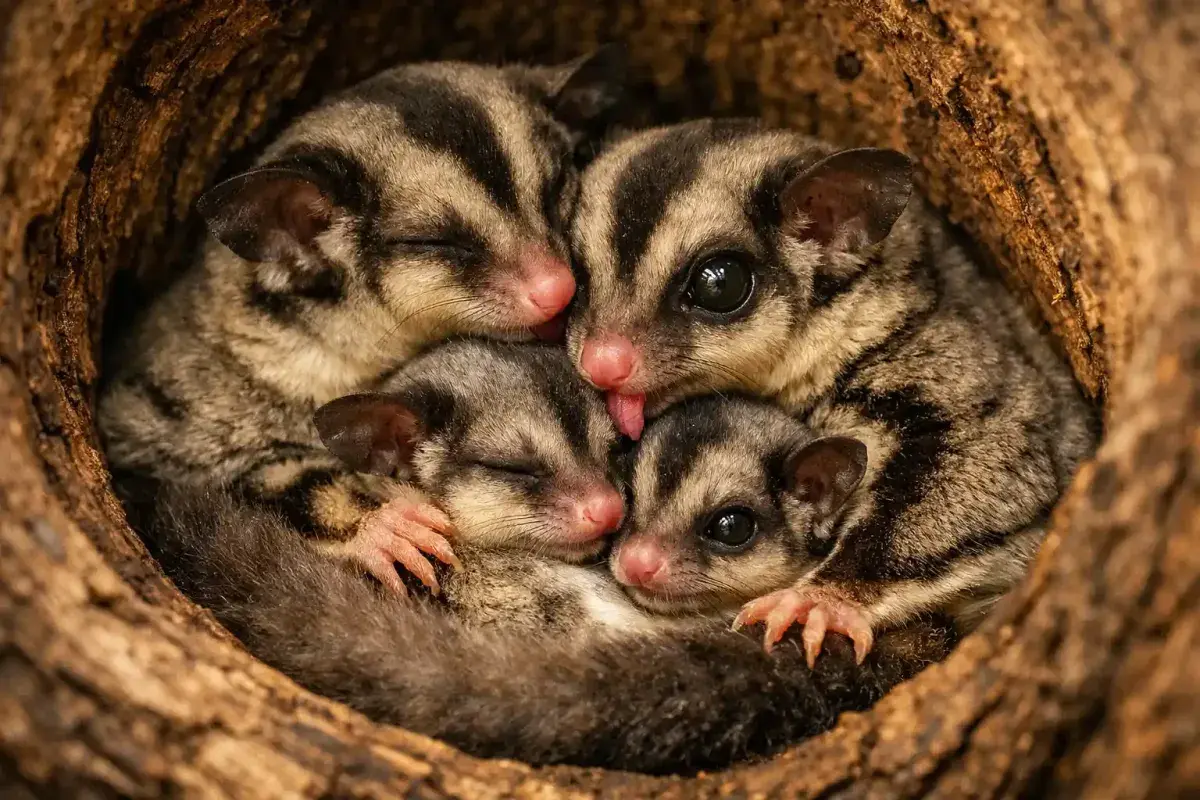
Sugar gliders are highly social animals that rarely spend their lives alone in the wild. Instead, they live in family groups known as colonies. These groups often consist of several related individuals that share sleeping areas, cooperate in daily activities, and help protect one another from danger.
Living in a colony offers many benefits. One important advantage is protection. More eyes and ears mean greater awareness of predators and environmental changes. If one member detects danger, the others can react quickly and move to safety.
Social bonds within a colony are strengthened through grooming. Sugar gliders frequently groom one another by cleaning fur and removing debris. This behavior serves practical purposes, but it also helps maintain strong relationships among group members. Grooming creates trust and reinforces social connections.
Colonies typically share nesting sites located in tree hollows. During daylight hours, several sugar gliders may sleep together in the same sheltered space. By resting close to one another, they conserve body heat and maintain a sense of security.
Communication plays a major role in colony life. Sugar gliders produce various sounds to express different messages. Some vocalizations help members locate each other, while others communicate excitement, warning, or social interaction. Scent marking is another important method of communication that helps identify territory and colony membership.
Young sugar gliders benefit greatly from growing up in a social environment. They learn important behaviors by observing adults and interacting with siblings. This learning process helps prepare them for life within the colony and increases their chances of success as mature animals.
Scientists studying sugar glider behavior often point to their strong social structure as one of the species' most interesting characteristics. These small marsupials demonstrate that cooperation and family bonds can play a major role in survival.
Their close relationships remind us that even tiny animals can maintain complex social lives. Behind their adorable appearance is a sophisticated system of communication, cooperation, and family support that helps sugar gliders thrive in the forests they call home.
6. Sugar Gliders Have Their Own Unique Language
Image
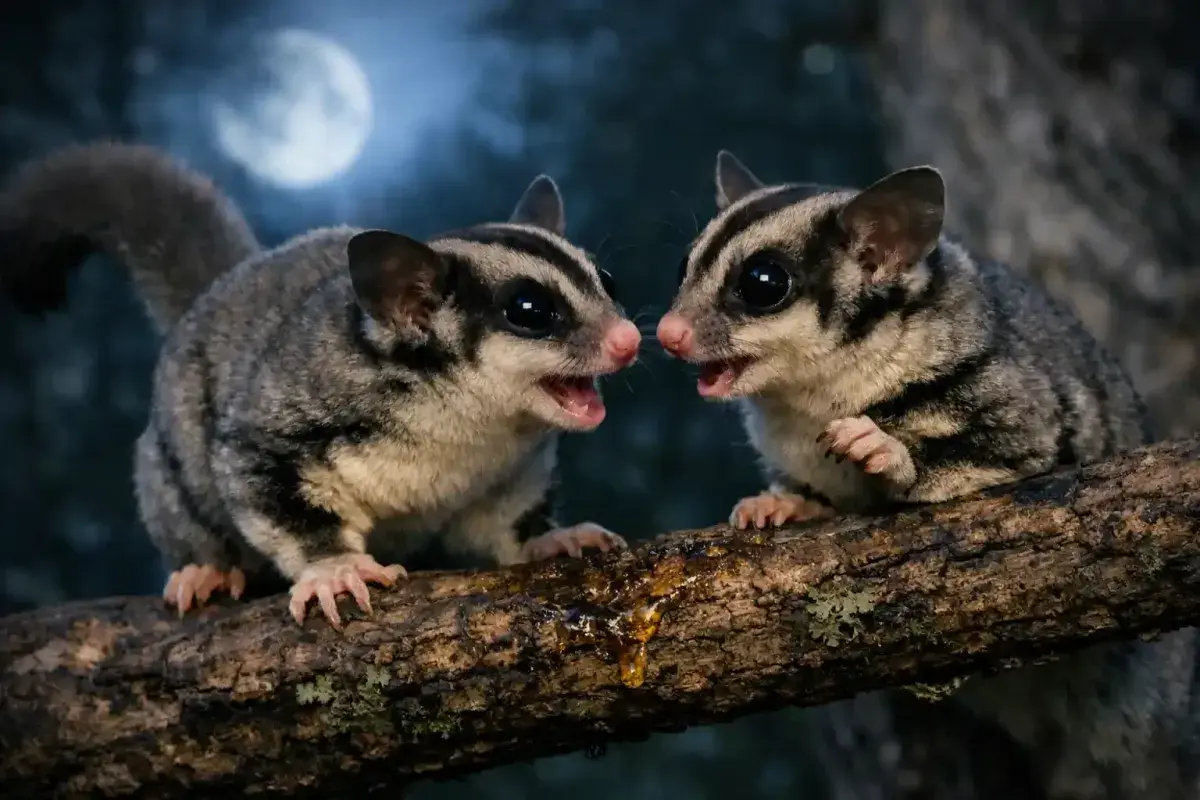
Sugar gliders may be small animals, but they have a surprisingly complex system of communication. Members of a colony rely on sounds, scent markings, and body movements to share information with one another. These methods help them maintain social bonds, identify family members, warn of danger, and coordinate activities throughout their daily lives.
One of the most interesting aspects of sugar glider communication is the variety of sounds they produce. Researchers have documented several different vocalizations, each serving a specific purpose. Some calls are used when individuals are searching for one another, while others signal excitement, curiosity, or concern. Young sugar gliders also make sounds to communicate with their mothers and other colony members.
Scent plays an equally important role. Sugar gliders possess scent glands that allow them to leave chemical messages on branches, nesting sites, and even other members of their colony. These scent markers help identify territory and reinforce social relationships. Colony members often recognize one another through scent, creating a strong sense of group identity.
Body language provides another layer of communication. Changes in posture, movement, and facial expressions can indicate mood or intention. An alert posture may signal awareness of a nearby threat, while relaxed behavior often reflects comfort and security within the group.
Communication becomes especially important because sugar gliders are active at night. In darkness, visual cues may be limited, so sounds and scents help individuals remain connected even when they cannot clearly see one another. These communication systems allow colonies to function efficiently despite the challenges of a nocturnal lifestyle.
Scientists continue studying sugar glider communication to better understand how social animals interact and cooperate. Their findings reveal that even small mammals can maintain sophisticated social networks through multiple forms of information exchange.
The next time you think of a sugar glider, imagine more than just a gliding animal. Picture a highly social creature constantly sharing messages with family members through a fascinating combination of sounds, scents, and behaviors that help keep the colony connected.
7. Their Tails Are Important Tools
Image
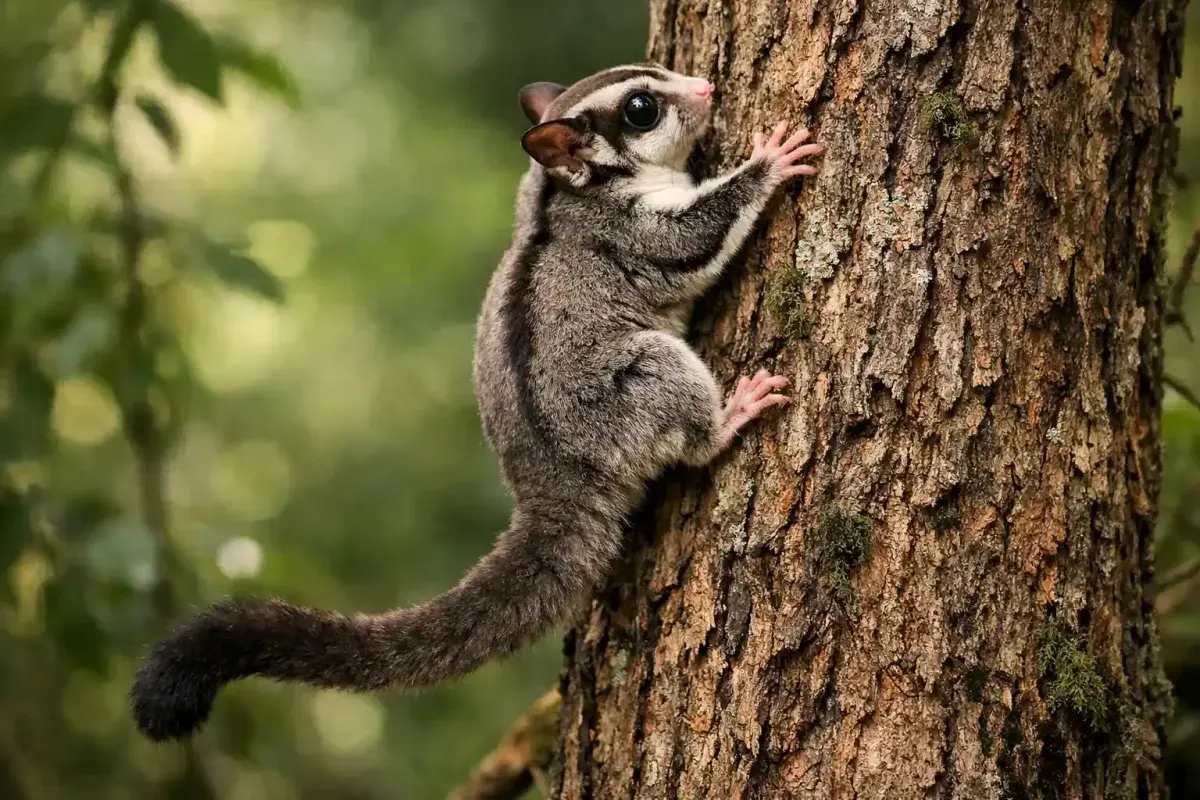
The long tail of a sugar glider is far more than a decorative feature. It serves several important purposes that help the animal survive and move efficiently through its environment. From balancing on branches to assisting with gliding, the tail is one of the most useful tools in a sugar glider's body.
When climbing through trees, balance is essential. Forest canopies are filled with narrow branches and uneven surfaces that require careful movement. The tail helps sugar gliders maintain stability as they navigate these challenging pathways. By adjusting the position of the tail, they can make quick corrections that prevent falls and improve agility.
During glides, the tail acts much like a rudder on a boat. Small movements help control direction and maintain stability while airborne. This additional control contributes to the impressive accuracy with which sugar gliders land on branches and tree trunks after traveling considerable distances through the air.
The tail may also assist when carrying nesting materials. Researchers have observed sugar gliders transporting leaves and other soft materials back to their nesting sites. In some cases, the tail helps support or manage these materials while climbing.
Because sugar gliders spend most of their lives above the ground, every adaptation that improves mobility is valuable. The tail works together with strong limbs, sharp claws, and the gliding membrane to create an efficient system for life in the treetops.
Young sugar gliders gradually learn how to use their tails effectively. As they mature, they develop better coordination and become more skilled at balancing, climbing, and gliding. These abilities improve with practice and experience.
Many animals possess specialized body parts that help them survive in unique environments. For sugar gliders, the tail is one of those important adaptations. It contributes to movement, balance, and control in ways that significantly enhance their ability to thrive in forest habitats.
Without their versatile tails, sugar gliders would find many daily activities far more difficult. This often overlooked feature plays a major role in making them the agile and successful animals they are today.
8. They Spend Most Of Their Lives In Trees
Image
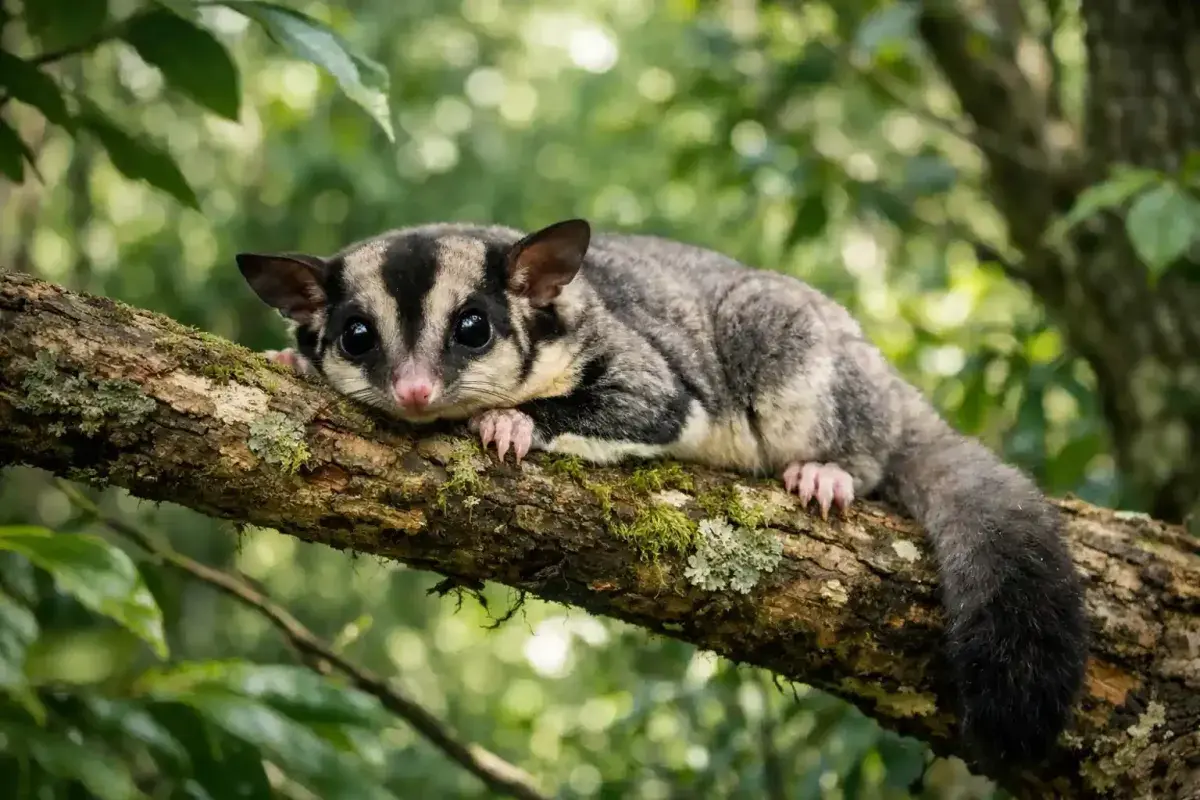
Sugar gliders are considered arboreal animals, which means they spend most of their lives in trees. Nearly every aspect of their behavior reflects this lifestyle. From feeding and sleeping to socializing and traveling, the forest canopy serves as their primary home.
Living high above the ground offers several advantages. Trees provide access to food sources such as nectar, pollen, sap, insects, and fruit. The canopy also contains numerous hiding places that help sugar gliders avoid predators. Tree hollows serve as safe nesting locations where colonies can rest during daylight hours.
Their bodies are perfectly adapted for climbing. Sharp claws help them grip bark and branches securely, while strong limbs provide the strength needed to move through complex forest environments. Combined with their gliding membrane, these features allow them to travel efficiently without descending to the ground frequently.
Remaining in the trees reduces exposure to many dangers. Ground dwelling predators are less likely to encounter sugar gliders that stay within the canopy. By moving above the forest floor, they gain both safety and easier access to resources.
Tree hollows play a particularly important role in their lives. These natural shelters provide protection from weather conditions and predators. Colonies often return to the same nesting sites repeatedly, creating familiar and secure environments for raising young.
The structure of the forest itself influences sugar glider behavior. Areas with connected tree canopies make movement easier because gliding becomes more efficient. Forest fragmentation can create challenges by increasing the distances between suitable trees.
Scientists studying forest ecosystems often view sugar gliders as indicators of habitat quality. Healthy forests with abundant tree cover are more likely to support thriving sugar glider populations. Their dependence on trees highlights the importance of preserving natural habitats.
Every adaptation of a sugar glider reflects its life among the branches. Their climbing skills, gliding ability, social behavior, and feeding habits all revolve around the forest canopy, making trees the center of their world.
9. Baby Sugar Gliders Are Called Joeys
Image
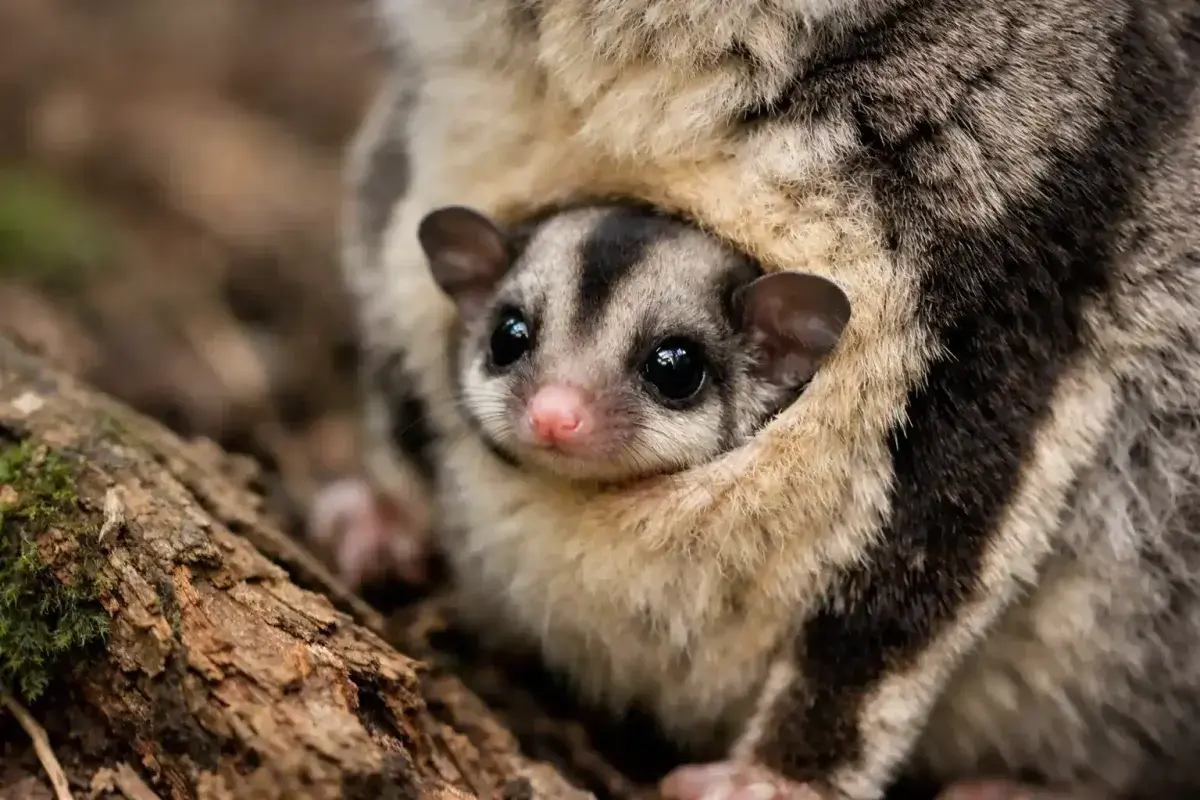
Like kangaroos and many other marsupials, baby sugar gliders are called joeys. This charming name refers to one of the most fascinating stages in the life of these animals. The journey from birth to independence involves remarkable growth and development.
When a joey is born, it is extremely small and underdeveloped. At this stage, it cannot survive independently. Guided by instinct, the newborn crawls into its mother's pouch where it attaches to a nipple and continues growing in a protected environment.
Inside the pouch, the joey receives nourishment and warmth while its body develops. This stage lasts for several weeks and represents one of the most critical periods in the animal's life. The pouch acts as a secure nursery that shields the young from external dangers.
As development continues, the joey gradually becomes stronger and more active. Eventually it begins peeking out of the pouch and observing the world around it. These first glimpses of the outside environment mark an important step toward independence.
Even after leaving the pouch, young sugar gliders remain dependent on their parents. They continue learning essential survival skills such as climbing, gliding, foraging, and social interaction. Family members often play an important role in helping young animals gain experience and confidence.
The growth of a joey provides scientists with valuable insights into marsupial development. Because much of the developmental process occurs after birth, researchers can observe stages that remain hidden in many other mammals.
Watching a joey mature from a tiny newborn into an agile glider is an impressive example of nature's adaptability. Every stage of development prepares the young animal for life in the forest canopy where it will eventually become an active member of its colony.
The story of a sugar glider joey reminds us that even the smallest creatures begin life with enormous challenges. Through parental care and gradual learning, they develop into capable animals ready to explore the world around them.
10. Sugar Gliders Are Important To Forest Ecosystems
Image
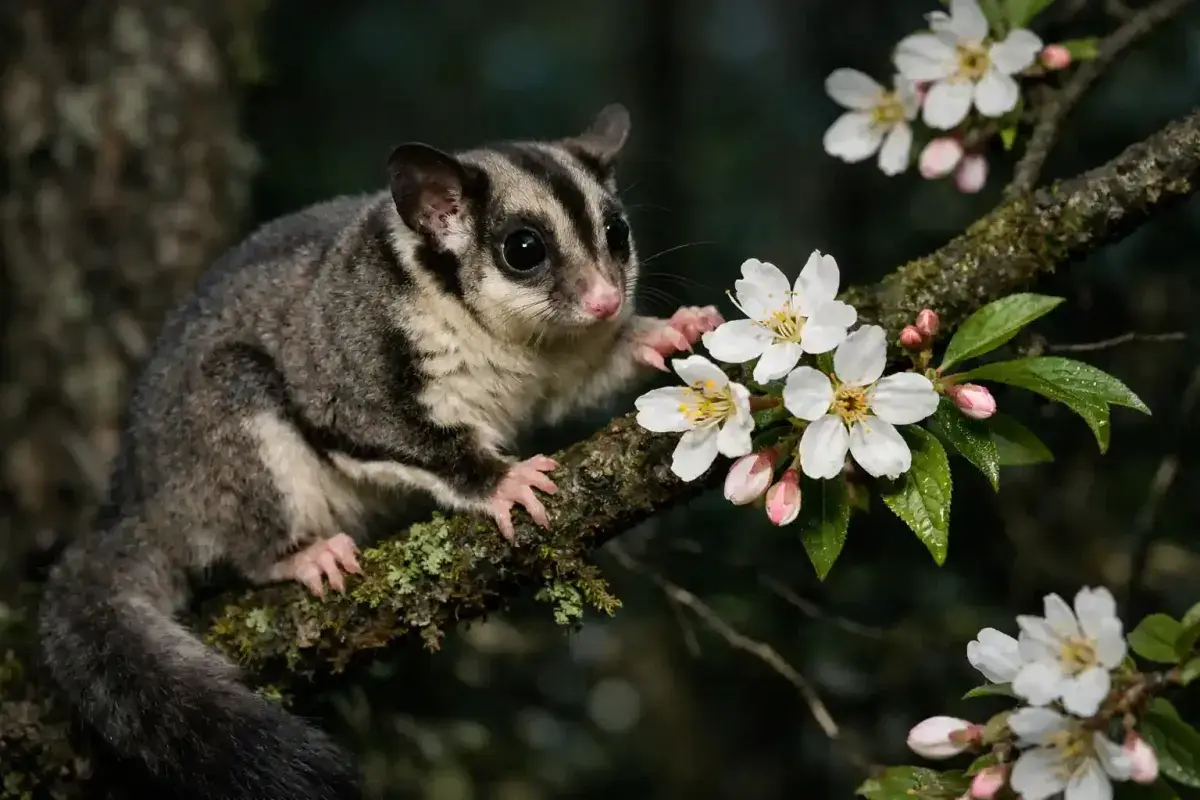
Sugar gliders are not only fascinating animals but also important contributors to the ecosystems where they live. Every species plays a role in maintaining ecological balance, and sugar gliders are no exception. Their daily activities influence plants, insects, and other organisms throughout the forest.
One of their most valuable contributions involves pollination. While feeding on nectar, sugar gliders may transfer pollen from one flower to another. This process supports plant reproduction and helps maintain healthy plant populations. Many flowering plants depend on animals to move pollen, and sugar gliders participate in this important ecological service.
Their diet also includes insects and other small invertebrates. By consuming these organisms, sugar gliders help regulate populations that might otherwise become excessive. This contributes to the overall balance of the forest ecosystem.
As they move through the canopy searching for food, sugar gliders interact with many different plant species. Their activities create connections between various parts of the environment and support natural ecological processes. Even seemingly simple behaviors can have broader impacts on ecosystem health.
Sugar gliders themselves are also part of the food web. Predators rely on them as a food source, creating another important ecological connection. Every species contributes to a network of relationships that helps ecosystems function effectively.
Habitat conservation benefits not only sugar gliders but also the many other organisms that share their environment. Protecting forests ensures that these ecological relationships can continue into the future. Healthy sugar glider populations often indicate healthy forest ecosystems.
Scientists studying biodiversity recognize the importance of preserving species that contribute to ecological stability. Sugar gliders represent one example of how even small animals can have significant environmental value.
When people admire sugar gliders for their appearance or gliding skills, they sometimes overlook their ecological importance. Yet these small marsupials help support the health and diversity of the forests they inhabit. Their role in nature extends far beyond their remarkable ability to glide through the trees.
Sugar gliders are extraordinary animals that combine beauty, intelligence, and remarkable adaptations into one small package. At first glance, their large eyes and soft fur may be what attract attention, but a closer look reveals a creature perfectly designed for life in the forest canopy. Every aspect of their biology tells a story of adaptation, survival, and cooperation.
Their ability to glide long distances allows them to travel efficiently between trees while avoiding many dangers found on the ground. As marsupials, they share a fascinating reproductive strategy with some of Australia's most famous animals. Their large eyes support a nocturnal lifestyle, helping them navigate darkness with confidence. Their preference for sweet foods inspired their name, while their flexible diet contributes to their success in a changing environment.
Equally impressive is their social behavior. Sugar gliders form strong family bonds, communicate through sounds and scents, and work together within colonies. Their tails assist with balance and steering, their lives revolve around trees, and their young experience one of the most unique developmental journeys in the animal kingdom.
Beyond their individual characteristics, sugar gliders also play meaningful roles in forest ecosystems. Through pollination, insect control, and participation in food webs, they contribute to the health of the environments they inhabit. Their presence highlights the interconnected nature of wildlife and the importance of preserving natural habitats.
Learning about sugar gliders reminds us that even the smallest animals can possess extraordinary abilities. They demonstrate how evolution shapes species to meet the challenges of their environment and how cooperation can improve survival. Their combination of agility, intelligence, and social complexity makes them one of the most interesting mammals in the world.
Whether you are a wildlife enthusiast, a student, or simply someone who enjoys discovering fascinating facts about nature, sugar gliders offer countless reasons to be amazed. These tiny marsupials prove that remarkable things often come in small packages, and their story continues to inspire curiosity about the incredible diversity of life on Earth.