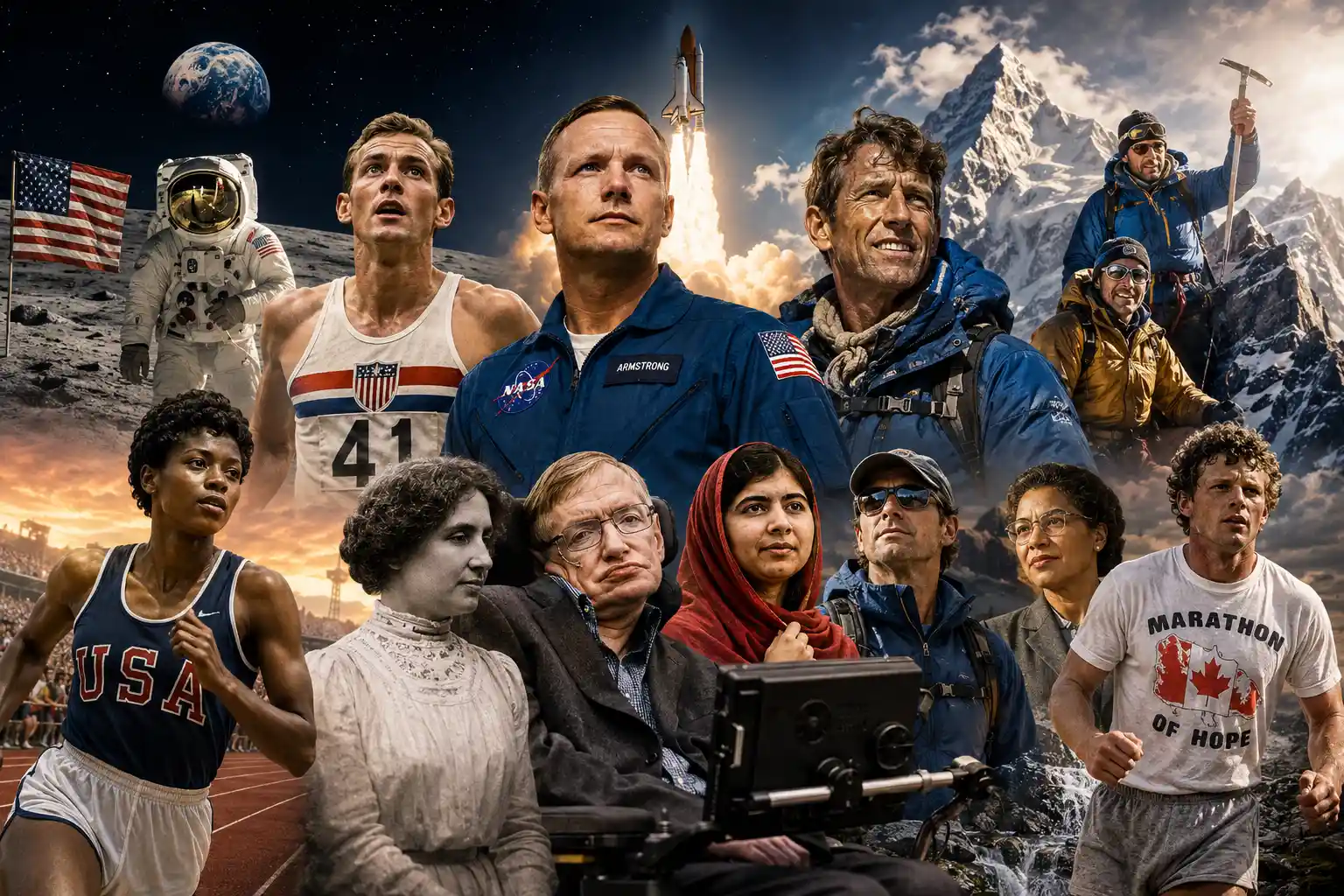
Human history is filled with moments that seemed completely beyond reach until someone proved otherwise. Every generation inherits a list of limitations that society accepts as fact. Some are based on science, some on tradition, and others on fear. Yet time and again, extraordinary individuals have stepped forward and challenged those assumptions. What makes their stories fascinating is not simply that they succeeded. It is that many of them were told repeatedly that success could never happen.
The word impossible has a powerful influence. It discourages innovation, suppresses ambition, and convinces talented people to stay within boundaries established by others. Throughout history, however, there have always been individuals willing to test those boundaries. They pursued goals that experts dismissed, governments rejected, competitors laughed at, or the public considered unrealistic. Their willingness to continue despite criticism often mattered just as much as their talent.
Some of these people changed science. Others transformed sports, exploration, medicine, or human rights. Their accomplishments did more than earn personal recognition. They expanded what humanity believed could be achieved. Once an impossible feat is completed, it frequently becomes the starting point for future generations.
The stories in this list are not merely examples of success. They are examples of persistence in the face of overwhelming doubt. Each person encountered obstacles that would have convinced most people to quit. Instead, they kept moving forward until the impossible became reality. Their journeys remind us that many limits exist only until someone finds a way beyond them.
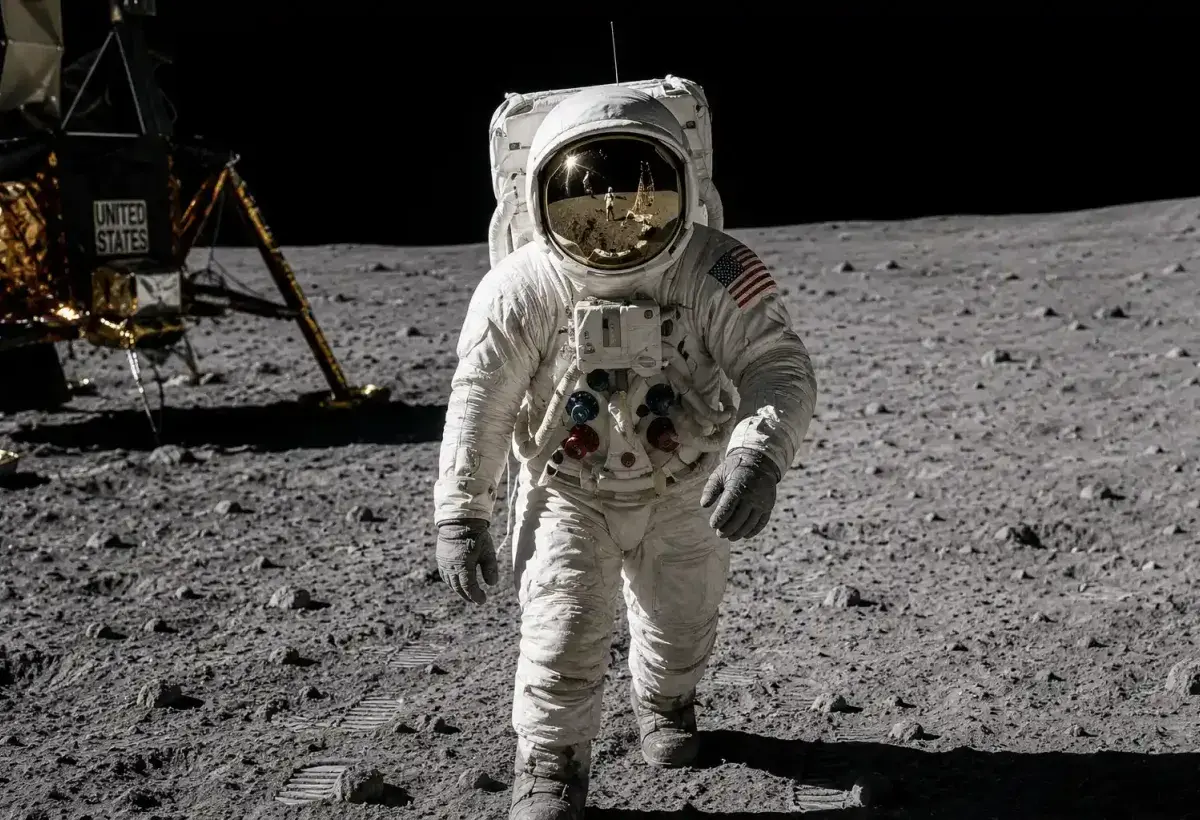
1. Neil Armstrong Walked on the Moon
Before the middle of the twentieth century, the idea of a human being standing on the Moon belonged mostly to science fiction. Writers imagined it, artists painted it, and dreamers discussed it, but few people genuinely believed it would happen within their lifetimes. The technological challenges appeared overwhelming. Humanity had barely mastered powered flight before beginning to consider travel beyond Earth.
When the space race intensified, many experts acknowledged that reaching the Moon would require breakthroughs in engineering, computing, navigation, and life support systems. Every stage presented risks. Rockets exploded during testing. Astronauts faced dangerous training conditions. Entire missions depended on equipment performing flawlessly in an environment no human had ever experienced.
Neil Armstrong became the face of one of history's greatest achievements when he commanded the Apollo 11 mission. On July 20, 1969, he stepped onto the lunar surface and delivered words that became part of global history. Millions watched as a goal once considered impossible became reality.
What makes Armstrong's accomplishment remarkable is the scale of uncertainty surrounding it. Engineers had to calculate trajectories across hundreds of thousands of miles. Astronauts had to survive launch, travel through space, land safely, and return home. Failure at any stage could have resulted in disaster.
The Moon landing changed humanity's perception of what was possible. It demonstrated that determination, scientific innovation, and international attention could combine to achieve something previously unimaginable. The event inspired generations of scientists, engineers, and explorers.
Today, lunar missions are discussed as practical objectives rather than impossible dreams. That shift in perspective exists largely because Armstrong and countless people behind the Apollo program proved that humanity could accomplish what many once considered beyond reach.
Image
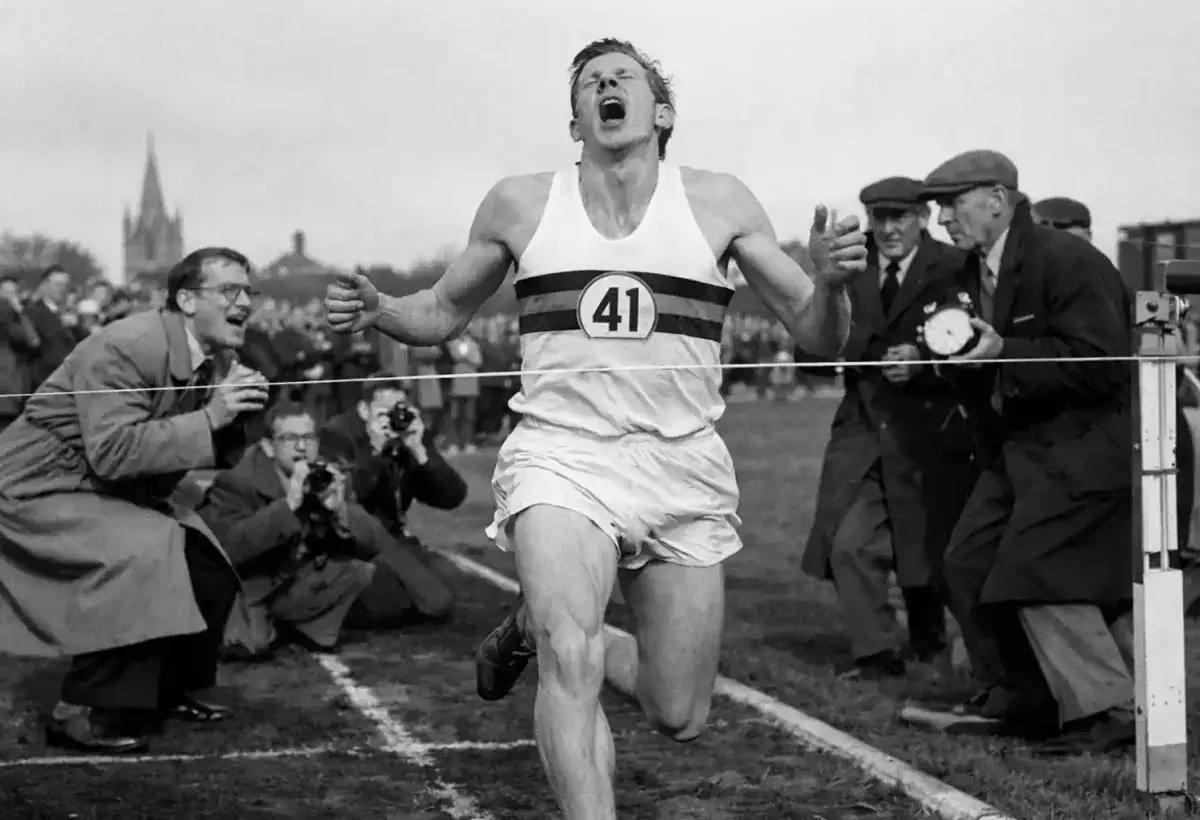
2. Roger Bannister Broke the Four Minute Mile
For many years, athletes and experts believed the human body could not run a mile in less than four minutes. The barrier became one of the most famous limitations in sports history. Coaches, doctors, and commentators frequently argued that the physical demands exceeded what the human body could safely achieve.
Roger Bannister was not willing to accept that assumption. A medical student with limited training time compared to many elite competitors, he focused on refining his preparation and understanding the science behind performance. He believed the barrier was psychological as much as physical.
On May 6, 1954, Bannister competed in Oxford under challenging weather conditions. Despite the wind and pressure, he completed the mile in three minutes and fifty nine point four seconds. The achievement shocked the sporting world.
What happened afterward was equally significant. Once Bannister demonstrated that the barrier could be broken, other runners soon achieved the same feat. A record that had seemed unreachable suddenly became attainable. This pattern highlighted an important lesson about human performance. Sometimes perceived limits exist because people believe they exist.
Bannister's accomplishment became a symbol of overcoming mental barriers. His achievement showed that progress often accelerates after someone proves a challenge can be conquered. The four minute mile remains one of the most celebrated milestones in athletic history because it represented far more than a race. It represented a transformation in what people believed the human body could accomplish.
His story continues to inspire athletes, entrepreneurs, researchers, and dreamers who face goals that others insist cannot be achieved. Bannister demonstrated that impossible often means untested rather than unattainable.
Image
3. Helen Keller Overcame Deafness and Blindness to Become a Global Voice
Many people in the late nineteenth century believed that individuals who were both deaf and blind could never fully communicate, receive advanced education, or influence society on a large scale. These assumptions reflected widespread misunderstandings about disability and human potential.
Helen Keller challenged those beliefs in extraordinary fashion. After an illness during infancy left her unable to see or hear, she faced immense obstacles in understanding the world around her. Communication seemed almost impossible. Frustration and isolation were constant challenges during her early years.
Everything began to change when teacher Anne Sullivan entered her life. Through patience, creativity, and determination, Sullivan developed methods that allowed Keller to connect words with objects and ideas. Once communication became possible, Keller's intellectual growth accelerated dramatically.
She went on to master language, attend college, write books, deliver speeches, and advocate for social causes around the world. Her achievements surprised many people who had assumed such accomplishments were beyond reach for someone facing her circumstances.
Keller's success was significant not only because of what she achieved personally but because of what it revealed about human capability. She helped challenge misconceptions that had limited opportunities for countless others. Her life demonstrated that barriers often arise from society's expectations rather than actual potential.
As an author and activist, Keller became one of the most recognized figures of her era. She used her platform to promote education, disability rights, and social reform. Her influence extended across continents and generations.
What once seemed impossible became a reality through persistence, support, and an unwavering desire to learn. Keller's story remains one of the most powerful examples of overcoming circumstances that others viewed as insurmountable.
Image

4. Edmund Hillary Reached the Summit of Mount Everest
For centuries, Mount Everest stood as a symbol of nature's ultimate challenge. The mountain's extreme altitude, unpredictable weather, and dangerous terrain convinced many people that reaching the summit was impossible. Numerous expeditions failed, and some ended in tragedy.
The challenge involved much more than physical strength. Climbers had to confront freezing temperatures, avalanches, exhaustion, and dangerously thin air. Even experienced mountaineers struggled to function effectively at such heights.
In 1953, Edmund Hillary of New Zealand and Tenzing Norgay accomplished what generations of explorers had attempted. Together they reached the summit of Everest, becoming the first confirmed climbers to stand at the highest point on Earth.
Their success required meticulous planning, teamwork, and extraordinary endurance. Every step near the summit demanded effort under conditions that pushed the human body to its limits. The climb represented years of accumulated knowledge gained from previous expeditions.
The achievement captured global attention because Everest had become synonymous with impossibility. Reaching the summit transformed one of the world's greatest mysteries into a historic accomplishment. Although climbing Everest remains dangerous, it is now viewed as a challenge that can be met with preparation and determination.
Hillary's role in the expedition made him an international hero. Yet he often emphasized the importance of teamwork and the contributions of those who supported the mission. The climb remains a powerful example of what can happen when persistence overcomes repeated failure.
Everest continues to symbolize ambition and resilience. The first successful ascent reminds us that some of the greatest achievements occur when people continue pursuing a goal despite years of setbacks and widespread doubt.
Image

5. Wilma Rudolph Became an Olympic Champion After Childhood Paralysis
Wilma Rudolph's story is one of the most remarkable transformations in sports history. As a child, she suffered from illnesses that included polio. Doctors and specialists feared she might never walk normally. At various points during her early life, she relied on leg braces and extensive treatment.
Given her condition, the idea that she would someday become one of the fastest women in the world seemed impossible. Many people would have accepted the limitations placed before them. Rudolph chose a different path.
Through years of determination and rehabilitation, she gradually strengthened her body. She practiced relentlessly and developed into a talented athlete. Her progress was not immediate. It required patience, discipline, and resilience through numerous setbacks.
By the time she reached international competition, Rudolph had become a force in track and field. At the 1960 Olympic Games in Rome, she won three gold medals and emerged as one of the event's biggest stars. Her speed, confidence, and composure captivated audiences around the world.
The contrast between her childhood challenges and her Olympic success made her story especially powerful. She transformed from a young girl facing severe physical limitations into an athlete competing at the highest level possible.
Rudolph's achievements inspired countless people beyond sports. She became a symbol of perseverance and possibility. Her success challenged assumptions about disability, recovery, and human potential. It showed that early obstacles do not determine future outcomes.
Even decades later, her journey remains one of the most inspiring examples of overcoming what others considered impossible. Her life demonstrated that determination can alter the course of a person's future in ways that once seemed unimaginable.
Image

6. Stephen Hawking Revolutionized Physics While Living With a Severe Disease
When Stephen Hawking was diagnosed with a serious motor neuron disease in his early twenties, doctors reportedly believed he had only a limited time to live. The condition gradually affected his ability to move and speak, creating challenges that would have discouraged many people from pursuing demanding intellectual work. At the time, few would have predicted that he would become one of the most influential scientists of the modern era.
Hawking refused to allow his diagnosis to define the limits of his ambitions. As his physical condition changed, he continued his research into some of the most difficult questions in theoretical physics. He focused on black holes, the origins of the universe, and the relationship between gravity and quantum mechanics. These topics required extraordinary concentration and mathematical insight.
One of his most significant contributions involved demonstrating that black holes are not completely inactive objects. His work suggested that they could emit radiation, a concept that became known as Hawking radiation. The idea challenged existing assumptions and sparked decades of further research. His theories helped reshape scientific understanding of the universe and opened new directions for exploration.
Beyond his research, Hawking became an internationally recognized communicator of science. His books introduced complex concepts to general audiences and inspired millions of readers to become interested in physics and cosmology. He demonstrated that scientific ideas could be both intellectually rigorous and accessible to people outside academic institutions.
What makes Hawking's story extraordinary is not only the quality of his achievements but the circumstances under which they occurred. He continued producing groundbreaking work while managing physical limitations that many people would have considered overwhelming. Through technology, determination, and an unwavering commitment to discovery, he achieved goals that seemed impossible given his diagnosis.
His life changed public perceptions about disability and achievement. Hawking showed that intellectual potential can flourish even under extremely difficult conditions. His legacy continues to influence science, education, and the broader conversation about what human beings can accomplish when they refuse to surrender to expectations imposed by others.
Image

7. Malala Yousafzai Continued Her Mission After Surviving an Attack
Many people would understandably retreat from public life after facing violence because of their beliefs. Malala Yousafzai responded differently. Her story became one of the most powerful examples of courage in the face of intimidation and danger.
As a young girl, Malala spoke publicly about the importance of education for girls. In regions where educational opportunities were restricted, her advocacy attracted attention both locally and internationally. However, her willingness to speak out also placed her at significant risk. Critics and extremists viewed her message as a threat.
In 2012, she survived a violent attack that shocked people around the world. For many observers, the fact that she recovered and returned to public advocacy seemed almost unimaginable. Instead of allowing fear to silence her, she expanded her efforts and continued promoting access to education.
Her recovery required determination, medical care, and resilience. Once she returned to public life, she used her growing international platform to advocate for children who lacked educational opportunities. Her speeches, interviews, and initiatives brought attention to issues affecting millions of students worldwide.
In 2014, she became the youngest recipient of the Nobel Peace Prize. The recognition reflected not only her personal courage but also the broader significance of the cause she represented. She transformed a personal tragedy into a global movement focused on opportunity and empowerment.
Malala's achievement lies in her refusal to abandon her mission despite overwhelming circumstances. Many people assumed that surviving such an experience would end her activism. Instead, it strengthened her commitment and expanded her influence. Her story illustrates how determination can overcome efforts to suppress important ideas.
Today, she remains an influential advocate for education and human rights. Her journey demonstrates that even in the face of violence and adversity, individuals can continue pursuing goals that create meaningful change. What seemed impossible became reality through persistence, conviction, and remarkable courage.
Image

8. Erik Weihenmayer Climbed Mount Everest Without Sight
Mount Everest is challenging for any climber. The journey requires physical endurance, technical skill, mental strength, and careful navigation through dangerous terrain. For a person who cannot see, the challenge appears even more daunting. Many people would have considered such an achievement impossible.
Erik Weihenmayer lost his vision as a teenager due to a degenerative eye condition. While blindness changed aspects of his life, it did not diminish his desire for adventure or achievement. He developed skills that allowed him to participate in demanding outdoor activities and eventually pursue ambitious climbing goals.
His ascent of Mount Everest in 2001 attracted worldwide attention. Reaching the summit required extensive preparation, teamwork, and trust. Climbers faced harsh weather, steep slopes, and dangerous sections where mistakes could have severe consequences. Weihenmayer relied on communication with teammates, specialized techniques, and years of mountaineering experience.
The accomplishment challenged assumptions about what blind individuals could achieve. Rather than focusing on limitations, Weihenmayer emphasized adaptation and problem solving. His success demonstrated that barriers often become manageable when people find innovative ways to overcome them.
Beyond Everest, he continued participating in challenging expeditions and outdoor adventures. He also became a motivational speaker and advocate, encouraging others to pursue goals that seem out of reach. His experiences inspired people from many different backgrounds.
What makes his story particularly powerful is the way it reframed public expectations. Instead of being defined by blindness, Weihenmayer became known for achievements that required exceptional determination and skill. He showed that limitations do not always prevent extraordinary accomplishments.
His journey serves as a reminder that human potential frequently exceeds conventional expectations. By reaching the highest point on Earth, he accomplished something many sighted climbers never achieve, proving that impossible is often a description of perception rather than reality.
Image

9. Katherine Johnson Helped Send Humans Into Space
During the early years of space exploration, sending a human safely into orbit and returning them to Earth represented one of the greatest technical challenges ever attempted. Success depended on complex calculations that had to be remarkably accurate. Errors could lead to mission failure or loss of life.
Katherine Johnson became one of the key mathematicians whose work helped make these missions possible. At a time when both racial and gender barriers limited opportunities for many talented individuals, she demonstrated exceptional mathematical ability and determination.
Working for the American space program, Johnson calculated trajectories, launch windows, and flight paths that were essential for major missions. Her calculations contributed to some of the most important achievements in early space exploration. Astronauts and engineers trusted her work because of its accuracy and reliability.
What made her accomplishments particularly remarkable was the environment in which they occurred. She succeeded in fields where opportunities for women and people of color were often restricted. Despite those obstacles, she earned respect through excellence and persistence.
Her contributions played a role in missions that helped transform humanity's relationship with space. The success of these efforts influenced scientific advancement, international competition, and public imagination. Millions celebrated astronauts who traveled into orbit, but many later learned how critical Johnson's mathematical expertise had been behind the scenes.
For years, her achievements were not widely recognized outside professional circles. As more people learned her story, she became an inspiration to students interested in science, technology, engineering, and mathematics. Her life demonstrated that groundbreaking contributions can come from individuals who are often overlooked.
Johnson accomplished what many believed was impossible by helping solve problems that had never been solved before. Her work expanded the boundaries of human exploration and proved that talent and determination can overcome barriers created by society and circumstance.
Image

10. Terry Fox Attempted to Run Across Canada After Losing a Leg
The idea of running thousands of miles across an entire country would seem extraordinarily difficult for any athlete. Attempting such a journey after losing a leg to cancer appeared almost impossible. Yet Terry Fox set out to do exactly that.
After being diagnosed with cancer and undergoing the amputation of his right leg, Fox experienced firsthand the challenges faced by patients and families affected by the disease. During his treatment, he developed a determination to raise awareness and funds for cancer research. Rather than choosing a conventional fundraising approach, he envisioned something unprecedented.
In 1980, he began what became known as the Marathon of Hope. Using a prosthetic leg, he started running across Canada. Day after day, he covered remarkable distances while attracting growing public attention. The physical demands were immense. Every mile required effort, endurance, and resilience.
As news of his journey spread, more people became inspired by his mission. Communities welcomed him, media coverage expanded, and donations increased. He transformed a personal challenge into a national movement centered on hope and research.
Although cancer eventually forced him to stop before completing the entire route, his impact far exceeded the original goal. The awareness and fundraising generated by his effort continued long after the run ended. Annual events inspired by his mission have raised hundreds of millions of dollars for cancer research around the world.
Fox achieved something extraordinary because he redefined success. The impossible goal was not merely running across a country. It was convincing millions of people to believe in a cause and participate in it. Through determination and selflessness, he accomplished that objective on a remarkable scale.
His story remains one of the most inspiring examples of perseverance ever recorded. Even decades later, his legacy continues to motivate people to overcome obstacles and contribute to causes larger than themselves. What seemed impossible became a lasting symbol of hope and human resilience.
Image

History repeatedly demonstrates that the limits people accept today are often temporary. Every achievement once considered impossible eventually becomes a reminder that human potential is far greater than expected. The individuals featured in this list came from different backgrounds, lived in different eras, and faced very different challenges. Yet they shared a common characteristic. They refused to let widespread doubt determine what they could accomplish.
Some overcame physical barriers that appeared insurmountable. Others challenged scientific assumptions, social expectations, or natural obstacles that had defeated countless predecessors. Their success did not happen because circumstances were easy. In many cases, the circumstances were precisely what made their accomplishments seem impossible in the first place.
An important lesson connects all of these stories. Progress often begins with a single person willing to question accepted limitations. Once a breakthrough occurs, what seemed unattainable suddenly becomes achievable for others. Roger Bannister's four minute mile, Neil Armstrong's Moon landing, and Edmund Hillary's ascent of Everest all illustrate this pattern. One achievement changes expectations and creates opportunities for future generations.
These stories also reveal that impossible is frequently a matter of perspective. Obstacles that appear overwhelming can become manageable through innovation, persistence, collaboration, and courage. The path is rarely straightforward, and setbacks are almost always part of the journey. Yet the willingness to continue despite those setbacks often determines the outcome.
The next impossible achievement may already be taking shape somewhere in the world. A scientist may be developing a breakthrough, an athlete may be training for an unprecedented performance, or an ordinary person may be pursuing a goal that others dismiss as unrealistic. History suggests that many of tomorrow's greatest accomplishments will begin exactly where doubt is strongest.
That is why stories like these continue to resonate. They remind us that human beings are capable of far more than conventional wisdom sometimes allows. The impossible has a habit of becoming possible when someone decides not to accept the limits that others have drawn.