
For many people, satellite internet seemed like a technology that would always remain slow, expensive, and limited to places where no other connection existed. Families living in remote communities often accepted that streaming videos, joining online meetings, or downloading large files would never be as smooth as it was for people living in cities. Satellite phones were valuable during emergencies, but they were never designed to replace the fast internet that most people use every day. That perception changed dramatically when Starlink entered the picture and demonstrated that satellites could do much more than simply provide basic communications.
The idea of using satellites to connect people around the world is far older than Starlink. Long before SpaceX announced its ambitious broadband network, companies such as Iridium and Globalstar had already proven that low Earth orbit satellites could provide reliable communications across vast distances. Their networks supported travelers, researchers, sailors, pilots, emergency responders, and military personnel who often operated far beyond the reach of traditional mobile networks. These pioneering systems established important foundations and showed that a constellation of satellites could serve practical needs on a global scale.
What made Starlink different was not the simple idea of placing satellites in orbit. Instead, it was the decision to rethink what a satellite network could accomplish. Rather than focusing mainly on voice calls and small amounts of data, Starlink pursued the much larger challenge of delivering broadband internet capable of supporting modern digital life. Advances in reusable rockets, satellite manufacturing, onboard computing, and antenna technology helped transform a concept that would have been financially impossible decades earlier into a rapidly expanding global network.
Understanding how these three systems compare reveals an interesting story about technological progress rather than direct competition. Each network was designed to solve different problems at different moments in history. Together they illustrate how innovation often builds upon previous achievements while introducing new ideas that reshape an entire industry. Their combined history offers valuable insight into the evolution of satellite communications and the future of connecting people wherever they may live, work, or explore.
1. The Dream of Global Communication Began Long Before Starlink
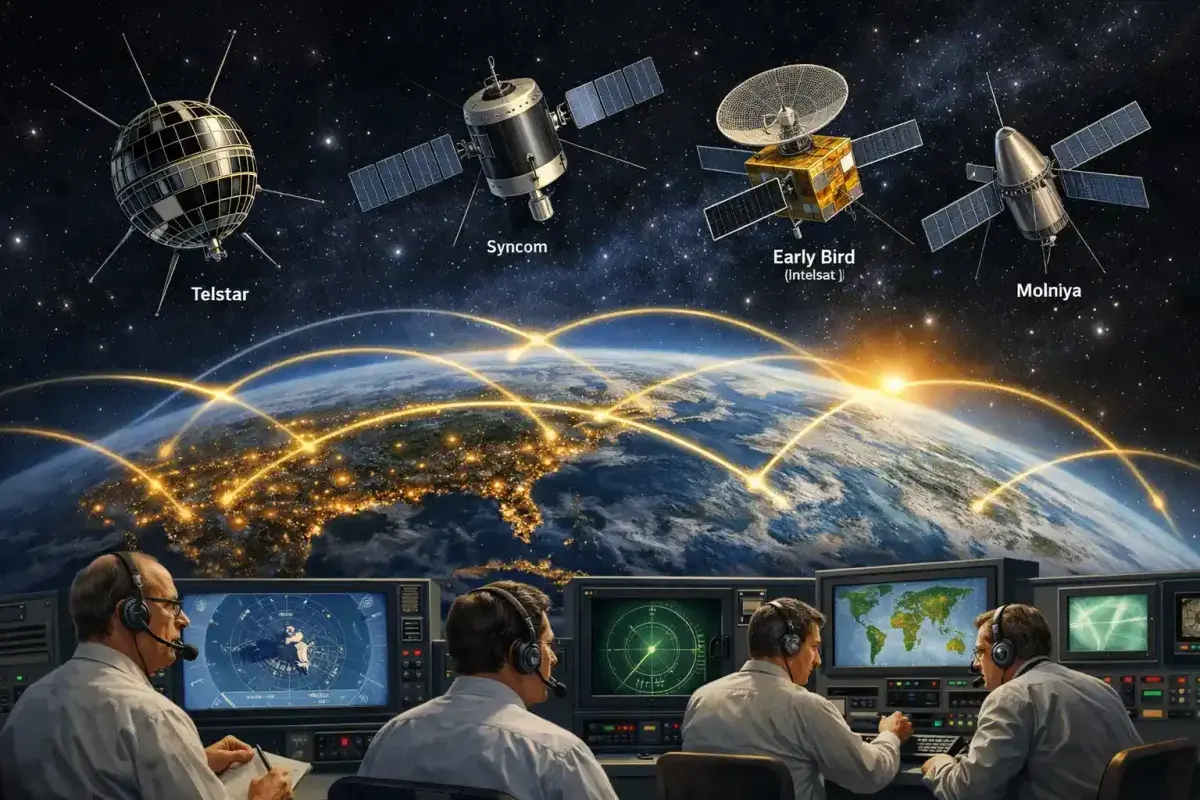
The desire to communicate across great distances has inspired inventors for generations. From the earliest telegraph systems to modern fiber networks, every major advance has sought to make communication faster, more reliable, and more accessible. Satellites became an exciting part of that vision because they offered a way to reach places where cables, cell towers, and traditional infrastructure simply could not. As technology advanced during the twentieth century, engineers began exploring the possibility of using satellites that orbited much closer to Earth. These low Earth orbit satellites promised lower delays and stronger signals than satellites positioned much farther away.
During the late twentieth century, several companies invested enormous resources into transforming this concept into reality. Among the most significant were Iridium and Globalstar. Their goal was not to replace home internet connections but to create dependable communication systems for people who worked far beyond conventional networks. Fishermen navigating remote oceans, scientists conducting research in isolated regions, humanitarian organizations responding to disasters, and military personnel operating in challenging environments all needed reliable communications regardless of location.
Building these constellations required overcoming extraordinary engineering challenges. Satellites had to remain precisely positioned while moving rapidly around the planet. Ground stations needed to coordinate constant handoffs as satellites passed overhead. User equipment also had to function reliably despite changing weather conditions and constantly moving spacecraft. Every successful connection represented years of research, testing, and engineering refinement.
Although these early systems never became mainstream consumer products, they proved something extremely important. They demonstrated that low Earth orbit satellite networks could operate successfully on a global scale. This achievement encouraged future innovators to think beyond emergency communications and imagine broader possibilities.
When SpaceX later explored satellite broadband, it did not begin with a blank sheet of paper. Engineers could study decades of experience gained from earlier satellite constellations while applying modern technology that had become available through advances in computing, manufacturing, and launch capabilities. The result would eventually become one of the largest satellite networks ever constructed.
Image
2. Why Iridium Focused on Reliable Communication Instead of Fast Internet
Iridium was created during a time when mobile phones were still developing and reliable communications in remote regions remained a significant challenge. Its founders recognized that millions of people worked in locations where conventional telephone networks simply did not exist. Their solution was ambitious. Instead of relying upon towers spread across countries, they would create a network of satellites capable of supporting voice calls almost anywhere on Earth.
This decision reflected the technology available at the time. Internet use was growing, but broadband had not yet become central to daily life. Most people used computers for email, simple web browsing, and exchanging relatively small files. Video streaming, cloud computing, online gaming, and high definition video conferences had not yet become everyday expectations. As a result, designing satellites for dependable voice communications made far more practical sense than attempting to deliver high speed internet that existing technology could not economically support.
One of Iridium's most impressive engineering achievements involved allowing satellites to communicate directly with one another. This capability meant information could travel through space before reaching a ground station. The system offered exceptionally broad coverage that included remote oceans and even polar regions where many other communication systems struggled to operate consistently.
Iridium also developed a reputation for dependability. Pilots, ship captains, explorers, emergency response teams, and government organizations trusted the network because it prioritized maintaining communication under demanding conditions rather than delivering large amounts of data. For these users, reliability often mattered far more than download speed.
Although Iridium never competed directly with broadband providers, its accomplishments demonstrated that satellite constellations could become trusted communication infrastructure. The company proved that carefully designed networks could serve specialized markets across the globe for many years. Those lessons would later influence discussions about larger satellite systems designed for broader public use, even though the final goals would differ substantially.
Image

3. How Globalstar Took a Different Path
While Iridium concentrated on achieving worldwide communication through satellites that exchanged information with one another, Globalstar selected a different architectural approach. Instead of emphasizing satellite to satellite communication, its system relied heavily on ground gateways that received and forwarded signals. This design reflected different engineering priorities and business objectives rather than a simple attempt to imitate competing networks.
Globalstar concentrated on providing dependable services for customers who needed communication in regions where cellular networks were unavailable. Outdoor enthusiasts, commercial transportation companies, emergency organizations, environmental researchers, and industrial operations benefited from equipment that allowed them to remain connected in challenging environments. The network also became valuable for tracking valuable assets and supporting monitoring systems located far from cities.
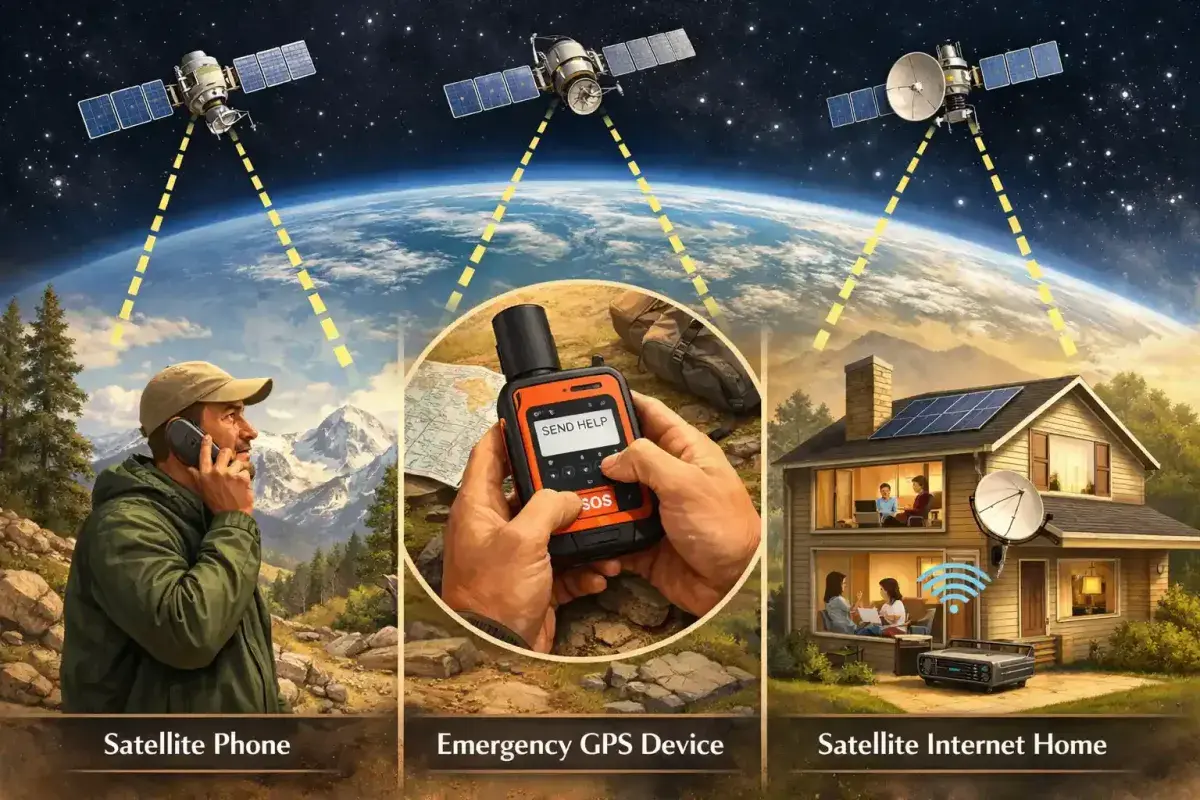
Over time, Globalstar expanded its capabilities to support additional applications beyond traditional satellite phones. Messaging services, location tracking, and emergency communication became increasingly important as personal safety devices gained popularity among hikers, campers, and adventurers exploring remote landscapes. These services offered reassurance to both travelers and their families by providing dependable ways to request assistance when conventional mobile coverage disappeared.
A major milestone arrived when Globalstar technology became part of emergency satellite messaging for certain smartphones. This partnership introduced millions of consumers to satellite communication without requiring them to purchase dedicated satellite equipment. For many people, it represented their first direct interaction with space based communications during emergency situations.
Although Globalstar never attempted to become a global broadband provider, it demonstrated that satellite networks could continue evolving to meet changing consumer expectations. The company adapted its technology toward practical everyday applications while remaining focused on communication reliability rather than delivering extremely high data speeds.
Its history reminds us that successful innovation does not always require pursuing the largest market. Sometimes addressing specialized needs with dependable technology creates lasting value that continues serving customers for decades.
Image

4. Why Building SpaceX Changed Everything
When Elon Musk founded SpaceX in 2002, the company's primary mission centered on making space transportation dramatically more affordable. At first glance, this objective appeared unrelated to internet services. Yet lowering the cost of reaching orbit would eventually become one of the most important factors that made Starlink possible.
Launching satellites had traditionally been extremely expensive. Every spacecraft represented a significant financial investment before it even began operating. If thousands of satellites were required to provide broadband internet across the globe, launch expenses alone would have made such a project economically unrealistic. This limitation discouraged many ambitious ideas from progressing beyond theoretical studies.
SpaceX gradually transformed launch economics through the development of reusable rockets. Recovering and reusing major rocket components reduced costs while increasing launch frequency. The company also refined manufacturing techniques and streamlined production, allowing satellites and launch vehicles to be produced more efficiently than before.
These improvements created opportunities that previous generations of satellite companies simply did not possess. Instead of carefully protecting a small constellation because replacements were prohibitively expensive, SpaceX could continuously launch additional satellites while upgrading hardware with newer technology over time. This flexibility encouraged rapid innovation and ongoing improvements throughout the network.
The relationship between SpaceX and Starlink illustrates an important principle in technological development. Sometimes the most valuable innovation is not the final product itself but the infrastructure that enables entirely new possibilities. Without affordable and frequent access to space, the vision of deploying thousands of broadband satellites would likely have remained financially unattainable.
By solving one challenge first, SpaceX laid the groundwork for another ambitious project that would eventually reshape expectations about satellite internet around the world.
Image

5. How Starlink Redefined What Satellite Internet Could Become
When Starlink entered public awareness, many people assumed it would simply become another satellite communication company. Instead, it introduced an entirely different vision. Rather than focusing mainly on voice calls or emergency messaging, Starlink sought to provide broadband internet capable of supporting nearly every online activity people performed at home or work. This represented a dramatic shift in expectations for satellite based services.
Delivering broadband through thousands of low Earth orbit satellites required remarkable coordination between spacecraft, ground stations, user terminals, and sophisticated software. Each satellite continually moved around Earth while handing connections from one satellite to another. Customers experienced this process without needing to understand the extraordinary complexity operating above them every second.
Another major innovation involved the customer equipment itself. Traditional satellite systems often required specialized installation and equipment designed primarily for commercial or government users. Starlink introduced compact electronically controlled antennas that automatically aligned with satellites as they moved across the sky. This made satellite broadband far more accessible to ordinary households than earlier systems.
The impact extended beyond rural homes. Businesses, schools, emergency organizations, ships, aircraft, construction projects, and disaster recovery teams all discovered situations where fast satellite internet could provide valuable connectivity. Regions affected by natural disasters could restore communications more rapidly when conventional infrastructure became damaged.
Starlink also changed public expectations about what satellite internet should deliver. Instead of accepting slow speeds as unavoidable, customers began expecting performance suitable for streaming entertainment, participating in virtual meetings, online learning, and cloud based work. This shift influenced the entire satellite communications industry and encouraged competitors to pursue new technologies and expanded capabilities.
Rather than replacing the achievements of earlier satellite pioneers, Starlink demonstrated how decades of technological progress combined with lower launch costs and modern engineering could transform an established concept into something that reached an entirely new audience.
Image

6. Why Starlink Is Not Simply a Bigger Version of Iridium or Globalstar
At first glance, it may seem reasonable to assume that Starlink is simply a much larger version of Iridium or Globalstar. All three rely on satellites that orbit relatively close to Earth, and all three are designed to connect people beyond the reach of traditional communication networks. However, that comparison overlooks the very different problems each system was created to solve. Their similarities exist mainly in the fact that they operate in space. Their missions, engineering priorities, and customer expectations are remarkably different.
Iridium and Globalstar were built during an era when dependable communication mattered far more than moving massive amounts of information. Their customers often needed to send a short message, place a voice call, or request emergency assistance from locations where no other option existed. These networks succeeded because they remained reliable even under demanding conditions. Their equipment emphasized durability, portability, and dependable performance rather than high speed internet access.
Starlink entered a world where digital lifestyles had completely changed. People expected to stream movies, participate in video conferences, upload creative projects, play online games, and operate businesses from almost anywhere. Meeting those expectations required an entirely different network architecture. Instead of focusing on conserving bandwidth, Starlink was designed to deliver enough capacity for activities that consume enormous amounts of data every day.
Another important distinction involves the customer experience. A scientist working in Antarctica with a satellite phone has very different communication needs from a family living on a remote farm that wants the same internet experience enjoyed in a major city. Both situations involve isolation, but the technical requirements are completely different. One values reliability above everything else, while the other expects speed, low delay, and continuous connectivity for multiple devices.
Understanding these differences helps explain why Starlink did not replace Iridium or Globalstar. Instead, it expanded the satellite communications landscape by addressing an entirely different market. Even today, there are situations where a compact satellite phone remains the better choice, just as there are situations where broadband internet is essential. The existence of multiple solutions reflects the diversity of communication needs around the world rather than unnecessary competition between companies.
Image

7. How Advances in Technology Made Starlink Possible
Many people associate Starlink with Elon Musk because SpaceX created and operates the network, yet the project also represents the convergence of many technological advances that matured over several decades. If engineers had attempted to build the same system during the nineteen nineties, it would almost certainly have failed because the necessary tools simply did not exist at the required level of performance or affordability.
One of the most significant changes involved launch costs. For many years, sending satellites into orbit required enormous financial resources, making large constellations extremely difficult to justify. SpaceX changed this equation by developing reusable rockets that could return to Earth, undergo refurbishment, and fly again. Lower launch expenses made it realistic to place thousands of satellites into orbit while replacing older units with newer generations over time.
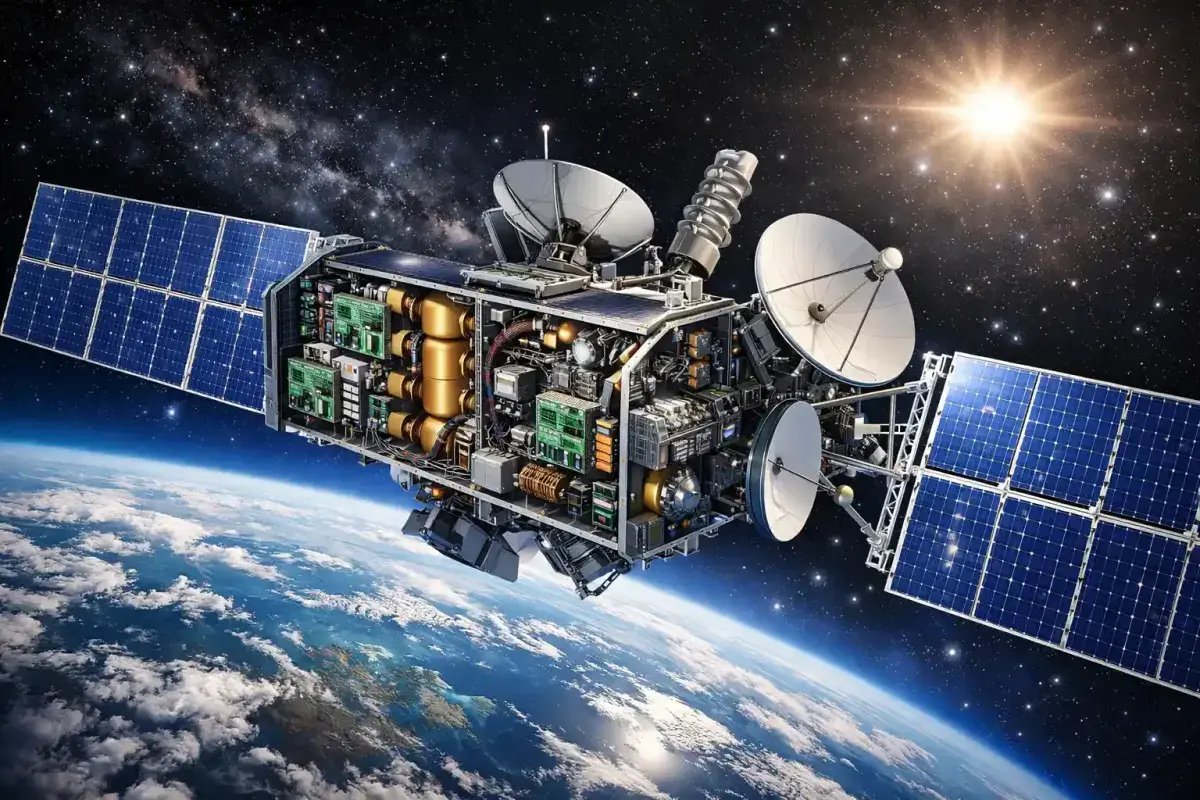
Satellite manufacturing also evolved dramatically. Modern satellites became smaller, lighter, and far more capable than earlier designs. Advances in electronics allowed onboard computers to process larger amounts of information while consuming less power. Improved solar panels and batteries increased operating efficiency, allowing spacecraft to remain productive throughout their missions.
Ground equipment experienced similar improvements. Instead of requiring complicated installations performed by specialists, modern electronically controlled antennas became easier for ordinary customers to set up. These antennas automatically tracked satellites moving across the sky without requiring mechanical adjustments. The result was a much simpler experience for households that had never used satellite communications before.
Software played an equally important role. Sophisticated algorithms continuously manage thousands of satellites while directing customer connections through the most efficient routes. This process occurs so quickly that users rarely notice the complex coordination happening above them. Artificial intelligence and advanced automation also assist with monitoring network performance, identifying potential issues, and improving efficiency across the entire constellation.
When viewed together, these developments demonstrate that Starlink is not the result of a single invention. It represents the combination of advances in rocketry, electronics, computing, manufacturing, software, and communications engineering. Each improvement contributed another piece to a puzzle that eventually allowed global broadband satellite internet to become practical.
Image
8. What the Future May Hold for Satellite Communications
Satellite communications continue to evolve at a remarkable pace, and the coming years are likely to bring changes that would have seemed impossible only a generation ago. As technology advances, the distinction between traditional cellular networks and satellite systems may become less noticeable to everyday users. Instead of thinking about whether a connection comes from a tower or a satellite, people may simply expect reliable communication wherever they happen to be.
One important trend involves direct communication between ordinary smartphones and satellites. Rather than carrying specialized equipment, users may increasingly rely upon devices already in their pockets to send messages during emergencies or maintain basic communication in remote regions. Early versions of this capability already exist, and future improvements could expand both coverage and functionality.
Competition is also encouraging innovation. As additional companies invest in satellite constellations, engineers continue searching for ways to improve speed, reduce operating costs, increase network capacity, and enhance reliability. This healthy competition benefits consumers because each new advancement encourages others to develop even better solutions. The result is an industry that continues moving forward instead of remaining satisfied with existing achievements.
Environmental responsibility is becoming another important consideration. Operators now devote greater attention to reducing space debris, safely removing retired satellites from orbit, and designing systems that minimize long term risks to future space missions. Responsible management of orbital resources will become increasingly important as more satellites enter service around Earth.
The future will likely include networks that work together rather than replacing one another completely. Broadband systems may provide high speed internet for homes and businesses, while specialized satellite networks continue serving emergency responders, scientific expeditions, maritime operations, aviation, and remote industrial facilities. Each technology can contribute unique strengths that complement the others.
Looking ahead, satellite communications appear poised to become an even more essential part of everyday life. What once served only a limited number of professionals in remote locations is gradually becoming an important extension of the world's communication infrastructure. The journey that began with pioneering constellations such as Iridium and Globalstar continues today with new innovations that promise to connect even more people across every corner of the planet.
Image

9. What We Can Learn From Three Different Visions of Connectivity
Looking back at the development of Iridium, Globalstar, and Starlink reveals an important lesson about innovation. Revolutionary ideas rarely appear in isolation. More often, they grow from earlier achievements, solve new problems, and take advantage of technologies that were unavailable to previous generations. Each of these satellite networks reflects the needs and possibilities of the era in which it was created.
Iridium demonstrated that a constellation of low Earth orbit satellites could provide dependable communication across nearly every part of the planet. It showed that people working in remote environments no longer had to remain isolated simply because cellular towers could not reach them. For emergency responders, explorers, military personnel, and maritime operators, this represented a significant improvement in safety and operational efficiency.
Globalstar approached the challenge from a different direction while continuing to expand practical satellite communications. Its services supported businesses, outdoor enthusiasts, transportation companies, and emergency applications that required reliable messaging and location awareness. By adapting its technology to changing consumer needs, the company proved that satellite communication could extend beyond specialized government and commercial users into products that benefited ordinary people.
Starlink built upon decades of experience while pursuing an entirely different objective. Instead of focusing primarily on voice calls or short messages, it sought to deliver broadband internet that could support the growing digital demands of modern society. Remote work, online education, entertainment, cloud computing, and video communication all became practical in places where traditional infrastructure was unavailable.
These three systems remind us that technological progress is not a competition in which one idea completely erases another. Instead, each innovation expands the possibilities available to society. Different users have different requirements, and successful technologies often coexist because they solve distinct problems. A rescue team operating after a natural disaster, a research vessel crossing the ocean, and a family living in a rural community may all depend upon satellite communication, yet each may benefit from a different type of network.
By understanding the unique strengths of each system, we gain a clearer appreciation of how the satellite industry has evolved from basic communication services into an increasingly connected future.
Image
10. The Next Chapter Will Be Written by Future Innovators
Although Starlink currently attracts much of the public attention, the history of satellite communications is still being written. Every generation of engineers builds upon the work of those who came before, and future innovators will almost certainly introduce technologies that seem unimaginable today. The pace of change suggests that satellite communications will continue expanding in ways that benefit both developed cities and the most remote communities around the world.
One area of continued development involves improving the relationship between terrestrial and satellite networks. Instead of operating as completely separate systems, future communication services may switch automatically between ground infrastructure and satellites without users noticing any difference. This seamless experience could make reliable connectivity available in more locations while improving resilience during natural disasters and infrastructure failures.
Artificial intelligence is also expected to play an increasing role in managing satellite constellations. Intelligent software may optimize traffic, predict maintenance needs, reduce communication delays, and improve the overall efficiency of large networks. These capabilities could allow future constellations to serve more users while consuming fewer resources and operating with greater reliability.
International cooperation will remain essential as more countries and private organizations launch satellites into orbit. Shared standards, responsible orbital management, and continued investment in safe space operations will help ensure that future generations can continue benefiting from satellite technology without creating unnecessary risks. Maintaining the long term sustainability of space will require careful planning and cooperation across the global community.
Perhaps the most exciting aspect of this journey is that innovation remains open to new ideas. The next major breakthrough may come from technologies that have not yet been invented or from companies that do not yet exist. Just as Iridium and Globalstar inspired new thinking that eventually contributed to Starlink, future pioneers will likely discover new ways to connect people that extend beyond today's expectations.
The story of satellite communications reminds us that progress is rarely about replacing the past. Instead, it is about learning from earlier successes, improving upon proven ideas, and creating new opportunities that help people communicate, learn, work, and explore with greater confidence than ever before.
Image

The evolution of satellite communications is a story of continuous progress rather than sudden transformation. Long before broadband internet reached remote communities through Starlink, companies such as Iridium and Globalstar had already demonstrated that low Earth orbit satellites could deliver dependable communication where traditional infrastructure could not. Their pioneering efforts proved that space based networks could become practical tools for people working, traveling, and living far beyond the reach of cellular towers.
Starlink entered this established field with a different vision. Instead of concentrating on voice calls or emergency messaging, it pursued the far more demanding goal of providing broadband internet that could support everyday digital life. This ambition became possible because advances in reusable rockets, satellite manufacturing, computing, antenna technology, and software dramatically changed what engineers could accomplish. SpaceX combined these developments into a network that challenged long held assumptions about satellite internet performance.
At the same time, the success of Starlink should not overshadow the achievements of the companies that came before it. Iridium and Globalstar solved important communication challenges during periods when available technology imposed significant limitations. Their experience helped demonstrate the value of low Earth orbit constellations and contributed valuable knowledge that benefited the wider satellite industry. Innovation often advances through many connected steps rather than a single breakthrough.
Today, each of these systems continues serving valuable purposes for different users around the world. Together they illustrate how technological progress builds upon earlier accomplishments while adapting to changing needs and expectations. As satellite communications continue evolving, future innovators will undoubtedly introduce new ideas that further expand global connectivity. The journey from dependable satellite phone calls to high speed broadband internet reminds us that the greatest innovations often emerge by combining established knowledge with bold new thinking.