
Reading is one of the most remarkable activities the human brain can perform. At first glance, it may seem like a simple act. A person opens a book, looks at words on a page, and follows a story or learns something new. Behind the scenes, however, an incredible process is taking place. Millions of brain cells communicate with one another at astonishing speed as letters become words, words become ideas, and ideas become vivid experiences inside the mind.
Unlike many daily activities, reading engages several areas of the brain at the same time. Language centers interpret meaning, memory systems connect information to past experiences, and imagination helps create mental pictures. Even emotional regions become active when readers connect with characters, events, or powerful ideas. This combination makes reading one of the most complete mental workouts available.
Scientists have spent decades studying how reading affects cognitive function. Their findings continue to reveal fascinating insights. Reading can strengthen memory, improve concentration, encourage creativity, and even help people better understand the emotions of others. These benefits are not limited to children or students. Adults and older individuals can experience positive effects as well, making reading a valuable habit throughout life.
Books are particularly powerful because they require active participation from the reader. Unlike passive entertainment, reading asks the brain to fill in details, imagine scenes, and follow complex thoughts. Every page becomes a collaboration between the writer and the reader's mind.
The next time you pick up a favorite novel, biography, or nonfiction book, remember that much more is happening than simple entertainment. Your brain is working, adapting, and growing with every chapter. Here are ten fun facts that reveal just how extraordinary the connection between reading and the human brain can be.
Image
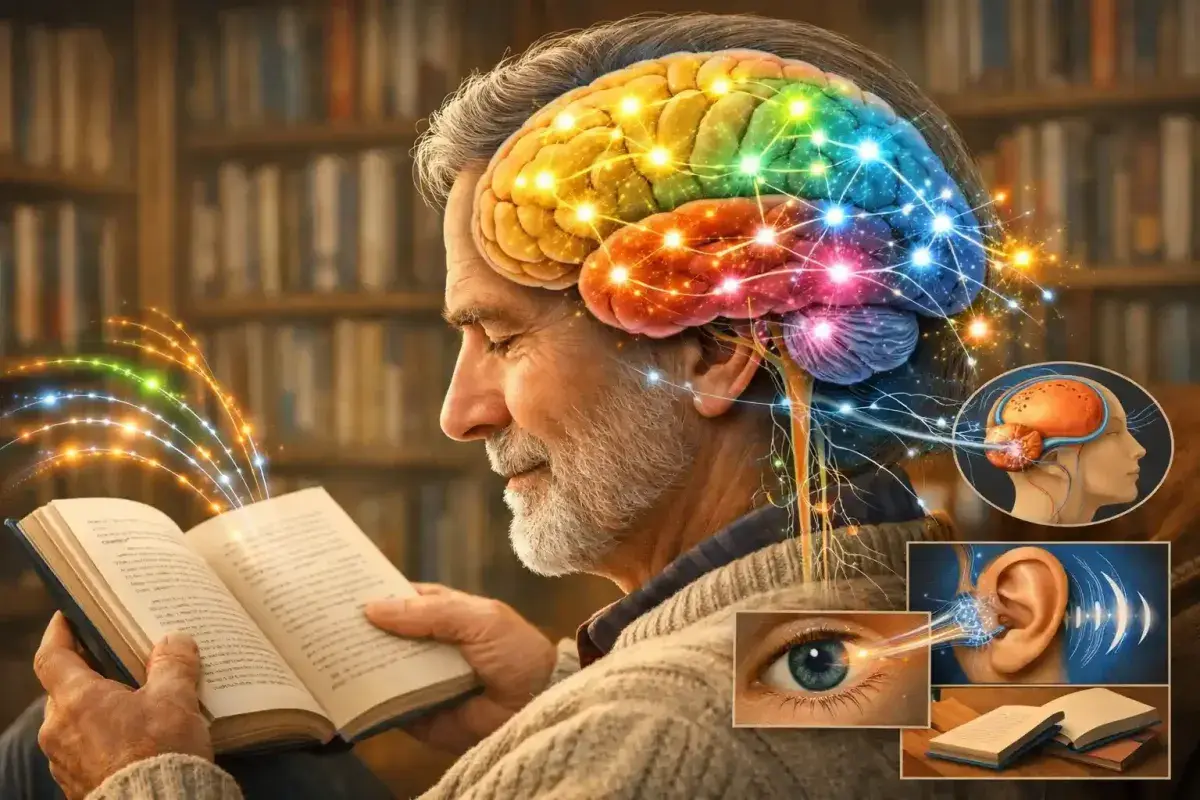
1. Reading Activates Many Parts of the Brain at Once
One of the most fascinating facts about reading is that it rarely involves just a single area of the brain. Instead, reading functions more like a coordinated team effort. Different regions work together to process language, recognize symbols, create meaning, recall memories, and imagine scenes.
When a reader sees a word, visual areas first identify the letters. Language centers then decode the meaning of those words. Memory systems compare new information with existing knowledge. At the same time, imagination helps construct mental images that bring the text to life. Emotional centers may also become active if the content triggers feelings such as excitement, curiosity, happiness, or concern.
This extensive brain activity is one reason reading is often described as a mental workout. Imagine visiting a gym where several muscle groups are exercised during a single session. Reading provides a similar experience for the mind. Instead of training only one skill, it encourages multiple cognitive functions to work together.
The process becomes even more impressive when reading fiction. Readers often visualize characters, environments, sounds, and events. Even though they are sitting still, their brains can create experiences that feel surprisingly vivid. A well written story can transport someone to another country, another century, or even another world.
Researchers have discovered that brain activity during reading can resemble activity that occurs during real experiences. Reading about running may stimulate areas associated with movement. Reading descriptions of smells or tastes may activate related sensory regions. The brain often responds as if it is participating in the events being described.
This remarkable ability helps explain why books can feel immersive and memorable. Every page becomes an opportunity for the brain to engage in complex and meaningful work. Reading is not merely looking at words. It is a highly active process that turns symbols on a page into living experiences inside the mind.
Image
2. Reading Helps Strengthen Memory
Memory plays a major role in reading, and reading gives memory an excellent workout in return. Every time a reader progresses through a book, the brain stores and organizes information. Characters, locations, facts, themes, and events must all be remembered to make sense of what happens next.
Consider reading a mystery novel. A reader may need to remember clues presented many chapters earlier. The brain continuously retrieves and updates information while processing new details. This repeated exercise helps strengthen memory related pathways.
Nonfiction books provide another form of memory training. Readers absorb facts, concepts, and explanations while connecting them to knowledge they already possess. The more frequently these mental connections are used, the stronger they can become.
Reading also encourages the brain to organize information into meaningful structures. Rather than storing isolated details, the mind creates relationships among ideas. This organization can make information easier to recall later.
Another interesting aspect is that stories often help people remember information more effectively than isolated facts. Human brains naturally respond to narratives. When information is presented within a story, readers often form stronger emotional and mental connections to it. Those connections can make memories more durable.
Many avid readers notice that they become skilled at recalling details from books they enjoyed years earlier. While memory naturally changes over time, regular reading provides consistent opportunities to practice retention and recall.
The benefits extend beyond the pages themselves. Skills developed through reading can support learning in many areas of life. Whether remembering names, instructions, historical events, or professional knowledge, a brain that regularly engages with books receives frequent opportunities to exercise its memory systems.
Reading may not feel like studying, especially when the material is entertaining, but the brain is constantly strengthening important cognitive abilities. Each chapter offers another chance to build mental connections that contribute to long term learning and memory.
Image

3. Reading Expands Imagination
Reading allows the brain to create entire worlds without requiring physical images on a screen. This unique quality makes books powerful tools for imagination.
When watching a film, many visual details are provided. Reading is different. Authors describe people, places, and events, but readers complete the picture themselves. The brain becomes an active creator rather than a passive observer.
As a result, every reader may imagine a story slightly differently. One person might picture a castle in a particular style, while another envisions something entirely different. These personal interpretations demonstrate the creative power of the human mind.
Imagination is not limited to fiction. Reading history, science, travel writing, and biographies can also stimulate creative thinking. Readers imagine distant locations, historical moments, scientific possibilities, and future innovations.
This ability to mentally explore situations beyond immediate experience can support problem solving and innovation. Many inventors, scientists, entrepreneurs, and artists have credited books with inspiring new ideas. Reading introduces concepts that the brain can combine in unexpected and creative ways.
Imagination also helps readers understand perspectives they may never encounter directly. Through stories, people can experience different cultures, professions, challenges, and lifestyles. These mental journeys broaden understanding and encourage curiosity.
Children often benefit significantly because reading helps develop creative thinking during important stages of development. However, adults continue to gain imaginative benefits as well. Creativity does not disappear with age, and books remain valuable tools for keeping it active.
The next time a story draws you into a vivid world, remember that your brain is performing an extraordinary feat. It is transforming simple words into detailed experiences, proving that imagination remains one of humanity's most remarkable mental abilities.
Image

4. Reading Can Improve Focus and Concentration
Reading requires attention. Unlike many forms of media that constantly change images and sounds, books encourage readers to follow a continuous stream of ideas. This sustained engagement can help strengthen concentration skills.
When reading a chapter, the brain must remain focused long enough to understand the narrative or absorb information. Frequent interruptions make comprehension more difficult. As a result, reading naturally encourages longer periods of attention.
Modern life often presents countless distractions. Notifications, messages, videos, and advertisements compete for attention throughout the day. Reading offers a different experience. It creates an opportunity to slow down and engage deeply with a single activity.
Many readers notice that regular reading makes it easier to remain focused during work, study, and other tasks. While concentration varies among individuals, reading provides valuable practice in directing attention toward a specific goal.
Longer books can be especially beneficial because they require readers to maintain engagement across many chapters. Following complex plots or detailed arguments exercises the brain's ability to stay mentally organized and attentive.
Focus is important not only for academic achievement but also for everyday decision making and productivity. Activities that encourage sustained concentration may help individuals manage information more effectively.
Reading also promotes a sense of immersion. When readers become absorbed in a compelling story, they often lose awareness of surrounding distractions. This state of deep engagement demonstrates the brain's remarkable capacity to focus intensely on meaningful content.
Developing concentration is similar to strengthening a muscle. Consistent practice tends to produce stronger results than occasional effort. Reading provides an enjoyable and accessible way to exercise attention while simultaneously gaining knowledge or entertainment.
For people seeking a break from constant digital stimulation, books offer a refreshing opportunity to reconnect with focused thinking and sustained mental engagement.
Image

5. Reading Helps You Understand Other People Better
One surprising effect of reading is its connection to empathy. Empathy is the ability to understand and share the feelings of others. Books, especially stories, can help strengthen this important human skill.
When readers follow characters through challenges, successes, fears, and personal growth, they spend time considering perspectives different from their own. The brain practices understanding thoughts, motivations, and emotions that belong to someone else.
This process can broaden awareness and encourage compassion. Readers encounter people from different backgrounds, cultures, generations, and circumstances. Through stories, they gain insight into experiences they may never personally encounter.
Fiction is particularly effective because it often explores emotional complexity. Readers witness characters making difficult decisions, facing conflicts, and learning important lessons. Following these journeys can deepen emotional understanding.
Books provide a safe environment for exploring unfamiliar situations. Readers can experience challenges indirectly while reflecting on how they might respond themselves. This mental exercise encourages perspective taking, a key component of empathy.
Empathy plays an important role in relationships, teamwork, leadership, and communication. Understanding other viewpoints helps people navigate social interactions more effectively. Reading offers a unique opportunity to develop these skills through engaging narratives.
The emotional connections formed with fictional characters can feel surprisingly real. Readers may celebrate victories, feel concern during difficult moments, and reflect on meaningful themes long after finishing a book. These reactions demonstrate how deeply stories can influence human thought and emotion.
Far from being a solitary activity, reading can strengthen the social and emotional skills that connect people to one another. Every story becomes an invitation to see the world through different eyes, enriching both understanding and compassion.
Image

6. Reading Encourages the Brain to Build New Connections
The human brain is remarkably adaptable. Throughout life it constantly forms, strengthens, and reorganizes connections between nerve cells. Scientists often refer to this ability as neuroplasticity. While the term may sound technical, the idea behind it is simple. The brain changes in response to experiences, and reading is one of the activities that can encourage this process.
Every book introduces new information, unfamiliar ideas, and different ways of thinking. As readers encounter these concepts, the brain works to connect them with existing knowledge. New mental pathways begin to form as understanding grows. The more often these pathways are used, the stronger they can become.
Imagine learning about an ancient civilization for the first time. The brain starts linking facts about geography, culture, history, and human behavior. Later, when reading another book on a related topic, those existing connections help make learning easier and more meaningful. Knowledge becomes a network rather than a collection of isolated facts.
Fiction contributes as well. Following a complex storyline requires readers to remember relationships, understand motivations, and connect events across many chapters. The brain continuously builds links between pieces of information in order to understand the bigger picture.
One reason reading remains beneficial throughout life is that it provides constant opportunities for mental growth. Whether someone is reading about science, travel, philosophy, history, or personal development, the brain is actively creating and refining connections.
This adaptability helps explain why lifelong learners often remain intellectually curious. Every new subject expands the mental framework through which they understand the world. Reading does not simply add information. It helps create richer and more interconnected patterns of thought.
Even a short reading session can expose the brain to fresh ideas and perspectives. Over months and years, these experiences accumulate into a vast network of knowledge and understanding. Every page becomes another opportunity for the brain to strengthen itself through learning, exploration, and discovery.
Image

7. Reading Can Help Calm the Mind
Many people turn to books because they enjoy stories or want to learn something new. An additional benefit is that reading can create a sense of calm and relaxation. When readers become absorbed in a book, their attention shifts away from daily worries and focuses on the material in front of them.
Modern life often involves constant stimulation. Phones, social media, work demands, and endless streams of information compete for attention. This environment can leave people feeling mentally exhausted. Reading offers a chance to slow down and engage with a single activity in a more deliberate way.
When someone settles into a comfortable chair with a good book, the brain begins focusing on characters, ideas, and narratives rather than immediate concerns. This shift in attention can create a welcome mental break. Readers often describe losing track of time because they become fully immersed in the experience.
Stories can be particularly effective because they transport readers into different settings and situations. For a while, concerns about schedules, deadlines, or responsibilities fade into the background. The brain becomes engaged in exploration rather than stress.
Nonfiction can provide similar benefits. Reading about nature, history, travel, or inspiring individuals often creates a sense of curiosity and reflection. The act of concentrating on meaningful content can feel restorative after a busy day.
Reading before bedtime is a habit many people enjoy because it encourages a gradual transition from activity to rest. A quiet reading routine can help create a peaceful environment and prepare the mind for sleep.
Another advantage is that books do not require constant interaction. Unlike many digital activities that encourage rapid responses and multitasking, reading invites patience and steady engagement. This slower pace can feel refreshing in a fast moving world.
While reading cannot eliminate life's challenges, it can provide moments of calm, reflection, and enjoyment. Those moments allow the brain to recharge while continuing to learn and grow through the power of books.
Image
8. Reading Introduces Your Brain to Thousands of New Words
One of the most visible effects of reading is its impact on vocabulary. Every book exposes readers to words, phrases, and expressions they may not encounter in everyday conversation. Over time, this exposure helps expand language skills in a natural and enjoyable way.
When readers come across unfamiliar words, the brain begins gathering clues from the surrounding context. Even without looking up definitions immediately, people often develop a general understanding of meaning through repeated exposure. This process allows vocabulary to grow gradually and organically.
Different types of books contribute in different ways. Novels may introduce descriptive language and dialogue. Historical works may include specialized terms related to specific eras. Science books often present technical concepts. Biographies can expose readers to language associated with particular professions or experiences.
A larger vocabulary offers benefits beyond communication. Language influences thinking itself. The more words people understand, the more precisely they can express ideas, describe experiences, and interpret information. Words become tools that help the brain organize and communicate thoughts.
Reading also improves familiarity with sentence structure and grammar. Even when readers are not consciously studying language, their brains absorb patterns and conventions. Frequent exposure helps develop stronger reading comprehension and writing skills.
Children often experience dramatic vocabulary growth through regular reading, but adults continue learning new words throughout life as well. Every unfamiliar term represents an opportunity to expand understanding.
Books are especially valuable because they frequently contain richer language than everyday speech. Conversations tend to rely on commonly used words, while books often introduce more varied and expressive vocabulary. This variety challenges the brain and encourages linguistic growth.
The result is a cycle of improvement. As vocabulary expands, reading becomes easier and more enjoyable. As reading increases, vocabulary continues to grow. This positive relationship helps explain why lifelong readers often develop strong communication skills and a deep appreciation for language.
Image

9. Reading Helps the Brain Think Through Problems
Books do more than provide information. They often encourage readers to analyze situations, evaluate choices, and consider possible outcomes. These mental activities can strengthen problem solving skills.
Many stories involve challenges that characters must overcome. Readers follow their decisions, successes, mistakes, and consequences. Along the way, the brain naturally evaluates what is happening and often predicts what might occur next.
Mystery novels are a perfect example. Readers gather clues, identify patterns, and test theories while trying to solve the puzzle before the characters do. This process engages reasoning and critical thinking abilities.
Nonfiction books also contribute to problem solving. Reading about history, business, science, or personal development exposes readers to real world challenges and solutions. Learning how others approached difficult situations can inspire new ways of thinking.
The brain benefits whenever it examines relationships between causes and effects. Reading frequently requires this type of analysis. Readers ask questions, compare information, and draw conclusions based on evidence presented in the text.
Problem solving is valuable in nearly every area of life. Whether making financial decisions, managing projects, resolving conflicts, or pursuing personal goals, people rely on their ability to think critically and evaluate options.
Books provide countless opportunities to practice these skills. Each chapter presents information that must be interpreted and understood. Readers constantly assess what they know, what they do not know, and what might happen next.
The ability to think carefully and systematically often develops gradually through repeated mental exercise. Reading supplies that exercise in an enjoyable format. Instead of completing formal training, readers strengthen cognitive skills while being entertained or informed.
Over time, exposure to different perspectives, situations, and ideas helps create a more flexible and adaptable mind. That flexibility can support better decision making and more effective problem solving both inside and outside the pages of a book.
Image

10. Reading Is a Lifelong Exercise for the Brain
One of the greatest qualities of reading is that it can be enjoyed at virtually every stage of life. Unlike many activities that depend on age, location, or physical ability, reading remains accessible to millions of people across generations.
From childhood onward, books help the brain learn, adapt, and grow. Young readers develop language skills and imagination. Students use books to expand knowledge. Adults rely on reading for professional development, personal interests, and entertainment. Older individuals continue discovering new subjects and perspectives through books.
The brain benefits from ongoing mental engagement. Just as physical exercise helps maintain the body, intellectual activities help keep the mind active. Reading provides a convenient and enjoyable way to challenge cognitive abilities throughout life.
Every book introduces new information, unfamiliar viewpoints, and opportunities for reflection. These experiences encourage the brain to remain engaged rather than settling into repetitive patterns. Lifelong learning supports curiosity and intellectual growth.
Reading also connects generations. Families share stories, teachers introduce students to literature, and book clubs bring people together through discussion. These social connections add another dimension to the reading experience.
Another advantage is the incredible variety available. Readers can explore virtually any topic imaginable, from astronomy and ancient history to travel, psychology, art, and technology. There is always something new to discover.
Many lifelong readers describe books as companions that continue providing value year after year. A favorite novel may reveal new insights during different stages of life. A nonfiction work may inspire fresh ideas each time it is revisited.
The simple act of opening a book creates an opportunity for learning, imagination, reflection, and growth. Few activities offer such a rich combination of benefits. Reading remains one of the most rewarding ways to exercise the brain while expanding understanding of both the world and ourselves.
Books have entertained, educated, and inspired people for centuries, but their influence extends far beyond the stories and information they contain. Every time a person reads, the brain engages in a remarkable series of processes that support learning, memory, creativity, concentration, and emotional understanding. What appears to be a quiet activity is actually one of the most complex and rewarding forms of mental exercise available.
Books activate multiple brain regions, strengthen memory, expand imagination, improve focus, encourage empathy, build new neural connections, promote relaxation, increase vocabulary, enhance problem solving abilities, and support lifelong cognitive engagement. Together, these benefits make reading one of the most valuable habits a person can develop.
Perhaps the most impressive aspect of reading is that its rewards continue accumulating over time. A single book may introduce new ideas, but years of reading can transform how people think, learn, communicate, and understand the world around them. Each page contributes to a larger journey of intellectual and personal growth.
Reading does not require expensive equipment, advanced training, or special circumstances. It can be enjoyed almost anywhere and adapted to nearly any interest. Whether someone prefers fiction, history, science, biographies, travel writing, or self improvement books, every reading experience offers opportunities for the brain to learn and develop.
In a world filled with distractions and fast moving information, books provide something increasingly valuable: the chance to slow down, focus deeply, and engage meaningfully with ideas. That simple act benefits not only knowledge and understanding but also the health and vitality of the brain itself.
The next time you open a book, remember that you are doing much more than reading words on a page. You are giving your brain an opportunity to grow, adapt, and thrive through one of humanity's most enduring and powerful activities.