
Starting an online business has never been more accessible than it is today. Just a couple of decades ago, launching a website often required thousands of dollars, professional developers, graphic designers, and expensive software licenses. Many people with great ideas never moved forward because the cost of entry was simply too high. Today, the situation is completely different. With affordable domain names, low cost hosting plans, open source software, and powerful artificial intelligence tools, almost anyone can build an online presence without spending a fortune.
One of the biggest misconceptions about online businesses is that success requires a large startup budget. While having more money can certainly accelerate growth, it is not a requirement for getting started. Many successful websites began as simple projects built from spare bedrooms, kitchen tables, or home offices. What mattered was not the size of the budget but the willingness to learn, experiment, and consistently improve over time.
The internet has leveled the playing field for entrepreneurs. A small startup can now use many of the same technologies that larger organizations use. Free open source platforms power millions of websites around the world. Cloud based services provide security and performance enhancements at little or no cost. Artificial intelligence tools can help beginners solve technical challenges that previously required hiring experts.
The key is to focus on building a solid foundation. Rather than spending money on expensive services, beginners can invest a small amount into essential tools and use freely available resources to learn the rest. A carefully planned website can be launched for less than the cost of a weekend dinner out.
This guide walks through ten practical steps for creating an online business with minimum investment. Whether you want to start an ecommerce store, a content website, a blog, a community platform, or another type of online venture, these steps can help you launch professionally while keeping expenses under control.
1. Decide What Kind of Online Business You Want to Start and Who Your Target Market Is
Image

The first step in starting any online business is deciding exactly what type of business you want to build. This may sound obvious, but many beginners skip this stage and rush directly into buying a domain name or creating a website. Without a clear direction, however, it becomes difficult to attract visitors, create useful content, or generate revenue.
Think about the purpose of your website. Are you planning to sell products, offer services, publish articles, create a membership community, provide educational content, or build a specialized information resource? Different business models require different strategies. An ecommerce store operates differently from a blog, and a membership platform operates differently from a consulting website.
Equally important is identifying your target market. Your target market is the group of people most likely to benefit from what you offer. Understanding their interests, challenges, and goals helps you create content and products that meet real needs. A website aimed at retirees will look very different from one designed for college students or technology enthusiasts.
Spend time researching your niche before building anything. Search for websites already serving similar audiences. Look at what they do well and identify areas where you could provide something unique. Pay attention to discussions on forums, social media platforms, and online communities to understand what people are talking about and what questions they frequently ask.
Do not worry about finding a completely untouched market. Most successful businesses enter competitive industries. The goal is not necessarily to be the first. The goal is to offer something valuable, useful, or distinctive that helps people solve a problem or achieve a goal.
The clearer your vision becomes at this stage, the easier every future decision will be. Your domain name, website design, content strategy, and marketing efforts will all benefit from having a clearly defined business concept and audience from the beginning.
2. Choose a Domain Name for Your Online Business
Image

Your domain name becomes the online identity of your business. It is the address people type into their browsers to find your website, and it often becomes one of the first things visitors remember about your brand.
When choosing a domain name, simplicity is usually the best approach. Short names tend to be easier to remember, easier to type, and less likely to be misspelled. A concise domain also looks cleaner on business cards, social media profiles, and marketing materials.
Whenever possible, try to secure a domain using a widely recognized extension such as .com, .net, or .org. These extensions have been around for many years and are familiar to internet users around the world. Many people automatically assume a website uses one of these extensions when searching for a business online.
Before registering a domain, consider how it sounds when spoken aloud. If someone hears the name during a conversation, will they be able to remember and spell it correctly later? Avoid unnecessarily complicated words, excessive abbreviations, or combinations of letters that could confuse potential visitors.
A domain name should also reflect the purpose of your business whenever practical. While creative branding can work very well, clarity often helps new businesses establish recognition more quickly. Visitors should be able to gain some sense of what your website is about simply by seeing the name.
The good news is that domain names remain very affordable. In many cases, you can register a quality domain for roughly nine to fifteen dollars per year. This small annual investment gives your business a professional online address and establishes a foundation for future growth.
Think of your domain name as digital real estate. A thoughtful choice today can continue supporting your business for many years to come.
3. Get Affordable Web Hosting for Your Business
Image
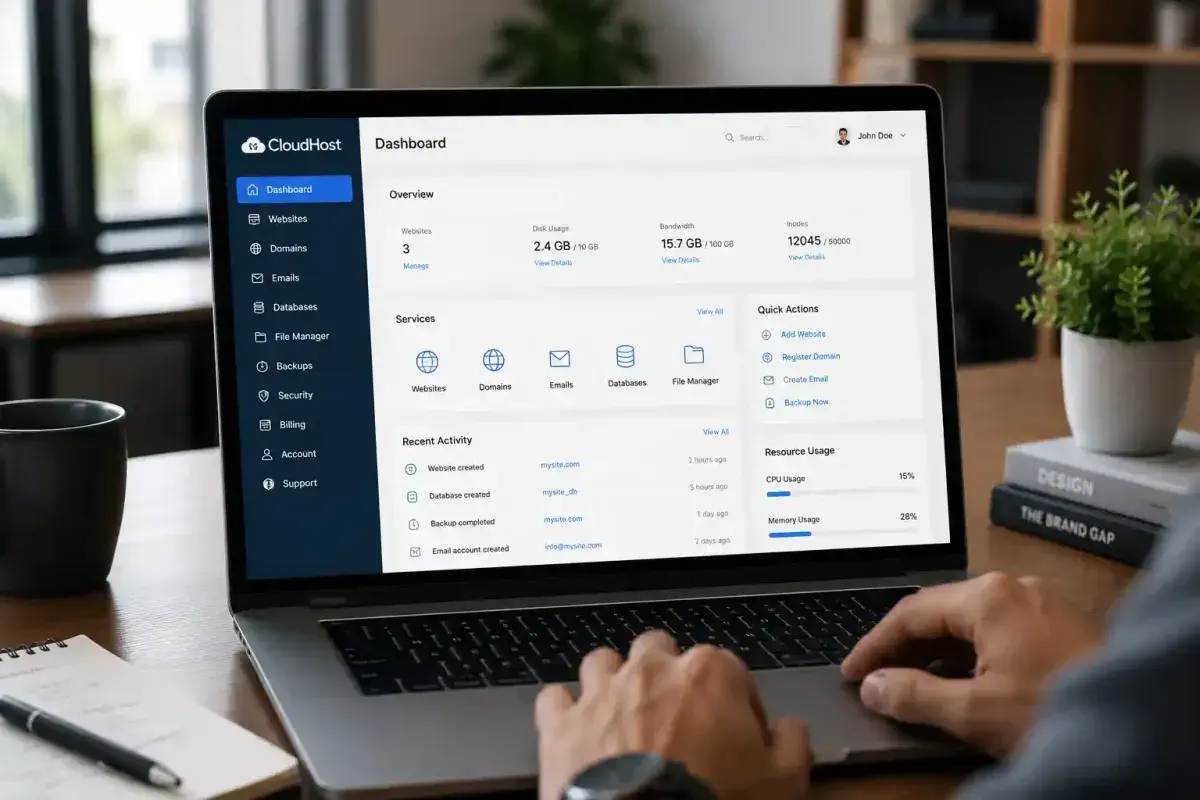
Once you have secured a domain name, the next step is finding a hosting provider. Web hosting is the service that stores your website files and makes them accessible to visitors around the world.
Many new business owners assume they need expensive hosting plans immediately. In reality, most startups begin with relatively low traffic and simple requirements. Purchasing a high end enterprise solution before it is needed often wastes money that could be used elsewhere in the business.
A reliable shared hosting plan is often more than enough for a new website. These plans provide the essential resources needed to launch and operate a site while keeping monthly costs manageable. As your traffic grows and your business expands, you can always upgrade to more powerful hosting packages later.
When evaluating hosting providers, focus on reliability, customer support, storage capacity, security features, and ease of use. A provider with responsive support can be especially valuable for beginners who may occasionally need assistance during setup or maintenance.
Hosting prices vary widely, but many reputable providers offer plans ranging from approximately two to nineteen dollars per month. If your budget allows, paying annually can often reduce costs significantly. Discounts ranging from twenty percent to sixty percent are commonly available for longer billing periods.
The most important thing to remember is that hosting is not a permanent decision. Businesses frequently upgrade or migrate hosting services as they grow. Your first hosting plan simply needs to provide a stable foundation for launching your website.
Starting small and scaling later allows you to minimize risk while preserving cash for other important aspects of your business development.
4. Choose an Open Source Platform That Fits Your Business
Image
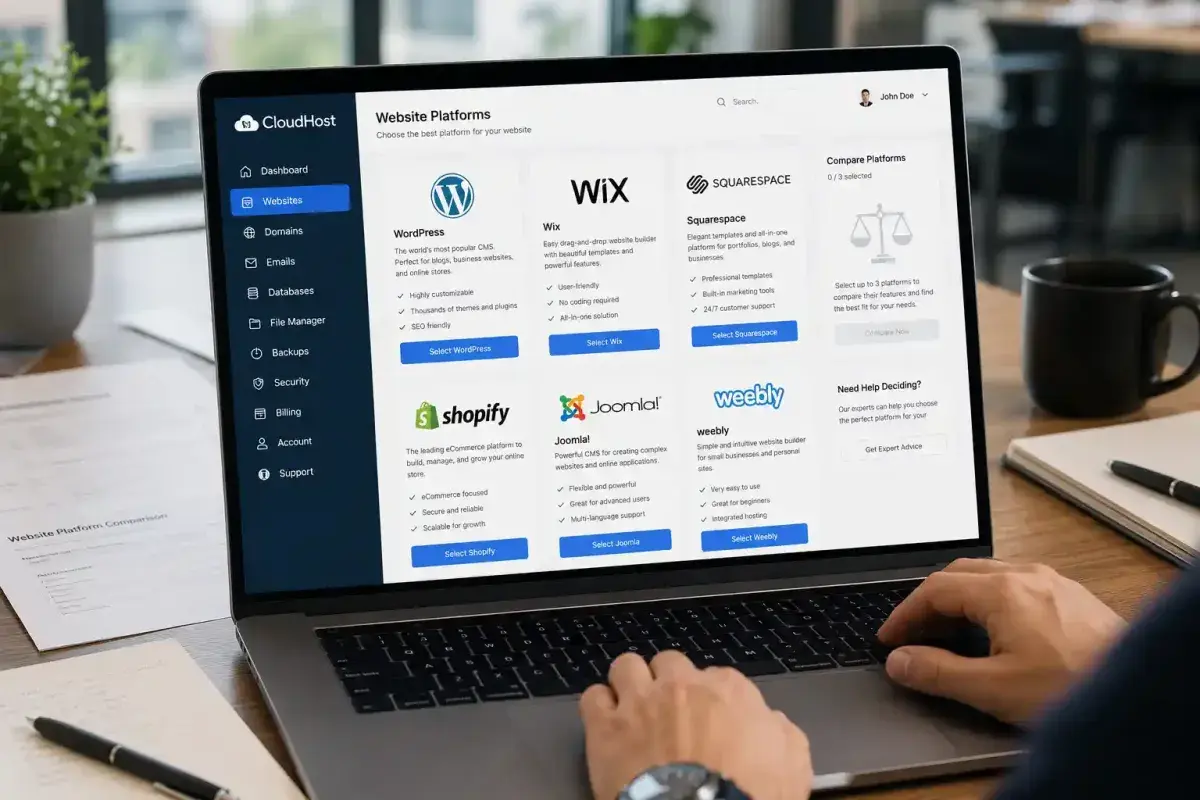
One of the greatest advantages available to modern entrepreneurs is the abundance of free open source software. These platforms allow people to build sophisticated websites without paying expensive licensing fees.
The best platform depends largely on your business goals. If you plan to create an ecommerce store, there are numerous open source solutions designed specifically for selling products online. If your goal is publishing articles, building communities, or creating content focused websites, there are many excellent content management systems available as well.
Open source software provides flexibility, customization, and freedom. Because the source code is available to the public, developers around the world continuously improve these platforms and create extensions that add new functionality. This large ecosystem often allows business owners to implement advanced features without needing custom development.
Examples include ecommerce focused platforms such as Magento, OpenCart, and Zen Cart. Content management systems such as Drupal, Joomla, and WordPress remain popular choices for blogs, news sites, and hybrid content platforms. These examples represent only a small portion of the available options.
Take time to research different platforms before making a decision. Consider factors such as ease of use, available themes, community support, scalability, and compatibility with your long term goals. Choosing a platform that aligns with your vision can save significant time and effort later.
Perhaps the most exciting aspect of open source software is that it allows entrepreneurs to compete with organizations that may have much larger budgets. A well configured open source platform can power websites that look and perform professionally without requiring major financial investment.
Your imagination often becomes the primary limitation rather than your budget.
5. Choose the Design of Your Website
Image
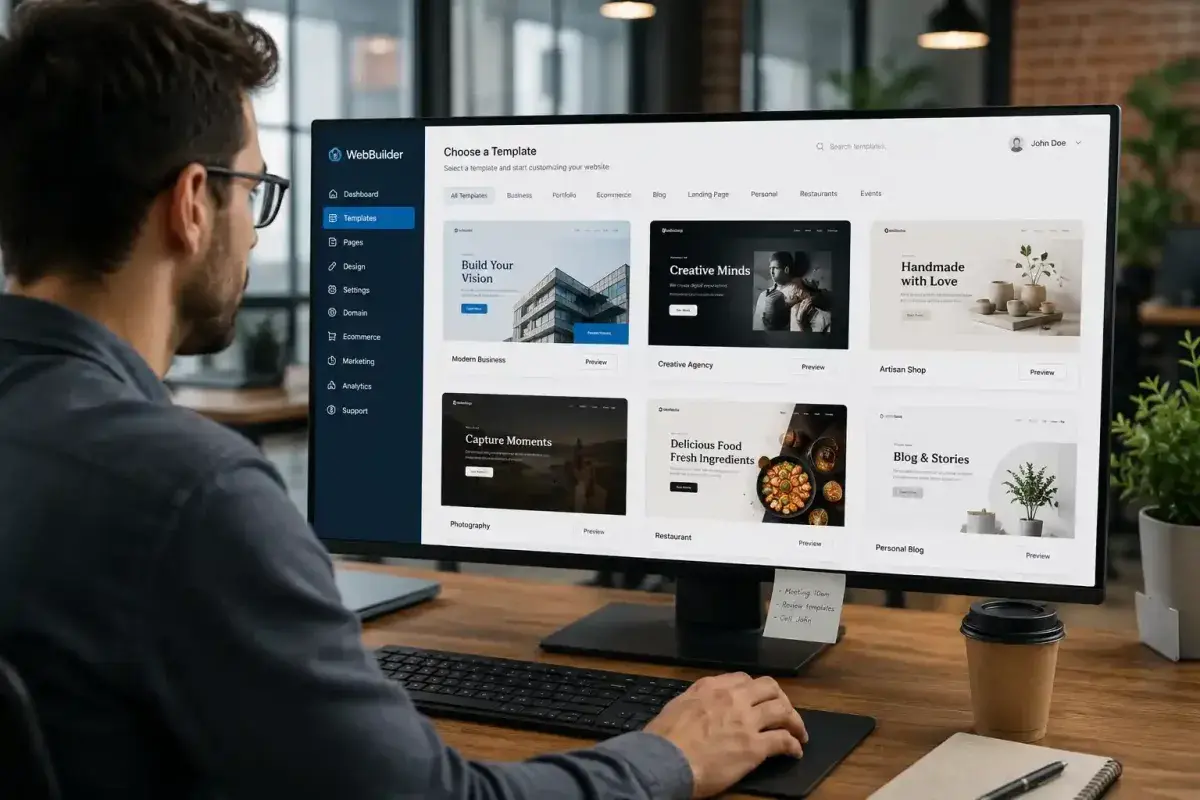
The visual appearance of your website creates an immediate impression on visitors. Within seconds of arriving, users begin forming opinions about your professionalism, credibility, and trustworthiness. That is why choosing the right design deserves careful attention.
Fortunately, creating a professional looking website no longer requires hiring an expensive design agency. Many open source platforms offer thousands of free and premium templates that can dramatically improve the appearance of your site with minimal effort.
If you have some experience with HTML, CSS, or web design principles, you may decide to customize a template or create your own design. Modern artificial intelligence tools can also assist with coding suggestions, design recommendations, and troubleshooting, making the process more accessible than ever before.
For those who prefer a faster approach, predesigned templates provide an excellent solution. Many templates include professionally designed layouts, responsive mobile compatibility, navigation systems, and visual elements that would otherwise require significant design expertise.
Premium templates are often available from marketplaces such as ThemeForest and TemplateMonster. Prices commonly range from approximately nine to ninety nine dollars depending on the complexity and features included. Compared to hiring freelancers or agencies that may charge hundreds or thousands of dollars, purchasing a quality template can provide substantial savings.
Remember that design should support usability rather than simply looking attractive. Visitors should be able to navigate your site easily, find information quickly, and complete desired actions without confusion. Simplicity and clarity often outperform overly complicated designs.
A well chosen template gives your website a polished appearance while allowing you to focus your time and energy on growing your business and serving your audience.
6. Install Your Platform and Template Using AI as Your Guide
Image

For many first time website owners, installation is the stage that creates the most anxiety. Terms such as databases, file managers, control panels, DNS settings, and configuration files can sound intimidating if you have never worked with websites before. The good news is that this step is far easier today than it was even a few years ago.
Most hosting providers now include one click installation tools that can automatically install popular open source platforms in just a few minutes. Instead of manually uploading files and configuring settings, you often only need to answer a few basic questions before the software is ready to use.
Even if you encounter a challenge during installation, there is no reason to panic. Modern artificial intelligence tools can provide step by step guidance in plain language. Rather than searching through complicated technical documentation, you can describe your problem and receive instructions tailored to your situation. This makes it possible for people with little or no technical background to complete tasks that once required professional assistance.
After installing your chosen platform, the next step is uploading and activating your selected template. Most platforms make this process straightforward through an administration panel. Once activated, your website immediately takes on a professional appearance and begins resembling the vision you had when you first planned the project.
The key is patience and willingness to learn. Every website owner encounters moments where something does not work exactly as expected. These small obstacles are a normal part of the process. What once might have required hiring a developer can now often be solved in minutes with the help of online tutorials and AI guidance.
In many cases, the entire installation process can be completed in less than ten minutes. Once finished, you will have a functioning website ready for customization, content creation, and future growth. The hardest part is often simply taking the first step and realizing that the process is much more manageable than it initially appears.
7. Connect Your Website to Cloudflare
Image
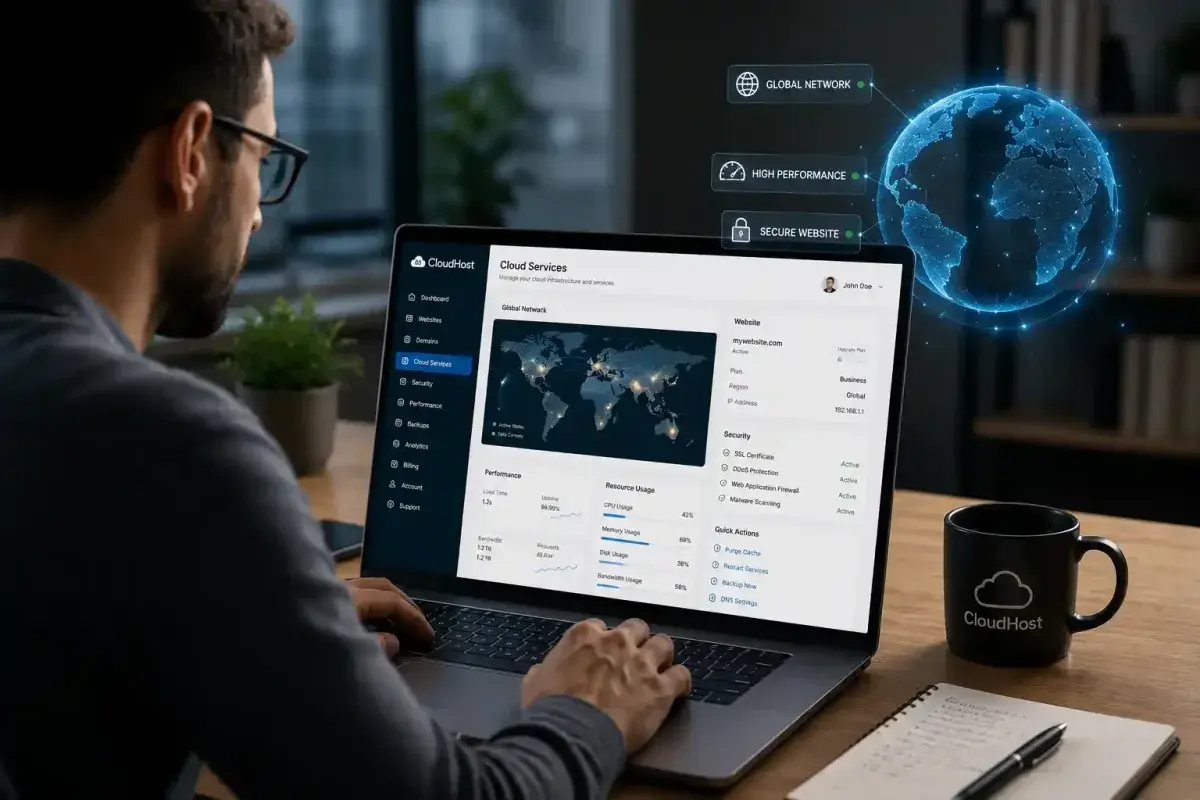
After your website is online, one of the smartest upgrades you can make is connecting it to Cloudflare. This service offers several valuable benefits that can improve both performance and security without increasing your startup costs.
One of the primary advantages is faster website loading times. Cloudflare operates a global network that helps deliver website content from locations closer to visitors. Instead of every visitor connecting directly to your hosting server, portions of your website can be served through Cloudflare's network, reducing delays and improving the browsing experience.
Website speed matters more than many beginners realize. Faster sites generally create a better user experience, encourage visitors to stay longer, and may contribute positively to search engine visibility. Even small improvements in loading speed can make a noticeable difference over time.
Another major benefit is security. Cloudflare helps protect websites against various online threats and suspicious traffic. While no service can guarantee complete protection, adding an additional layer of defense is especially valuable for new websites that may not yet have advanced security systems in place.
Perhaps the most recognizable benefit is SSL encryption. SSL creates the secure connection indicated by the padlock icon displayed in modern web browsers. Visitors increasingly expect websites to use secure connections, especially when forms, logins, or personal information are involved. A secure connection helps build trust and protects information transmitted between users and your website.
Many hosting providers offer SSL certificates, but Cloudflare provides a free option that can help reduce expenses. For startup businesses operating on a limited budget, every dollar saved can be redirected toward content creation, marketing, or future growth initiatives.
The setup process is generally straightforward, and AI tools can easily guide beginners through each step. Within a short period, your website can become faster, more secure, and more professional without adding significant costs to your overall budget.
8. Create Unique and Valuable Content
Image

Once your website is technically complete, the real work begins. Content is what transforms a website from an empty structure into a valuable destination that attracts visitors and encourages them to return.
Many people focus heavily on design and technology while overlooking the importance of content. In reality, content is often the single most important factor determining whether a website succeeds or fails. Visitors come to websites seeking information, solutions, entertainment, products, services, or experiences. Without quality content, even the most beautiful website struggles to gain traction.
Think carefully about what makes your website unique. What perspectives, knowledge, products, or experiences can you offer that others cannot? Your content should reflect the needs and interests of your target audience while showcasing your expertise and personality.
Originality matters. Search engines and visitors both tend to reward websites that provide fresh insights and valuable information. Rather than copying what others have already published, focus on creating content that adds something meaningful to the conversation. This could involve sharing personal experiences, conducting research, offering tutorials, publishing guides, or presenting information from a unique perspective.
Consistency is equally important. Publishing one excellent article and then disappearing for months rarely produces strong results. Building a content library over time creates more opportunities for search visibility, social sharing, and audience engagement. Every new article becomes another doorway through which potential visitors can discover your website.
Remember that content creation is a long term investment. Results rarely appear overnight. However, each piece of original content contributes to the overall value of your website and strengthens its foundation for future growth.
Among all the steps involved in building an online business, content creation often requires the greatest ongoing commitment. It is also one of the areas where dedication can produce the most significant rewards.
9. Use AI to Improve Your Search Engine Optimization
Image

Creating excellent content is essential, but people still need a way to discover it. This is where search engine optimization becomes important. Search engine optimization, often called SEO, refers to the process of improving your website so search engines can better understand and present your content to users.
In the past, SEO often required expensive consultants, specialized agencies, or years of technical experience. While professional expertise remains valuable, modern AI tools have made many aspects of SEO more accessible to beginners.
Artificial intelligence can help identify relevant keywords, improve article structure, suggest title ideas, create meta descriptions, optimize headings, and highlight opportunities for improvement. Instead of paying substantial fees for basic optimization tasks, website owners can often perform many of these activities themselves.
One of the most important aspects of SEO is understanding user intent. Successful websites create content that directly answers the questions people are searching for online. AI tools can help identify common search queries and provide insights into what users may want to know about a particular topic.
Technical SEO can also benefit from AI assistance. Issues involving page titles, internal links, image optimization, structured data, and content organization can often be diagnosed and improved with guided recommendations.
It is important to remember that SEO is not a one time task. Search engines continuously evolve, competitors publish new content, and audience interests change over time. Effective optimization requires ongoing attention and regular updates.
The advantage of using AI is that it lowers the barrier to entry. Instead of spending large amounts of money during the early stages of your business, you can learn fundamental optimization principles and gradually improve your website as your experience grows.
For entrepreneurs working with limited resources, this approach provides an opportunity to compete effectively while maintaining control over expenses.
10. Connect Analytics, Search Consoles, and Social Media Platforms
Image

Once your website contains quality content and basic optimization has been completed, the next step is measuring performance and expanding your reach. Fortunately, several powerful tools are available completely free of charge.
Google Search Console allows website owners to monitor how their pages appear in Google search results. It provides insights into indexing status, search visibility, keyword performance, and technical issues that may affect search rankings. This information helps identify opportunities for improvement and ensures your content can be discovered more easily.
Google Analytics provides detailed information about visitor behavior. You can learn how people find your website, which pages receive the most traffic, how long visitors stay, and what actions they take while browsing. These insights help guide future content and marketing decisions.
Bing Webmaster Tools offers similar benefits for Microsoft's search ecosystem. Although some website owners focus primarily on Google, Bing can still provide meaningful traffic and should not be ignored.
Social media integration is equally important. Platforms such as Facebook, Instagram, X, Bluesky, and others provide opportunities to share content, engage with audiences, and build brand recognition. Each platform offers different strengths and attracts different types of users.
The combination of analytics tools and social media channels creates a feedback system. You publish content, monitor performance, identify what resonates with audiences, and refine your strategy accordingly. Over time, this process helps improve both visibility and engagement.
As with earlier steps, AI can assist with setup and configuration. Detailed guidance is readily available for connecting analytics accounts, verifying websites, and integrating social sharing features. With patience and consistent effort, you can establish a professional digital presence supported by data driven decision making.
Image

Starting an online business does not require a massive budget, a team of developers, or years of technical experience. The internet has created opportunities that allow ordinary individuals to transform ideas into functioning businesses with surprisingly modest investments.
By selecting a clear business direction, registering an affordable domain name, choosing budget friendly hosting, leveraging open source software, and using professionally designed templates, you can establish a solid online foundation without overspending. Modern AI tools further reduce barriers by helping beginners navigate technical challenges that once required specialized expertise.
The most important investment is not money but effort. Technology can provide the tools, but success ultimately depends on the value you create for your audience. A website filled with useful information, original content, and genuine purpose has a much greater chance of succeeding than one built solely around technology or design.
Patience is equally important. Online businesses rarely become successful overnight. Growth often occurs gradually through consistent publishing, continuous learning, search engine optimization, audience engagement, and ongoing improvement. Every article published, every page optimized, and every visitor served contributes to long term momentum.
What makes this opportunity especially exciting is the relatively low financial risk involved. A domain name, hosting account, template, and supporting tools can often be obtained for less than one hundred twenty dollars. Compared with many traditional businesses that require significant upfront investment, launching a website remains one of the most affordable ways to pursue entrepreneurship.
If you are willing to learn, experiment, and remain persistent, there has never been a better time to start. The tools are available, the knowledge is accessible, and the costs are lower than ever before. Your online business journey can begin today with little more than an idea, a computer, and the determination to take the first step.